

Intel
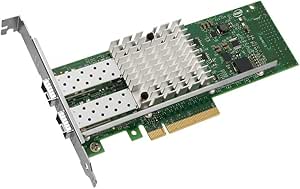
Intel E10G42BTDAG1P5 X520-DA2 10Gigabit Ethernet Card
Dual 10GbE SFP+ ports on a single PCIe card eliminate the bandwidth ceiling that 1GbE imposes on NAS, VM, and high-throughput storage workloads.
$57.99*
View on Amazon
✓ In Stock on Amazon.com
*Price sourced from Amazon.com. Last updated:Aug 30, 2026.Price and availability are subject to change — details.
Affiliate Disclosure: As an Amazon Associate, Studio Supplies earns from qualifying purchases made through links on this page, at no additional cost to you. This helps support our editorial team.
Notice a mistake? Let Us Know
Overview
Key Features
E10G42BTDAG1P5
INTEL
Specifications
Brand
Intel
Model
E10G42BTDAG1P5 (X520-DA2)
Controller
Intel 82599ES
Port Type
SFP+ (Dual Port)
Port Speed
10 Gigabit Ethernet per port
Interface
PCIe 2.0 x8
Virtualization
SR-IOV supported
Offload Support
TSO, LRO, iSCSI offload
Frequently Asked Questions
What PCIe slot version and lane width does the X520-DA2 require, and will it fit a PCIe 3.0 slot?
The X520-DA2 uses a PCIe 2.0 x8 interface. It is backward and forward compatible with PCIe 3.0 and PCIe 4.0 slots — running it in a PCIe 3.0 x8 slot gives you more than sufficient bandwidth headroom for both 10GbE ports operating simultaneously.
What SFP+ transceiver or DAC cable types does this card support?
The X520-DA2 supports Intel-qualified SFP+ Direct Attach Copper (DAC) cables for short runs and standard SFP+ optical transceivers (SR, LR) for fiber connections. Note that Intel's driver has historically been strict about transceiver validation — third-party SFP+ modules may require a registry or driver tweak to suppress compatibility warnings, particularly on Windows Server.
Does this card support SR-IOV for virtualization, and is it compatible with VMware ESXi?
Yes — the X520-DA2 supports SR-IOV (Single Root I/O Virtualization), which allows a single physical port to be partitioned into multiple virtual functions assignable to VMs. It is on VMware's HCL for ESXi and has mature driver support in Linux (ixgbe driver) and Windows Server 2012 R2 through 2022.
Can both ports operate simultaneously at full 10Gbps each, or do they share bandwidth?
Each port operates independently at up to 10Gbps — the PCIe x8 interface provides approximately 32Gbps of aggregate bandwidth (PCIe 2.0), sufficient for both ports to saturate simultaneously without the interface becoming the bottleneck.
Is this card suitable for iSCSI or NFS storage networking, and does it support hardware offloads?
The X520-DA2 supports TCP Segmentation Offload (TSO), Large Receive Offload (LRO), and iSCSI offload, which meaningfully reduce CPU overhead during sustained storage traffic. For NAS or SAN workloads over 10GbE, these offloads are the reason enterprise environments prefer dedicated NICs over software-only solutions.
Related Products


