

Price history
Intel
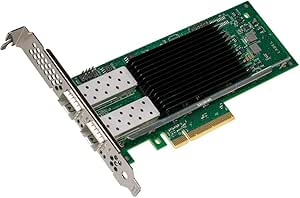
Intel E810-XXVDA2 Ethernet Network Adapter
Next-Generation Network Connectivity for Demanding WorkloadsIntroducing the Intel Ethernet Network Adapter E810-XXVDA2. Optimized for high-bandwidth applications, this adapter delivers accelerated packet processing and flexible configurations. Application Device Queues (ADQ): Dedicated traffic q...
$254.99*
View on Amazon
✓ In Stock on Amazon.com
*Price sourced from Amazon.com. Last updated:Jul 21, 2026.Price and availability are subject to change.
Affiliate Disclosure: Studio Supplies may earn a commission from qualifying purchases made through links on this page, at no additional cost to you. This helps support our editorial team.
Notice a mistake? Let Us Know
Overview
Next-Generation Network Connectivity for Demanding Workloads
Introducing the Intel Ethernet Network Adapter E810-XXVDA2. Optimized for high-bandwidth applications, this adapter delivers accelerated packet processing and flexible configurations.
- Application Device Queues (ADQ): Dedicated traffic queues for reduced latency
- Dynamic Device Personalization: Protocol-specific traffic acceleration
- iWARP and RoCEv2 support: High-speed, low-latency connectivity for storage
- Enhanced DPDK support: Increased packet processing speeds
- IEEE 1588 PTP v2 support: Precise clock synchronization
Key Features
Dual Port SFP28
PCI Express (PCIe) 4.0 x8
Application Device Queues (ADQ)
Dynamic Device Personalization (DDP)
Supports both RDMA iWARP and RoCEv2
IEEE 1588 Precision Time Protocol (PTP)
Specifications
Number of Ports
Dual Port
Port Type
SFP28
Interface
PCI Express (PCIe) 4.0 x8
Supported Protocols
RDMA iWARP, RoCEv2, IEEE 1588 PTP
Advanced Features
Application Device Queues (ADQ), Dynamic Device Personalization (DDP)
Frequently Asked Questions
What type of ports does the Intel E810-XXVDA2 Ethernet Network Adapter have?
This network adapter features Dual Port SFP28, designed for high-speed network connections.
What PCI Express version does this adapter utilize?
It utilizes PCI Express (PCIe) 4.0 x8, providing high bandwidth for data transfer.
What is Application Device Queues (ADQ) and does this adapter support it?
Yes, this adapter supports Application Device Queues (ADQ), which helps in prioritizing network traffic for critical applications.
Does the Intel E810-XXVDA2 support RDMA technologies?
Yes, it supports both RDMA iWARP and RoCEv2, enabling efficient data transfer with low latency.
Is this network adapter compatible with time synchronization protocols?
Yes, it supports IEEE 1588 Precision Time Protocol (PTP), which is important for accurate time synchronization in networked systems.
What is Dynamic Device Personalization (DDP)?
Dynamic Device Personalization (DDP) is a feature supported by this adapter that allows for flexible packet processing and classification.
Related Products


