



Intel
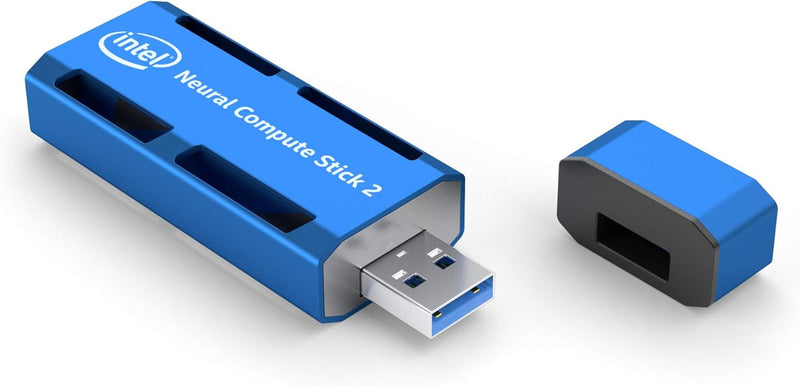
Intel NCSM2485.DK Neural Compute Stick 2 - AI Accelerator
★★★★★
Intel Neural Compute Stick 2: Accelerate Your AI Prototyping The Intel Neural Compute Stick 2 (NCS 2) enables rapid prototyping of deep neural network applications. Powered by the Intel Movidius Myriad X VPU and supported by the Intel Distribution of OpenVINO Toolkit, the NCS 2 offers enhanced p...
Check availability
Affiliate Disclosure: Studio Supplies may earn a commission from qualifying purchases made through links on this page, at no additional cost to you. This helps support our editorial team.
Notice a mistake? Let Us Know
Overview
Intel Neural Compute Stick 2: Accelerate Your AI Prototyping
The Intel Neural Compute Stick 2 (NCS 2) enables rapid prototyping of deep neural network applications. Powered by the Intel Movidius Myriad X VPU and supported by the Intel Distribution of OpenVINO Toolkit, the NCS 2 offers enhanced performance and efficiency for computer vision and AI at the edge.
Specifications:
- Processor: Intel Movidius Myriad X VPU
- Support: Intel Distribution of OpenVINO Toolkit
- Interface: USB
- Dimensions: 1.06 x 0.55 x 2.85 inches
- Item Weight: 0.64 ounces
Key Features
Deep learning prototyping is now available on a laptop, a single board computer or any platform with a USB port
Accessible and affordable—take advantage of more performance per watt and highly efficient fanless design
Combines the hardware-optimized performance of the newest Intel Movidius Myriad X VPU and the Intel Distribution of OpenVINO Toolkit to accelerate deep neural network-based applications
Specifications
Product Type
AI Accelerator
Processor
Intel Movidius Myriad X VPU
Interface
USB port
Design
Fanless
Software Toolkit
Intel Distribution of OpenVINO Toolkit
Pros & Cons
👍 Pros
- Enables deep learning prototyping directly on common platforms such as laptops or single board computers via USB.
- Offers enhanced performance per watt, indicating efficient power consumption for its acceleration capabilities.
- Features a highly efficient fanless design, contributing to silent operation and potentially lower maintenance.
- Integrates the Intel Movidius Myriad X VPU for hardware-optimized acceleration of deep neural networks.
- Leverages the Intel Distribution of OpenVINO Toolkit, providing a comprehensive software stack for AI development.
👎 Cons
- Requires a platform with a USB port for connectivity, which might limit integration in some embedded or custom systems.
- While affordable, it functions as an accelerator and does not replace a primary computing unit for general tasks.
- The focus is on deep learning prototyping, suggesting it may not be optimized for large-scale, production-level AI deployments.
- Specific performance benchmarks relative to its power consumption are not provided, making direct comparisons challenging.
- The device's capabilities are largely dependent on the Intel Distribution of OpenVINO Toolkit, requiring familiarity with this ecosystem.
Frequently Asked Questions
What is the primary function of the Intel NCSM2485.DK Neural Compute Stick 2?
The Intel Neural Compute Stick 2 is designed as an AI accelerator, enabling deep learning prototyping on various platforms with a USB port.
What hardware is inside the Neural Compute Stick 2 that aids in AI acceleration?
The device combines the hardware-optimized performance of the newest Intel Movidius Myriad X VPU for efficient deep neural network processing.
What software ecosystem does this AI accelerator utilize for development?
It leverages the Intel Distribution of OpenVINO Toolkit to accelerate deep neural network-based applications.
Can this device be used on any computer?
It is designed to be accessible on a laptop, a single board computer, or any platform that features a USB port.
Is the Intel Neural Compute Stick 2 an energy-efficient device?
Yes, it is designed for more performance per watt and features a highly efficient fanless design, making it energy-conscious.
Related Products

