



Intel
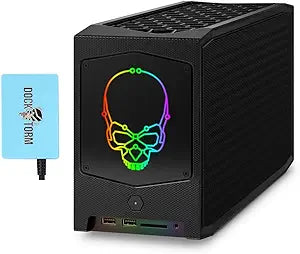
Intel NUC11BTMi9-2937-227332 NUC 11 Extreme i9 Mini Desktop 16GB 128GB SSD
UHDi9-11900KB16GB DDR4128GB SSD650W
An 8-core i9-11900KB at 4.9GHz boost in a sub-15-inch footprint — the NUC 11 Extreme delivers desktop-class compute without the desktop.
Check availability
Affiliate Disclosure: Studio Supplies may earn a commission from qualifying purchases made through links on this page, at no additional cost to you. This helps support our editorial team.
Notice a mistake? Let Us Know
Overview
Key Features
【Upgraded】 Seal is opened for Hardware/Software upgrade only to enhance performance. No Display ; Wi-Fi 6E AX210 Wifi, Bluetooth 5.2, Ethernet LAN (RJ-45), No Webcam, .
【Powerful Performance with Intel Core i9-11900KB Octa Core】 11th Gen Intel Core i9-11900KB 3.3GHz Processor (upto 4.9 GHz, 24MB Cache, 8-Cores) ; Intel UHD Integrated Graphics, .
【High Speed and Multitasking】 16GB DDR4 SODIMM; 650W Power Supply
128GB SATA SSD; 8 USB 3.1 Gen2, 1 HDMI, 2 Thunderbolt 4 (Type-C), SDXC Reader, No Optical Drive, Headphone/Microphone Combo Jack., Windows 11 Home., 1 Year Manufacturer warranty from GreatPriceTech (Professionally upgraded by GreatPriceTech)
Includes Dockztorm USB Hub(Special Edition Portable Docztorm Data Hub;Super Speedy Data Syn Rate upto 5Gbps)
Specifications
Processor
Intel Core i9-11900KB, 3.3GHz base / 4.9GHz boost, 8-core/16-thread, 24MB cache
Memory
16GB DDR4 SO-DIMM
Storage
128GB SATA SSD
Graphics
Intel UHD Integrated Graphics
Operating System
Windows 11 Home
Wireless
Wi-Fi 6E (Intel AX210), Bluetooth 5.2
Wired Networking
Gigabit Ethernet (RJ-45)
USB Ports
8× USB 3.1 Gen2
Display Output
1× HDMI, 2× Thunderbolt 4 (Type-C)
Card Reader
SDXC
Audio
Headphone/Microphone Combo Jack
Power Supply
650W internal
Dimensions
4.75" × 14" × 7.68"
Weight
9.80 lbs
Pros & Cons
👍 Pros
- i9-11900KB's 8-core/16-thread architecture and 4.9GHz boost clock deliver desktop-tier CPU throughput in a 4.75" × 7.68" × 14" chassis.
- Thunderbolt 4 on two ports provides 40Gbps bandwidth for external storage arrays, eGPU enclosures, and high-resolution display chains.
- 650W internal PSU supports discrete GPU installation for users who add a PCIe card — a unique capability in the mini PC category.
- Wi-Fi 6E AX210 card supports the 6GHz band for lower-latency, higher-throughput wireless on compatible networks.
- 8 × USB 3.1 Gen2 ports at 10Gbps each provide ample peripheral bandwidth without requiring a hub for most workstation setups.
👎 Cons
- 128GB SATA SSD creates a significant read/write bottleneck relative to the i9 processor's capability — NVMe upgrade is nearly mandatory for demanding workloads.
- 16GB DDR4 RAM is undersized for a system of this compute tier; memory pressure under simultaneous multi-application loads will be apparent.
- Intel UHD integrated graphics cannot handle GPU-accelerated rendering, ML inference, or gaming without adding a discrete card.
- The system was opened for hardware/software upgrade by the reseller — original factory seal is broken, which may affect manufacturer warranty claims.
- At 9.8 lbs and 14 inches deep, the chassis is not pocket-portable — it occupies meaningful desk or shelf space despite the "mini" classification.
Frequently Asked Questions
What does the 650W power supply in this form factor actually enable?
It's the key differentiator of the NUC 11 Extreme over standard NUCs. The 650W PSU provides sufficient headroom to power a discrete PCIe GPU installed in the NUC's internal expansion slot — something a standard NUC's 90–120W brick cannot support. Without a GPU added, the PSU is dramatically oversized, but it's there for the expansion potential.
Does the 128GB SATA SSD create a storage bottleneck on a system this powerful?
Yes, this is the most significant hardware limitation. SATA SSDs top out around 550MB/s sequential read. The i9-11900KB and Thunderbolt 4 ports are capable of far higher data throughput — the NVMe M.2 slots on the NUC 11 Extreme's "Compute Element" board support PCIe Gen 4, meaning a storage upgrade to NVMe would substantially improve file I/O for large workloads.
What does Thunderbolt 4 (Type-C) enable on this machine?
Thunderbolt 4 delivers up to 40Gbps bidirectional bandwidth per port. Practically, this means external GPU enclosures, 40Gbps storage arrays, daisy-chained 4K/8K displays, and docking stations with full bandwidth — capabilities that USB-A ports at 10Gbps cannot match. Two TB4 ports give this NUC external expansion flexibility unusual at this form factor.
How does the 16GB RAM in this configuration compare to the processor's capability?
The i9-11900KB supports up to 64GB DDR4. At 16GB, this configuration will show memory pressure under simultaneous GPU workloads, large dataset processing, or VM hosting. The SODIMM slots are accessible and user-upgradeable — a 32GB or 64GB upgrade is the first recommended hardware change for heavy workloads.
Is Wi-Fi 6E meaningfully better than Wi-Fi 6 for this use case?
Wi-Fi 6E extends into the 6GHz band, providing access to wider, less congested channels (up to 160MHz) for sustained high-throughput transfers. In a congested office or home environment, 6E delivers more consistent speeds and lower latency than 6GHz-limited Wi-Fi 6. For a desktop-class mini PC likely to be used for large file transfers or streaming, it's a genuine advantage.
Related Products


