

Intel
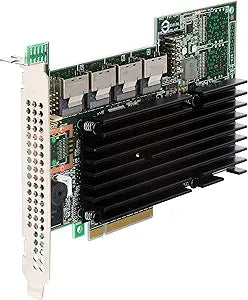
Intel RS2WG160 Raid Controller 16-Port Internal SAS/SATA
★★★★★
Enhance Storage Capabilities with Advanced RAID ControlThe Intel RS2WG160 RAID Controller delivers scalable performance and data protection for demanding storage environments. Equipped with 16 internal SAS/SATA ports and extensive RAID level support, this controller is an ideal solution for expan...
$399.00*
View on Amazon
✓ In Stock on Amazon.com
*Price sourced from Amazon.com. Last updated:Jul 14, 2026.Price and availability are subject to change.
Affiliate Disclosure: Studio Supplies may earn a commission from qualifying purchases made through links on this page, at no additional cost to you. This helps support our editorial team.
Notice a mistake? Let Us Know
Overview
Enhance Storage Capabilities with Advanced RAID Control
The Intel RS2WG160 RAID Controller delivers scalable performance and data protection for demanding storage environments. Equipped with 16 internal SAS/SATA ports and extensive RAID level support, this controller is an ideal solution for expanding storage infrastructure.
- Ports Internal: 16
- Ports External: 0
- Supported Devices: SAS/SATA Devices
- Compatible Battery Backup Options: AXXRSBBU7 or AXXRSBBU8
- RAID Levels Supported: 0, 1, 5, 6, 10, 50, 60
- Number of Devices Supported: 240
- Embedded Memory: 512MB
- PCIe Host Interface: PCI Express 2.0 x8
- IO Processor Model: LSI2108 + exp
- Board Form Factor: Full-Height
Key Features
Controller Type: SAS RAID Controller
Specifications
Controller Type
SAS RAID Controller
Ports
16-Port Internal
Supported Drive Interfaces
SAS/SATA
Pros & Cons
👍 Pros
- Supports SAS/SATA drives, providing versatile connectivity for various storage devices in a server or workstation
- Features 16 internal ports, enabling connection of a large number of drives for high-capacity storage solutions
- Functions as a RAID Controller, allowing for data redundancy and performance improvement through RAID arrays
- Designed by Intel, a brand known for its reliability and compatibility in computing components
- The internal design keeps cables neat and contained within the system chassis, improving airflow
👎 Cons
- As a RAID controller, it requires compatible SAS/SATA drives, which are not included with the unit
- Specific RAID levels supported (e.g., RAID 0, 1, 5, 6, 10, etc.) are not detailed in the product title or features
- The controller is internal, meaning it requires available PCIe slots and adequate internal space within the system chassis
- Installation knowledge of server hardware and RAID configuration is likely necessary for proper setup
- Power consumption specifications for the controller itself are not provided in the features
Frequently Asked Questions
What type of controller is the Intel RS2WG160?
The Intel RS2WG160 is a SAS RAID Controller.
How many drives can this RAID controller support?
This controller is designed with 16 internal ports, allowing it to connect up to 16 SAS or SATA drives.
What types of drives are compatible with this controller?
It supports both SAS (Serial Attached SCSI) and SATA (Serial Advanced Technology Attachment) drives.
Is this an internal or external RAID controller?
This is an internal RAID controller, designed to be installed inside a computer or server chassis.
What is the primary function of this Intel RS2WG160?
Its primary function is to provide RAID capabilities, allowing users to configure multiple SAS or SATA drives into various RAID levels for data redundancy and improved performance.
Related Products


