



Intel
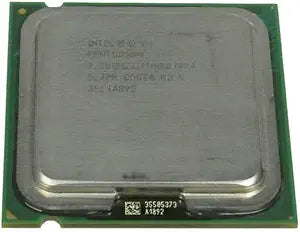
Intel SL7PR Pentium 4 2.80 GHz Processor
84W
The Intel Pentium 4 SL7PR at 2.80 GHz runs a proven LGA775 platform with an 800 MHz FSB — dependable silicon for legacy system maintenance or period-accurate builds.
$8.99*
View on Amazon
✓ In Stock on Amazon.com
*Price sourced from Amazon.com. Last updated:Oct 21, 2026.Price and availability are subject to change — details.
Affiliate Disclosure: As an Amazon Associate, Studio Supplies earns from qualifying purchases made through links on this page, at no additional cost to you. This helps support our editorial team.
Notice a mistake? Let Us Know
Overview
Key Features
CPU Speed: 2.80 GHz; PCG: 04A; Bus Speed: 800 MHz
Bus/Core Ratio: 14; L2 Cache Size: 1 MB; L2 Cache Speed: 2.80 GHz
Package Type: LGA775; Manufacturing Technology: 90 nm
Core Stepping: E0; CPUID String: 0F41h
Thermal Design Power: 84W; Thermal Specification: 67.7°C; VID Voltage Range: 1.4V
Specifications
Processor
Intel Pentium 4 (Prescott Core)
Clock Speed
2.80 GHz
FSB Speed
800 MHz
Bus/Core Ratio
14x
L2 Cache
1MB (at 2.80 GHz)
Socket
LGA775
Manufacturing Process
90nm
Core Stepping
E0
CPUID
0F41h
TDP
84W
Max Thermal Spec
67.7°C
VID Voltage Range
1.4V
PCG
04A
S-Spec
SL7PR
Similar Products
Other products from the same family that visitors often consider:
 ✓ Available
Intel SL7PR Pentium 4 2.8GHz Processor
$5.99
View on Amazon → ✓ Available
Intel Pentium 4 Socket 478 2.80GHz CPU
$29.99
View on Amazon → ✓ Available
Intel RK80532KE072512 Xeon 2.80GHz Server Processor
$89.95
View on Amazon → Currently Unavailable
Intel Quad Core Xeon X5660 2.80 GHz Processor
Check on Amazon → ✓ Available
Intel BX80638I73840QM Core i7-3840QM 2.80 GHz Processor
$548.87
View on Amazon →Frequently Asked Questions
What socket does the SL7PR use, and which motherboards is it compatible with?
The SL7PR is an LGA775 processor, compatible with Intel 915, 925, 945, 955, and 975 Express chipset-based motherboards that support the 800 MHz FSB. Not all LGA775 boards support Prescott-core Pentium 4 processors — consult your motherboard's CPU compatibility list and ensure BIOS revision supports the E0 stepping (CPUID 0F41h) before installing.
What is the 84W TDP of the SL7PR in practical terms — what cooling requirements does it impose?
At 84W, the SL7PR runs significantly hotter than modern processors with equivalent workload throughput. It requires a heatsink and fan rated for Socket 775 with at least 84W thermal dissipation capacity. The 67.7°C maximum thermal specification means inadequate cooling will cause thermal throttling and reduced stability. Do not run this CPU without a verified compatible cooler.
Does the SL7PR support Hyper-Threading, and how does that affect multi-threaded software performance?
Pentium 4 Prescott-core processors include Hyper-Threading Technology, which presents the single physical core as two logical processors to the operating system. This can improve throughput in applications designed for multi-threaded execution (video encoding, file compression) but does not substitute for a true second core — modern workloads expecting actual multi-core performance will not benefit significantly.
What L2 cache size does the SL7PR have, and how does it compare to competing CPUs of the same era?
The SL7PR has 1MB of L2 cache running at the full 2.80 GHz core speed. Compared to AMD Athlon 64 processors of the same era (which offered 512KB or 1MB L2 with architectural efficiency advantages), the Pentium 4's NetBurst architecture required higher cache sizes and clock speeds to compete — the 1MB cache at this clock was a significant Prescott improvement over earlier Northwood-core Pentium 4s.
Is the SL7PR compatible with Windows 10 or modern operating systems?
Windows 10 requires a minimum of SSE2 instruction support, which the Pentium 4 SL7PR provides. However, Microsoft has not certified LGA775 Pentium 4 processors for Windows 10 deployment, and driver availability for period-era motherboards under Windows 10 is inconsistent. For practical legacy system use, Windows XP or Windows 7 32-bit are the appropriate operating systems for this platform.
Related Products


