

Intel
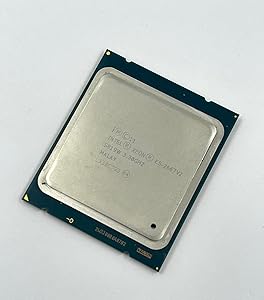
Intel SR19W Xeon E5-2667 v2 3.30GHz 8-Core CPU (Renewed)
Eight cores at 3.30 GHz base and 4.00 GHz turbo with 25MB Smart Cache — the E5-2667 v2 delivers high-clock Ivy Bridge-EP workstation performance at a fraction of its original cost.
$61.00*
View on Amazon
✓ In Stock on Amazon.com
*Price sourced from Amazon.com. Last updated:Oct 21, 2026.Price and availability are subject to change — details.
Affiliate Disclosure: As an Amazon Associate, Studio Supplies earns from qualifying purchases made through links on this page, at no additional cost to you. This helps support our editorial team.
Notice a mistake? Let Us Know
Overview
Key Features
Intel Xeon E5-2667 v2 SR19W
Processor Base Frequency: 3.30 GHz
25 MB Intel Smart Cache
Number of Cores: 8
Sockets Supported: FCLGA2011
Specifications
Model
Xeon E5-2667 v2 (SR19W)
Cores / Threads
8 / 16
Base Frequency
3.30 GHz
Max Turbo Frequency
4.00 GHz
Cache
25MB Intel Smart Cache
Socket
FCLGA2011
TDP
130W
QPI Links
2 x 8 GT/s
Memory Support
DDR3/DDR3L ECC RDIMM/LRDIMM, 4-channel, up to 1866 MHz
Condition
Renewed
Similar Products
Other products from the same family that visitors often consider:
 ✓ Available
Intel SR19W Xeon E5-2667 v2 3.33GHz Processor
$249.95
View on Amazon → ✓ Available
Intel SR19L Xeon E5-4610 V2 8-Core Processor (Renewed)
$97.00
View on Amazon → ✓ Available
Intel SR2P5 Xeon E5-2667 V4 8-Core Server CPU
$34.14
View on Amazon → ✓ Available
Intel SR19W-E5-2667v2 Xeon E5-2667 V2 Processor
$78.99
View on Amazon → ✓ Available
Intel CM8063501375101 Xeon E5-2650 v2 CPU (Renewed)
$78.99
View on Amazon →Frequently Asked Questions
What socket does the Xeon E5-2667 v2 use, and which motherboards are compatible?
It uses the FCLGA2011 socket (LGA2011-0), which is compatible with Intel C602/C604 chipset server boards and select high-end desktop (HEDT) X79 platform motherboards. Note: FCLGA2011-3 (Haswell-EP) boards for E5 v3 processors use the same socket physically but are NOT electrically compatible — confirm your board's supported CPU list before purchasing.
What socket and platform does the Xeon E5-2667 v2 require?
The E5-2667 v2 uses the LGA2011 socket (FCLGA2011) and requires an Intel C602 or C606 chipset-based motherboard on the Ivy Bridge-EP platform. It is not compatible with Haswell-EP (E5-2600 v3), Broadwell-EP (v4), or any consumer Intel desktop socket.
Does this CPU support dual-socket configurations?
Yes — the E5-2667 v2 includes two QPI links at 8 GT/s each, enabling dual-socket installations. In a verified 2P board, two E5-2667 v2 CPUs deliver 16 physical cores and 32 threads with cache coherence maintained across sockets via QPI interconnect.
What is the maximum RAM configuration this CPU supports?
The Xeon E5-2667 v2 supports up to 768GB of registered ECC DDR3 memory per socket across four memory channels at speeds up to DDR3-1866. In a dual-socket configuration, total addressable memory reaches 1.5TB, which is the primary reason this platform remains relevant for memory-intensive server workloads.
What workloads benefit most from the 4.0GHz turbo frequency of the E5-2667 v2?
Single-threaded or lightly-threaded workloads — database queries, ERP transactions, legacy application servers, and certain simulation codes — benefit most from the 4.0GHz turbo. With 8 cores and 16 threads, it also handles moderately parallel tasks like virtual machine hosting, where per-core performance directly affects VM responsiveness.
What are the thermal requirements for the E5-2667 v2's 130W TDP?
At 130W TDP — the highest in the E5-2600 v2 lineup — this chip requires a server-grade heatsink rated for at minimum 130W continuous dissipation. In a dual-socket 2P configuration, chassis airflow must be verified to prevent thermal throttling under sustained workloads.
How does the 25MB Smart Cache affect workstation performance?
The 25MB LLC (Last Level Cache) is shared across all 8 cores, reducing main memory latency for workloads whose active dataset fits within it. Database queries, simulation steps, and rendering tile passes benefit measurably. Workloads exceeding 25MB working sets will incur DDR3 DRAM latency on cache misses.
What is the TDP and what cooling solution does this processor require?
The TDP is 130W, which is on the higher end for the LGA2011 platform. It requires an active cooling solution rated for 130W TDP or higher — passive cooling is not viable. Verify that your server chassis or workstation cooling assembly supports a 130W LGA2011 processor before installation.
What does "renewed" mean for a server CPU, and is there any risk?
Renewed CPUs have been tested for functionality — core count, clock speed, and cache are verified to match specifications. The risk is primarily in physical condition: inspect the LGA2011 socket for bent pins on the motherboard side before installation. Functionally, CPUs rarely fail if they test correctly; the renewed designation affects cosmetic packaging, not silicon reliability.
What memory specification does the E5-2667 v2 support?
Four-channel DDR3/DDR3L ECC RDIMM or LRDIMM at up to 1866 MHz per socket. Maximum capacity is up to 768GB per socket with LRDIMMs. ECC error-correcting memory is supported and strongly recommended for workstation and server deployments where data integrity is required.
Related Products


