



Intel
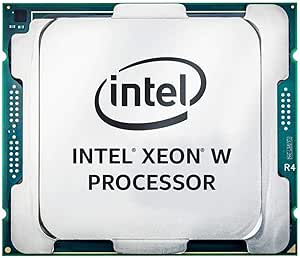
Intel SR3W2 Xeon W-2175 2.5GHz 14-Core Processor
The Xeon W-2175's 14 cores, 4.3GHz Turbo, and LGA-2066's quad-channel memory architecture make it the workstation processor built for sustained multi-threaded throughput in content creation and engineering.
$588.00*
View on Amazon
✓ In Stock on Amazon.com
*Price sourced from Amazon.com. Last updated:Oct 23, 2026.Price and availability are subject to change — details.
Affiliate Disclosure: As an Amazon Associate, Studio Supplies earns from qualifying purchases made through links on this page, at no additional cost to you. This helps support our editorial team.
Notice a mistake? Let Us Know
Overview
Key Features
Intel Xeon W-2175 Tetradeca-core (14 Core) 2.50 Ghz Processor - Socket R4 Lga-2066 - 14 Mb - 19.25 Mb Cache - 0 Mt/s Qpi - 8 Gt/s Dmi - 64-bit Processing - 4.30 Ghz Overclocking Speed - 14 Nm - 140 W
Specifications
Processor Model
Xeon W-2175
Core Count
Tetradeca-core (14 Core)
Base Clock Speed
2.50 Ghz
Socket Type
R4 LGA-2066
L2 Cache
14 Mb
L3 Cache
19.25 Mb
QPI Speed
0 Mt/s
DMI Speed
8 Gt/s
Architecture
64-bit Processing
Overclocking Speed
4.30 Ghz
Process Technology
14 Nm
Thermal Design Power (TDP)
140 W
Similar Products
Other products from the same family that visitors often consider:
 ✓ Available
Intel E5-2697V4 Xeon 14-Core Processor
$65.00
View on Amazon → ✓ Available
Intel Xeon Gold 5120 Tray 14-Core Server Processor
$329.95
View on Amazon → Currently Unavailable
Intel Quad Core Xeon W-3223 3.5GHz Processor
Check on Amazon → Currently Unavailable
Intel E5-2678V3 Xeon 2.5GHz 12-Core Processor
Check on Amazon → ✓ Available
Intel CD8069504393400 Xeon W-2265 Processor 3.5 GHz
$847.55
View on Amazon →Frequently Asked Questions
What platform does the W-2175 require, and is it compatible with consumer Z-series motherboards?
The W-2175 uses the LGA-2066 socket, which is exclusive to Intel's X299 chipset motherboards — it is not compatible with consumer Z270, Z370, Z490, or any LGA-1151/1200/1700 platform. X299 boards provide the PCIe lanes, memory channels, and power delivery infrastructure that the Xeon W-2000 series requires. Verify motherboard compatibility before purchasing, as LGA-2066 is a distinct socket from the consumer HEDT line.
Does the W-2175 support ECC memory, and why does that matter?
Yes — the Xeon W-2175 supports ECC (Error-Correcting Code) registered memory on compatible X299 workstation motherboards. ECC memory detects and corrects single-bit memory errors in real time, a capability absent from consumer DRAM. For workloads like 3D rendering, simulation, scientific computing, or financial modeling where data integrity over multi-hour jobs matters, ECC eliminates a class of silent data corruption risks.
What is the practical performance difference between the 2.5GHz base and 4.3GHz Turbo clock?
The 2.5GHz base clock is the sustained all-core frequency the processor maintains under continuous full-load operations. The 4.3GHz Turbo is the single-core peak, engaged when a workload is primarily sequential (single-threaded) and thermal headroom permits. In content creation — 3D rendering, video encoding — you'll spend most time at or near the base clock. In lightly threaded tasks like CAD modeling or audio plug-in processing, the Turbo clock delivers noticeably snappier response.
How does the 14-core W-2175 compare to a modern Ryzen 9 or Core i9 for multi-threaded workloads?
The W-2175 is a Skylake-based design using a 14nm process — by raw instructions-per-clock and power efficiency, modern Ryzen 9 7950X or Core i9-13900K designs are faster. The W-2175's advantages are its quad-channel memory bandwidth on LGA-2066, ECC support, and existing platform availability for workstation builds already on X299 infrastructure. It is not competitive with current-generation consumer flagship CPUs in new builds, but remains relevant in established X299 workstations where the platform investment justifies the CPU upgrade.
What cooling solution is required for the W-2175's 140W TDP?
The W-2175 has a 140W TDP, which requires a high-capacity CPU cooler — a 240mm or 280mm AIO liquid cooler, or a premium air cooler rated above 180W TDP. A 120mm AIO or budget tower cooler will not maintain acceptable temperatures under sustained all-core workloads. Confirm cooler TDP rating and LGA-2066 mounting bracket compatibility before purchase, as not all coolers ship with LGA-2066 hardware.
Related Products


