



Intel
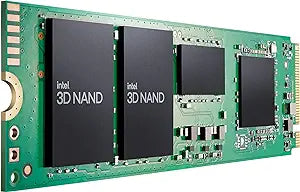
Intel SSDPEKNU020TZX1 670p 2TB NVMe M.2 SSD
★★★★★
2TB NVMe
2TB of NVMe speed at PCIe 3.0 ceiling performance — the storage upgrade that eliminates load-time bottlenecks for everyday and prosumer workloads.
$335.80*
View on Amazon
✓ In Stock on Amazon.com
*Price sourced from Amazon.com. Last updated:Jun 04, 2026.Price and availability are subject to change.
Affiliate Disclosure: Studio Supplies may earn a commission from qualifying purchases made through links on this page, at no additional cost to you. This helps support our editorial team.
Notice a mistake? Let Us Know
Overview
Key Features
2B Storage Capacity
M2. 2280 Form Factor
PCIe NVMe 3.0 x4 Interface
Up to 3500 MB/s Sequential Read Speeds. Up to 2700 MB/s Sequential Write Speeds. Intel QLC 3D NAND
Specifications
Storage Capacity
2TB
Form Factor
M.2 2280
Interface
PCIe NVMe 3.0 x4
Sequential Read Speed
Up to 3500 MB/s
Sequential Write Speed
Up to 2700 MB/s
NAND Technology
Intel QLC 3D NAND
Similar Products
Other products from the same family that visitors often consider:
 ✓ Available
Intel SSDPE2MX012T401 P3500 Series 1.2TB NVMe SSD
$137.00
View on Amazon → Currently Unavailable
Intel SSDPEKNU512GZN1 670p 512GB M.2 NVMe SSD
Check on Amazon → ✓ Available
Intel SSDPE2MW012T4X1 1.2TB 750 Series SSD
View on Amazon → Currently Unavailable
Intel SSDPE2MW012T4M2 750 Series 1.2TB SSD
Check on Amazon → ✓ Available
Intel SSDPEDMD020T401 2TB Internal SSD
$1,701.41
View on Amazon →Pros & Cons
👍 Pros
- Sequential read speed of 3500 MB/s saturates the PCIe 3.0 x4 bandwidth ceiling, delivering near-maximum bus performance for large file transfers and media asset loading.
- 2TB capacity in the M.2 2280 form factor provides meaningful storage headroom for creative professionals without requiring an additional drive bay.
- QLC 3D NAND enables a lower cost-per-gigabyte than TLC alternatives at this capacity, making high-density NVMe storage accessible at a reasonable price point.
- PCIe NVMe 3.0 x4 interface is compatible with virtually all modern motherboards and is backward compatible with PCIe 4.0 platforms.
- M.2 2280 form factor fits both desktop and laptop M.2 slots, making this a versatile upgrade path across build types.
👎 Cons
- QLC NAND's sustained write performance degrades once the SLC write cache is filled — sustained sequential write workloads like large disk-to-disk copies will see throughput step down noticeably below the 2700 MB/s peak.
- The 670p does not leverage PCIe 4.0 bandwidth — users with current-generation platforms will see the drive operate at half the theoretical bus speed available to them.
- QLC NAND has lower per-cell endurance than TLC, which means the 740 TBW rating is lower relative to capacity than TLC-based competitors.
- No included heatspreader — in chassis with poor M.2 airflow, sustained workloads may trigger thermal throttling.
Frequently Asked Questions
What interface does the 670p use, and what motherboard slot does it require?
The 670p uses a PCIe NVMe 3.0 x4 interface in an M.2 2280 form factor. It requires an M.2 slot on your motherboard that supports PCIe NVMe — not SATA M.2. Most motherboards from 2018 onward include at least one compatible slot, but verify your board's M.2 specification before ordering.
What does QLC NAND mean for sustained write performance compared to TLC drives?
QLC (Quad-Level Cell) NAND stores four bits per cell versus three for TLC, which increases density and lowers cost per gigabyte but reduces endurance and sustained write speed. The 670p's peak sequential write of 2700 MB/s is competitive at burst, but under sustained heavy writes — large video renders, disk-to-disk transfers — performance can step down as the SLC cache is exhausted. For typical mixed workloads this is rarely a bottleneck.
How does the 3500 MB/s sequential read speed translate to real-world application loading?
Sequential read at 3500 MB/s means large files — game levels, video project assets, OS boot sequences — load significantly faster than SATA SSDs (capped at ~550 MB/s). In practice, application launch and file open times feel near-instant compared to SATA, though random 4K read/write performance has more impact on day-to-day responsiveness than the sequential ceiling.
Is the 670p compatible with PCIe 4.0 motherboards?
Yes. PCIe is backward compatible, so the 670p will operate in a PCIe 4.0 x4 slot but will run at PCIe 3.0 speeds. You will not see a performance improvement from the faster bus — the drive's controller caps out at PCIe 3.0 throughput.
What is the rated endurance (TBW) for the 2TB model?
Intel rates the 670p 2TB at 740 TBW (terabytes written). For typical consumer and prosumer workloads — document editing, creative work, moderate gaming — this translates to years of practical life before the NAND endurance ceiling becomes a concern.
Related Products


