

Intel
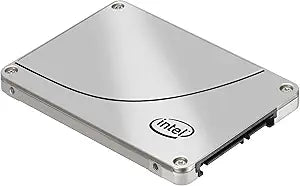
Intel SSDSC1NB240G401 DC S3500 240GB 1.8" Internal SSD
★★★★★
Enterprise-grade read consistency at 75,000 IOPS in a compact 1.8-inch footprint that blade server and dense storage deployments demand.
Check availability
Affiliate Disclosure: Studio Supplies may earn a commission from qualifying purchases made through links on this page, at no additional cost to you. This helps support our editorial team.
Notice a mistake? Let Us Know
Overview
Key Features
Perfect for Reducing Load Times in VR
Sequential Read: 500 MB/s; Sequential Write: 260 MB/s
Random Read: 75000 IOPS; Random Write: 7500 IOPS
Storage Capacity: 240GB
Interface: SATA 3.0 6Gb/S
Specifications
Capacity
240 GB
Form Factor
1.8-inch Internal
Interface
SATA 3.0 6 Gb/s
Sequential Read
500 MB/s
Sequential Write
260 MB/s
Random Read IOPS
75,000
Random Write IOPS
7,500
Read Latency (Typical)
50 µs
Read Latency (99.9% Max)
500 µs
Application
Data Center
Brand
Intel
Model
SSDSC1NB240G401
Frequently Asked Questions
What makes the 1.8-inch form factor significant for this drive?
The 1.8-inch form factor is a datacenter-specific size class used in blade servers, high-density storage enclosures, and Ultrabook-era enterprise notebooks. It is physically smaller than a standard 2.5-inch drive, so it only fits specific enterprise chassis that accommodate this form factor — verify your system's bay compatibility before purchasing.
How does the 75,000 read IOPS translate to real-world workload performance?
75,000 random read IOPS means the DC S3500 can service a large number of small, random I/O requests simultaneously — the load profile characteristic of database lookups, virtual machine boot storms, and analytics queries. At 50 µs typical read latency, responses arrive faster than most application-tier software can issue the next request.
Why is the write IOPS (7,500) so much lower than the read IOPS (75,000)?
This is a deliberate engineering trade-off. The DC S3500 is optimized for read-heavy datacenter workloads — video streaming, analytics, and VDI read caching — where read consistency matters more than write throughput. The asymmetric IOPS profile reflects Intel's MLC NAND tuning for endurance and read latency, not raw write speed.
Does this drive use SATA 3.0 or NVMe?
SATA 3.0 (6 Gb/s). The drive's 500 MB/s sequential read speed is at the practical ceiling of the SATA interface, meaning the interface itself, not the NAND, is the bottleneck. NVMe was not yet standard in this product generation; ensure your target system has SATA connectivity, not PCIe/NVMe only.
Is this drive suitable for a consumer desktop build?
Technically it will function in any SATA-capable system, but the 1.8-inch form factor requires an adapter bracket to fit a standard 2.5-inch or 3.5-inch bay. The performance profile and enterprise endurance ratings are overkill for most consumer use, and the cost-per-GB is higher than consumer alternatives of equivalent capacity.
Related Products


