

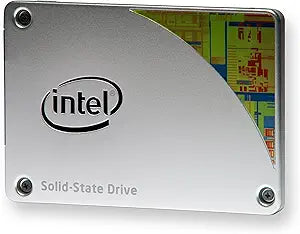


Intel
Intel SSDSC2BW480A4K5 480GB 2.5-Inch SSD
★★★★★
The Intel 530 Series 480GB delivers SATA III sequential reads up to 540MB/s, cutting system boot and application load times by an order of magnitude over spinning disk.
$321.99*
View on Amazon
✓ In Stock on Amazon.com
*Price sourced from Amazon.com. Last updated:Jun 04, 2026.Price and availability are subject to change.
Affiliate Disclosure: Studio Supplies may earn a commission from qualifying purchases made through links on this page, at no additional cost to you. This helps support our editorial team.
Notice a mistake? Let Us Know
Overview
Key Features
Improved PC responsiveness
Breakthrough storage performance
Quality you can trust. Sounds great, now determine which Intel SSD is right for your computing needs.
Specifications
Capacity
480GB
Form Factor
2.5-Inch
Similar Products
Other products from the same family that visitors often consider:
 Currently Unavailable
Intel FBA_SSDSC2BW480A4K5 530 Series 480GB SSD
Check on Amazon → ✓ Available
Intel SSDSC2BB480G4 480 GB 2.5" Internal SSD
$181.73
View on Amazon → Currently Unavailable
Intel SSDSCKKB480GZ01 480GB M.2 SATA SSD
Check on Amazon → Currently Unavailable
Intel D3-S4510 480GB M.2 SATA SSD
Check on Amazon → ✓ Available
Intel SSDSCKKF480H6X1 480GB SSD Pro 5400s Series
$306.00
View on Amazon →Pros & Cons
👍 Pros
- Sequential read speeds rated up to 540MB/s under SATA III saturate the interface ceiling, delivering the fastest possible throughput the bus allows.
- AES-256 hardware encryption with TCG Opal 1.0 support enables self-encrypting drive operation without CPU performance penalty.
- The 2.5-inch form factor is universally compatible with desktops, laptops, and rack servers that have a standard SATA bay.
- 20nm Intel MLC NAND provides better per-cell write endurance than competing TLC drives of the same generation — relevant for workloads with high daily write volumes.
- Intel SSD Toolbox provides firmware update capability and drive health diagnostics, extending long-term manageability on Windows platforms.
👎 Cons
- The SATA III interface hard-caps sequential performance around 550MB/s — workloads that can leverage NVMe would see 3–5× higher throughput from a modern M.2 drive at comparable price points.
- 20nm MLC NAND produces more heat under sustained write operations compared to newer planar NAND designs, which can trigger thermal throttling in poorly ventilated enclosures.
- The 530 Series predates NVMe and PCIe 4.0 — it offers no upgrade path for users whose workloads have outgrown SATA bandwidth constraints.
- Intel Rapid Storage Technology optimization features are only available on compatible Intel chipsets, limiting firmware-level performance tuning on AMD platforms.
- Write speeds lag significantly behind read performance under sustained sequential workloads — rated write speeds are roughly 60% of read speeds, a gap that shows up in large file transfer benchmarks.
Frequently Asked Questions
What interface does the Intel 530 Series use, and will it saturate a SATA III port?
The SSDSC2BW480A4K5 uses the SATA III 6Gb/s interface. Its rated sequential read speeds approach the practical throughput ceiling of SATA III (~550MB/s), meaning the drive is bottlenecked by the interface rather than the NAND — which is typical for high-performance SATA SSDs. If your board only supports SATA II (3Gb/s), expect roughly half the sequential throughput.
What NAND type does the Intel 530 Series use, and how does that affect endurance?
The 530 Series uses Intel-fabricated 20nm MLC NAND, which provides a better endurance-per-cell trade-off than TLC drives of the same era. The 480GB model offers higher inherent endurance than smaller capacities due to increased write distribution across more NAND cells.
Does this drive support hardware encryption?
The Intel 530 Series supports AES-256 hardware encryption and is compatible with the TCG Opal 1.0 security standard, enabling self-encrypting drive functionality when paired with compatible management software.
Is the 530 Series compatible with modern systems running Windows 10/11 or Linux?
Yes — the SATA interface is universally supported across operating systems. No special driver is required; the drive is recognized as a standard AHCI device. Intel's SSD Toolbox software (still available) provides firmware updates and health monitoring on Windows.
How does the 480GB capacity affect performance compared to smaller 530 Series models?
Larger NAND capacity directly improves sustained write performance because more NAND dies can operate in parallel. The 480GB model has more write parallelism than the 120GB or 180GB variants, resulting in higher sustained sequential write throughput under prolonged workloads.
Related Products


