



Lenovo
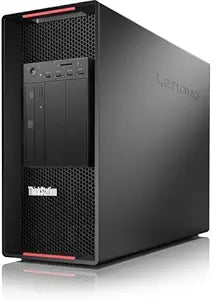
Lenovo 30BC005NUS Thinkstation P920 Tower Xeon Silver 4210R 32GB 512GB SSD
Dual Xeon Silver 4210R processors and PCIe NVMe storage deliver the multi-threaded compute throughput that simulation, rendering, and data science workflows actually require.
Check availability
Affiliate Disclosure: Studio Supplies may earn a commission from qualifying purchases made through links on this page, at no additional cost to you. This helps support our editorial team.
Notice a mistake? Let Us Know
Overview
Specifications
Processors
2x Intel Xeon Silver 4210R (10-core, 2.40GHz base)
Total Cores / Threads
20 cores / 40 threads
Memory (Installed)
32GB DDR4 SDRAM
Memory (Maximum)
1TB
Storage
512GB PCIe NVMe SSD
Operating System
Windows 10 Pro for Workstations (64-bit)
USB Ports
10 (2x USB 2.0, 8x USB 3.1 Gen 1)
Networking
Gigabit Ethernet
Power Supply
1400W
Form Factor
Tower
Pros & Cons
👍 Pros
- Dual Xeon Silver 4210R processors provide 20 physical cores and 40 threads — a thread count that enables genuine parallelism in rendering, simulation, and data pipelines rather than simulated concurrency.
- The 1TB maximum memory ceiling accommodates large in-memory datasets for scientific computing, large-scale analytics, and memory-mapped file workloads that consumer platforms can't address.
- PCIe NVMe SSD delivers multi-GB/s sequential throughput, preventing storage I/O from becoming the bottleneck in a compute-heavy workflow.
- ISV certification provides validated compatibility with major professional applications — AutoCAD, CATIA, Maya, SolidWorks — reducing integration risk in professional deployment environments.
- The 1400W power supply provides headroom for high-TDP workstation GPU additions without requiring a power infrastructure upgrade.
👎 Cons
- The base configuration ships without a discrete GPU — professional visualization, rendering, and compute workloads require a separately purchased and specified GPU before the machine fulfills its workstation role.
- Base 32GB RAM is significantly underprovisioned for a dual-processor platform capable of 1TB — virtually every professional deployment will require immediate memory expansion.
- The Silver 4210R's 2.40GHz base clock lags higher-tier Xeon Gold and Platinum options for single-threaded tasks; workloads that don't parallelize well won't see proportional benefit from the dual-socket architecture.
- Tower form factor is not rack-mountable without a separate conversion kit, limiting deployment in rack-dense data center or server room environments.
Frequently Asked Questions
How much RAM can the P920 actually support, and does it require ECC memory?
The P920 supports up to 1TB of DDR4 SDRAM across its memory slots. It uses registered ECC memory — the platform requires ECC, which is standard for dual-socket Xeon workstations. The base 32GB configuration is a starting point; production deployments in memory-intensive workloads will typically expand this significantly before the machine reaches its potential.
What does the dual Xeon Silver 4210R configuration mean in terms of core count?
Each Silver 4210R is a 10-core, 20-thread processor running at 2.40GHz base with a 4.10GHz boost. Two of them gives you 20 physical cores and 40 threads available to the OS simultaneously — a thread count that enables genuine parallelism in CPU-bound rendering, simulation, and compilation jobs where a consumer 16-thread desktop creates serialization bottlenecks.
Does the base configuration include a discrete GPU, or do I need to add one?
The base configuration does not specify a discrete GPU. Professional visualization workloads — 3D rendering, CAD, video processing — require a separately specified GPU. The 1400W power supply provides headroom for high-TDP workstation GPUs (NVIDIA RTX, Quadro, AMD Radeon Pro), but that GPU selection and cost is additional to the base system.
What does Windows 10 Pro for Workstations add over standard Windows 10 Pro?
Windows 10 Pro for Workstations includes native support for multi-socket CPU configurations, ReFS file system, persistent memory support, and higher RAM ceilings. Standard Windows 10 Pro cannot fully utilize the dual-processor architecture this machine is built on — the Workstations edition is not cosmetic; it's functionally necessary for this hardware platform.
What bottleneck does the NVMe SSD solve over a SATA SSD in this class of machine?
The PCIe NVMe SSD delivers multi-GB/s sequential read speeds — typically 3–5x faster than a SATA SSD. At the compute scale this workstation operates at, project files, dataset reads, and scratch disk I/O can become the limiting factor. The NVMe drive keeps storage from becoming the bottleneck in workflows that are already provisioned with substantial CPU resources.
Related Products


