



Lenovo
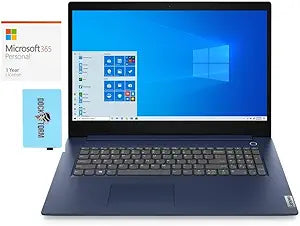
Lenovo 81WF004CUS-2290-28608 IdeaPad 3 17IIL05 i5-1035G1 12GB 256GB SSD Laptop
A 10th-gen Core i5 and 12GB of DDR4 in a 17-inch chassis deliver genuine all-day productivity without the premium laptop price.
Check availability
Affiliate Disclosure: Studio Supplies may earn a commission from qualifying purchases made through links on this page, at no additional cost to you. This helps support our editorial team.
Notice a mistake? Let Us Know
Overview
Specifications
Processor
Intel Core i5-1035G1, 4-Core, 1.0GHz base / 3.6GHz boost, 6MB Cache
Memory
12GB DDR4 (4GB onboard + 8GB SO-DIMM)
Storage
256GB SATA SSD
Display
17.3" HD+ 1600x900, 60Hz, 16:9
Graphics
Intel UHD Integrated Graphics
Operating System
Windows 10 Home 64-bit
Wireless
802.11ac Wi-Fi
Bluetooth
5.0
Camera
720p HD Webcam
Ports
2x USB 3.2 Gen1, 1x USB 2.0, 1x HDMI, SD Card Reader, 3.5mm Combo Jack
Battery
3-Cell, 42WHr
Power Adapter
65W
Dimensions
15.83 x 11.07 x 0.78 in
Weight
4.85 lb
Color
Abyss Blue
Pros & Cons
👍 Pros
- i5-1035G1 boosting to 3.6GHz handles Office, web, video conferencing, and light photo editing without stuttering.
- 12GB DDR4 configuration with a single occupied SO-DIMM slot allows a straightforward RAM upgrade to 20GB without replacing soldered memory.
- 17.3-inch screen size provides substantially more working space than 15-inch alternatives at the same price tier.
- 802.11ac Wi-Fi and Bluetooth 5.0 cover modern wireless connectivity requirements without dongles.
- 4.85 lb weight is competitive for a 17-inch laptop, making it portable enough for campus or office use.
👎 Cons
- 1600x900 (HD+) display resolution is below Full HD on a 17-inch panel, resulting in visibly lower pixel density than similarly-priced competitors offering 1080p.
- 256GB SATA SSD fills quickly on a primary machine — local storage for photos, video, or large project files will require an external drive or cloud sync strategy.
- Intel UHD integrated graphics cannot handle GPU-accelerated tasks like video transcoding at scale, 3D rendering, or modern gaming above low settings.
- Single SO-DIMM slot means the 4GB of soldered memory is always active, limiting maximum RAM to 20GB regardless of what module you install.
- 65W power adapter and 42WHr battery combine for modest real-world battery life under sustained workloads.
Frequently Asked Questions
What does the i5-1035G1 actually deliver for day-to-day performance?
The i5-1035G1 is a 10th-gen Ice Lake quad-core chip with a 1.0GHz base clock that boosts to 3.6GHz under load. In practice, the boost speed is what you'll see for most tasks — light to moderate workloads like browser tabs, Office, and video conferencing hit the boost states quickly. It's not a speed demon by current standards, but it handles multitasking comfortably at this RAM configuration.
Is 12GB of RAM enough, and can it be upgraded?
12GB — configured as 4GB onboard plus an 8GB SO-DIMM — is adequate for productivity workloads and moderate multitasking. The single occupied SO-DIMM slot means you can swap the 8GB module for a 16GB SO-DIMM, reaching 20GB total (4GB soldered + 16GB module). This is a meaningful upgrade path if RAM becomes the bottleneck over time.
What are the storage speed limitations of this 256GB SATA SSD?
The SATA SSD tops out at roughly 500–550MB/s sequential read — substantially faster than a mechanical hard drive but slower than NVMe drives, which can exceed 3,000MB/s. For typical laptop use (OS boot, app launches, file access), the SATA SSD is fast enough that most users won't notice the gap versus NVMe in daily tasks.
What does the 1600x900 display resolution mean in practical terms?
HD+ (1600x900) on a 17.3-inch panel is a lower pixel density than Full HD (1920x1080). At typical viewing distances it's adequate for productivity, but text rendering and fine detail are noticeably softer than on a 1080p display of the same size. It's a cost-saving choice that becomes apparent when doing side-by-side comparisons with FHD panels.
Does this laptop support external monitors?
Yes, via the HDMI port. You can drive a single external display at up to 1080p or higher resolution depending on monitor capability. There is no Thunderbolt or DisplayPort output listed, so multi-monitor configurations require the HDMI plus the built-in display.
Related Products


