



Lenovo
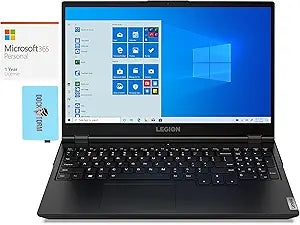
Lenovo 82K00045US-3878-24822 Legion 5 Gaming Laptop Ryzen 5 32GB 1TB SSD GTX 1650
1920x1080Ryzen 5 5600H32GB DDR41TB SSD230W
A Ryzen 5 5600H and 32GB DDR4 on a 17.3" 1080p panel give you a serious multitasking foundation — though the GTX 1650 sets a firm ceiling on modern gaming ambitions.
Check availability
Affiliate Disclosure: As an Amazon Associate, Studio Supplies earns from qualifying purchases made through links on this page, at no additional cost to you. This helps support our editorial team.
Notice a mistake? Let Us Know
Overview
Key Features
17.3" Full HD (1920x1080) 60Hz IPS Display; 802.11ax Wifi, Bluetooth 5.2, Ethernet LAN (RJ-45), 720p HD Webcam, Backlit, .
AMD Ryzen 5 5600H Hexa Core 5th Gen AMD Ryzen 5 5600H 3.30GHz Processor
32GB DDR4 SODIMM; 230W Power Supply, 4-Cell 80 WHr Battery; Phantom Blue Color, .
1TB SATA SSD; 4 USB 3.2 Gen1, 1 x HDMI 2.1, USB 3.2 Type-C Gen1, USB 3.2 Type-C Gen2, Windows 11 Home-64.,
Includes Microsoft 365 Personal 1 Year Subscription for 1 User
Specifications
Processor
AMD Ryzen 5 5600H, 6-core, 3.30 GHz (boost to 4.2 GHz)
Graphics
NVIDIA GeForce GTX 1650 4GB GDDR6
Memory
32GB DDR4 SO-DIMM
Storage
1TB SATA SSD
Display
17.3" Full HD (1920x1080) IPS, 60Hz
Operating System
Windows 11 Home 64-bit
Wireless
802.11ax (Wi-Fi 6), Bluetooth 5.2
Webcam
720p HD
Ports
4x USB 3.2 Gen1, 1x HDMI 2.1, 1x USB-C 3.2 Gen1, 1x USB-C 3.2 Gen2, SD Card Reader, 3.5mm combo jack
Battery
4-cell, 80 WHr
Power Supply
230W
Dimensions
15.75" x 11.41" x 1.25"
Weight
6.61 lbs
Color
Phantom Blue
Frequently Asked Questions
What gaming performance can I realistically expect from the GTX 1650 4GB GDDR6?
The GTX 1650 4GB GDDR6 delivers 1080p playability in esports and older titles at medium-to-high settings, typically 60+ fps in games like Valorant, Fortnite, and CS2. In demanding AAA titles from 2022 onward — Cyberpunk 2077, Alan Wake 2 — expect 30–45 fps at reduced settings. The 4GB VRAM buffer is a hard constraint for high-resolution textures in modern open-world games.
Does 32GB of DDR4 RAM provide any practical benefit for gaming over 16GB?
For gaming alone, 32GB provides marginal benefit — most titles are capped in practice by VRAM and GPU throughput, not system RAM. The tangible advantage is for concurrent workloads: running a game, a browser with many tabs, Discord, and background applications simultaneously without hitting memory pressure. For content creation or development alongside gaming, 32GB is a meaningful operational upgrade over a 16GB configuration.
Is the 1TB SATA SSD significantly slower than NVMe, and does it matter in practice?
SATA SSDs top out around 550 MB/s sequential read versus 3,000–7,000 MB/s for NVMe. For game loading times and OS responsiveness, real-world differences are modest — Windows boot and most game level loads are not bandwidth-bound. The gap becomes more apparent in large file transfers or game installations from external drives. The SATA interface is a cost trade-off, not a performance disaster.
Can the RAM or storage be upgraded after purchase?
The Legion 5 uses SO-DIMM slots and a standard M.2/SATA interface, making upgrades possible. However, verify the specific slot count and whether any RAM is soldered before committing to an upgrade plan — Lenovo's configuration varies between production runs of the same model number.
What does the 80 WHr battery deliver in real-world runtime?
Under light productivity use, expect 4–6 hours. Under sustained gaming load with the GPU active, runtime drops to 1.5–2.5 hours. The 80 WHr capacity is reasonable for a 17.3" gaming laptop but should not be the deciding factor — this class of laptop is primarily a desktop-replacement device and will spend most time plugged into the 230W supply.
Related Products


