



Lenovo
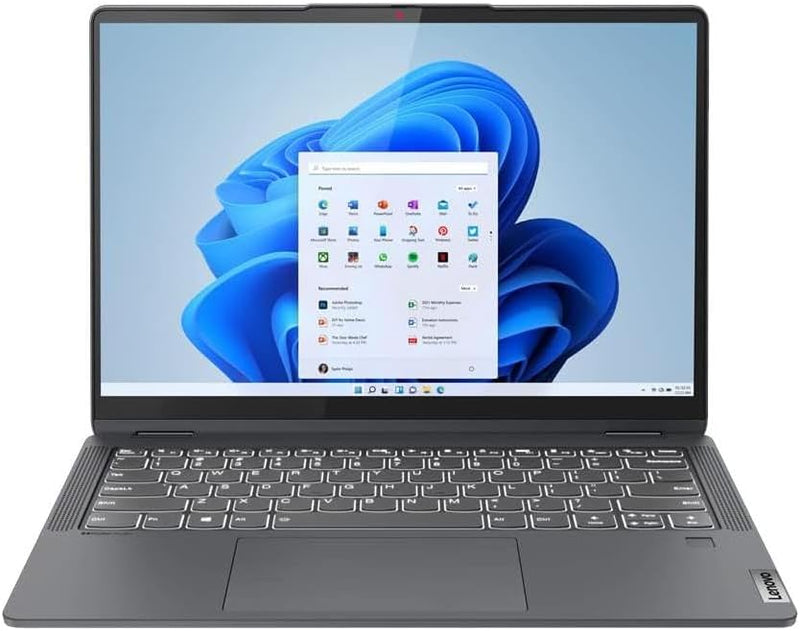
Lenovo 82R9000KUS IdeaPad Flex 5 16IAU7 Touchscreen 2-in-1
★★★★★
2240 x 1400
An octa-core Ryzen 7 convertible that flips between laptop and tablet without sacrificing the 2.2K display or 16GB of headroom for multitasking.
$685.97*
View on Amazon
✓ In Stock on Amazon.com
*Price sourced from Amazon.com. Last updated:Jun 04, 2026.Price and availability are subject to change.
Affiliate Disclosure: Studio Supplies may earn a commission from qualifying purchases made through links on this page, at no additional cost to you. This helps support our editorial team.
Notice a mistake? Let Us Know
Overview
Key Features
With 16 GB of memory, runs as many programs as you want without losing the execution
The 14" 2240 x 1400 screen provides a great movie watching experience
512 GB total SSD capacity is enough to store your essential documents and files, favorite songs, movies and pictures
10 Hours battery run time helps you stay unwired and work longer non-stop
Specifications
Processor
AMD Ryzen 7 5700U, 8-core, 1.8 GHz base / 4.3 GHz boost
Memory
16GB DDR4
Storage
512GB SSD
Display
14" 2240x1400 (2.2K) IPS Touchscreen
Graphics
AMD Radeon Integrated Graphics
Operating System
Windows 11 Home
Wireless
Wi-Fi + Bluetooth
Battery Life
Up to 10 hours (rated)
Form Factor
360-degree convertible (2-in-1)
Pros & Cons
👍 Pros
- AMD Ryzen 7 5700U delivers 8 cores and 16 threads, handling heavy multitasking that would throttle lower-tier U-series chips
- 16GB DDR4 RAM provides enough headroom to run demanding browser sessions, Office, and background processes simultaneously
- 2240x1400 touchscreen resolution offers ~190 PPI sharpness, cleaner than standard 1080p 14-inch displays
- 512GB SSD eliminates the storage bottleneck common in entry-level 2-in-1s and delivers faster boot and app launch times
- 360-degree hinge enables four usage modes — laptop, tent, stand, tablet — making it genuinely versatile for different workflows
👎 Cons
- AMD Radeon integrated graphics cap out on GPU-accelerated tasks — no discrete GPU means rendering and gaming performance will disappoint power users
- Non-upgradeable RAM in many IdeaPad Flex configurations means 16GB is a ceiling, not a floor
- The touchscreen panel adds measurable weight and display reflectivity compared to a matte non-touch screen of the same class
- USB port selection on the Flex 5 series is limited — power users needing multiple simultaneous high-speed connections may need a hub
- Fan noise becomes audible under sustained CPU loads — the chassis thermal solution is adequate but not whisper-quiet at peak draw
Frequently Asked Questions
What processor powers the IdeaPad Flex 5 16IAU7, and what does that mean for everyday performance?
It runs an AMD Ryzen 7 5700U — an 8-core, 16-thread chip with a 1.8 GHz base clock and boost up to 4.3 GHz. In practice, that means smooth multitasking across a dozen browser tabs, Office apps, and light video editing without thermal throttling becoming an issue under moderate loads.
Is the 2240x1400 display actually sharp enough for productivity work?
Yes. At 2240x1400 on a 14-inch panel, pixel density lands around 190 PPI — noticeably crisper than a standard 1080p 14-inch screen. Text renders cleanly, and the touchscreen layer adds interactive flexibility for note-taking in tablet mode.
How much storage does the 512GB SSD provide in practice, and is it expandable?
512GB is the rated capacity; after Windows 11 and system files, expect roughly 460GB usable. Lenovo's IdeaPad line typically includes an M.2 slot, but available expansion depends on the specific configuration — verify before assuming upgradability.
Can the AMD Radeon integrated graphics handle light creative work?
The Ryzen 7 5700U's integrated Radeon graphics (Vega architecture) can handle photo editing in Lightroom, casual Photoshop use, and 4K video playback, but it is not a discrete GPU. GPU-accelerated rendering, gaming above 1080p low, or 3D work will hit its ceiling quickly.
Does the 10-hour battery estimate hold up in real-world 2-in-1 use?
Ten hours is the manufacturer's estimate under light workloads. Real-world mixed use — web browsing, video, some productivity — typically yields 6–8 hours. The touchscreen and higher-resolution display draw more power than a standard 1080p panel, which shaves time off the rated figure.
Related Products


