



Lenovo
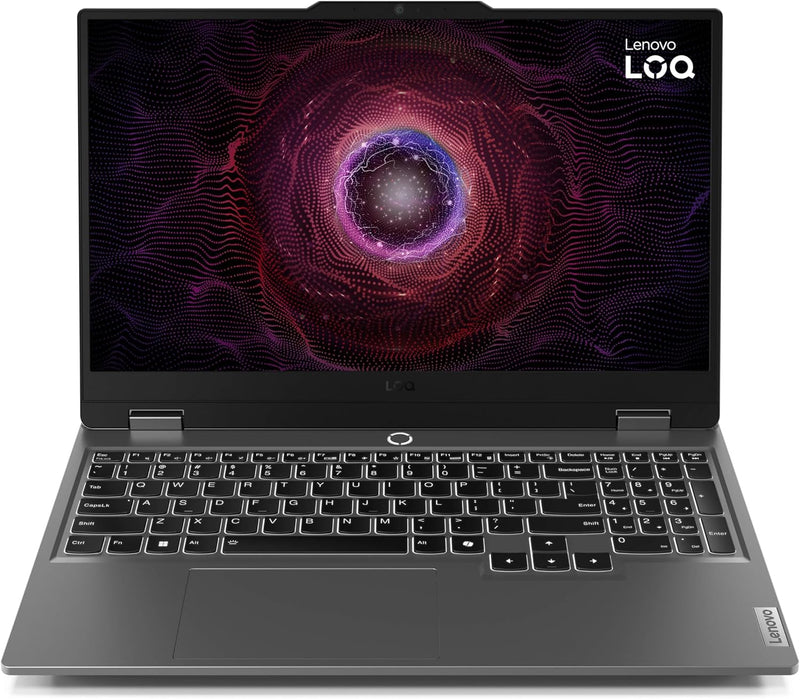
Lenovo 83JC007KUS LOQ 15.6" Ryzen 7 Gaming Laptop
★★★★★
Ryzen 7 7435HS
The Lenovo LOQ 15 pairs a Ryzen 7 7435HS and RTX 4050 6GB with a 144Hz IPS display — delivering playable framerates at 1080p for under-$1000 gaming without thermal compromise.
$1,199.00*
Check availability
*Price sourced from Amazon.com. Last updated:Jun 07, 2026.Price and availability are subject to change.
Affiliate Disclosure: Studio Supplies may earn a commission from qualifying purchases made through links on this page, at no additional cost to you. This helps support our editorial team.
Notice a mistake? Let Us Know
Overview
Key Features
Processor Manufacturer: AMD
Processor Type: Ryzen 7
Processor Generation: 7th Gen
Processor Model: Ryzen 7 7435HS
Processor Core: Octa-core (8 Core)
Specifications
Brand
Lenovo
Model Number
83JC007KUS
Product Name
LOQ 15.6" Ryzen 7 Gaming Laptop
Processor Manufacturer
AMD
Processor Type
Ryzen 7
Processor Generation
7th Gen
Processor Model
Ryzen 7 7435HS
Processor Core
Octa-core (8 Core)
Pros & Cons
👍 Pros
- Ryzen 7 7435HS delivers 8 cores across a proven Zen 3+ microarchitecture with a 2.4GHz base and 4.75GHz boost clock, sustaining multi-threaded workloads that 6-core competitors throttle under
- RTX 4050 6GB GDDR6 delivers hardware ray tracing and DLSS 3 support in a sub-$1000 gaming laptop bracket where most competitors use older RTX 3050/3060 hardware or AMD alternatives without DLSS access.
- 144Hz IPS display at 1920x1080 provides the refresh headroom to actually use the framerates the Ryzen 7 / RTX 4050 combination produces in esports titles — eliminating the mismatch of high-FPS hardware behind a 60Hz panel.
- RTX 4050 with 6GB GDDR6 provides 96 GB/s memory bandwidth — sufficient headroom for 1080p at high settings in current-generation titles without VRAM starvation
- 144Hz IPS panel eliminates the 60Hz cap that bottlenecks entry gaming laptops, delivering visibly smoother motion in fast-paced games without tearing at mid-range frame rates
- 16GB DDR5 RAM provides the memory bandwidth advantage of DDR5 over DDR4, which reduces CPU-GPU data transfer latency — measurable in titles that heavily populate VRAM with streaming assets.
- Wi-Fi 6 (2x2 802.11AX) brings reduced network latency in congested environments, directly relevant to online multiplayer performance in shared-network situations like dorms and apartments.
- 16GB DDR5 RAM in a dual-channel configuration doubles available memory bandwidth versus DDR4 at equivalent capacity, reducing GPU/CPU memory contention in VRAM-intensive scenarios
- Wi-Fi 6 (802.11ax, 2x2) provides up to 2.4Gbps theoretical throughput with 1024-QAM and OFDMA, materially reducing latency variance on congested home networks versus Wi-Fi 5
- E-privacy shutter on the 720p webcam provides a hardware-level camera disconnect — no driver or software required — which is a security assurance feature increasingly expected in professional and educational environments.
👎 Cons
- 512GB QLC NVMe is a tight primary storage allocation for a gaming laptop — a single AAA title can occupy 80–150GB, leaving limited room before storage management becomes a recurring task
- 512GB QLC NVMe SSD will fill quickly with a modern game library — AAA titles frequently exceed 100GB, meaning three or four major game installs consumes the drive, requiring either an external drive or disciplined uninstall management from day one.
- The Ryzen 7 7435HS is based on the Zen 3+ (not Zen 4) architecture, placing it in an older microarchitecture generation despite the 7000-series branding — buyers expecting AMD's current Zen 4 or 5 performance profile will find a gap between name and generation.
- RTX 4050 at 60W TDP operates noticeably below the performance ceiling of the same GPU in higher-wattage configurations — benchmarks from 80W+ LOQ variants will not reflect this unit's output
- 720p webcam produces visibly softer image quality compared to competing laptops in this tier that have adopted 1080p FHD cameras as the new standard
- 720p webcam resolution is a notable limitation for users who need this laptop for video conferencing in professional or academic contexts where 1080p webcam quality has become a reasonable expectation.
- At 15.6 inches with an RTX 4050 and gaming-tier internals, the LOQ's battery life in unplugged use will be measurably shorter than productivity-focused thin-and-lights — the GPU is a significant power draw even in idle browsing scenarios.
- Nahimic Audio software has a documented history of background CPU overhead and occasional audio routing conflicts after Windows updates
- Ryzen 7 7435HS is a Zen 3+ refresh rather than a new Zen 4 architecture — competing Intel and AMD Zen 4 laptops at similar price points offer meaningfully higher IPC and efficiency
- The Luna Grey chassis uses plastic construction in cost-reduction areas to reach the price point, which means flex characteristics under stress are more noticeable than premium aluminum-chassis gaming laptops at higher price tiers.
Frequently Asked Questions
What is the GPU TDP on the RTX 4050 in this configuration, and does it affect gaming performance?
The RTX 4050 in the LOQ 15 is configured at 60W TDP — a common implementation in this price tier. At 60W, the 4050 performs below its theoretical maximum (which scales to ~115W in higher-tier laptops), but it remains capable of hitting 60+ fps in modern titles at 1080p medium-to-high settings. Users moving from 45W mobile GPU configurations will notice the improvement; users expecting desktop-tier 4050 performance should account for the thermal envelope difference.
What does the Ryzen 7 7435HS's octa-core architecture mean for gaming frame generation and background workloads?
The 7435HS runs 8 Zen 3+ cores across a 4nm-class process node, with a boost clock up to approximately 4.7GHz. For gaming, the CPU feeds frame data to the RTX 4050 without creating a CPU-side bottleneck at 1080p in the vast majority of titles. The 8-core count also means background processes — Discord, streaming software, OS tasks — don't meaningfully compete with the game for CPU time.
Does the RTX 4050 6GB GDDR6 in this laptop support DLSS 3 Frame Generation?
The RTX 4050 supports DLSS 3 Super Resolution and DLSS Ray Reconstruction, but Frame Generation (DLSS 3 FG) requires the Ada Lovelace Optical Flow Accelerator present in RTX 40-series hardware — which the RTX 4050 does support. However, FG performance gains depend heavily on GPU TDP configuration in the laptop; the LOQ's power delivery to the GPU should be verified against Lenovo's TGP spec for this SKU.
Does the 512GB NVMe SSD use QLC or TLC NAND, and how does that affect sustained write performance?
The LOQ 15's SSD uses QLC NAND. QLC delivers competitive sequential read speeds but has a narrower SLC write cache — once that cache fills during large sequential writes (e.g., game installations over ~30GB), sustained write speeds drop significantly. For gaming workloads (random reads of existing assets), QLC performs well. For frequent large file transfers, an upgrade to a TLC NVMe drive is advisable.
Does the display support G-Sync or FreeSync, and does it matter at 144Hz?
The LOQ 15 supports AMD FreeSync via its Ryzen 7 / Radeon iGPU path. When gaming on the RTX 4050 (dGPU), NVIDIA's implementation on this panel type is MUX-switch dependent. At 144Hz with a GPU capable of consistently hitting 100+ fps at 1080p, adaptive sync reduces the practical impact of frame-rate variance.
How does 512GB QLC NVMe SSD storage compare to TLC in daily gaming use?
QLC NAND stores 4 bits per cell versus TLC's 3 bits, which reduces endurance ratings and can cause write speed drops after the SLC write cache is exhausted during large sequential writes. For gaming — installing titles, loading game data — QLC is generally adequate since game loads are sequential reads, not writes. Users who frequently install, update, or move large game libraries will encounter QLC's write speed ceiling more often than users who install games and leave them.
What does Wi-Fi 6 (2x2 802.11AX) provide over the previous Wi-Fi 5 standard in gaming contexts?
Wi-Fi 6's OFDMA and BSS Coloring features reduce latency and congestion in environments with many connected devices — a meaningful improvement in apartment buildings or shared networks. The 2x2 spatial stream configuration provides up to 2.4Gbps theoretical throughput, though the latency improvements of Wi-Fi 6 are more relevant to gaming than raw throughput.
Does the Ryzen 7 7435HS support PCIe Gen 4 for the NVMe slot?
Yes. The Ryzen 7000-series HS platform includes PCIe Gen 4 x4 NVMe support, providing theoretical sequential read bandwidth up to ~7GB/s for compatible drives. The stock QLC SSD may not saturate that bandwidth ceiling, but upgrading to a Gen 4 TLC drive will take full advantage of the available bus width.
How effective is the E-privacy shutter on the webcam?
The E-privacy shutter is a physical sliding cover over the 720p webcam lens — it mechanically blocks the lens when closed. It provides hardware-level assurance that the camera cannot capture video regardless of software state. It does not affect microphone function.
What display connection options does the LOQ provide for connecting to an external monitor?
The LOQ includes HDMI 2.1 and a USB 3.2 Gen 2 Type-C port. HDMI 2.1 supports up to 4K at 120Hz or 1080p at 240Hz to an external display. The USB-C port can support DisplayPort Alt Mode depending on the specific SKU configuration — verify with Lenovo's spec sheet for confirmed external display support via USB-C on this model number.
Related Products


