



LG
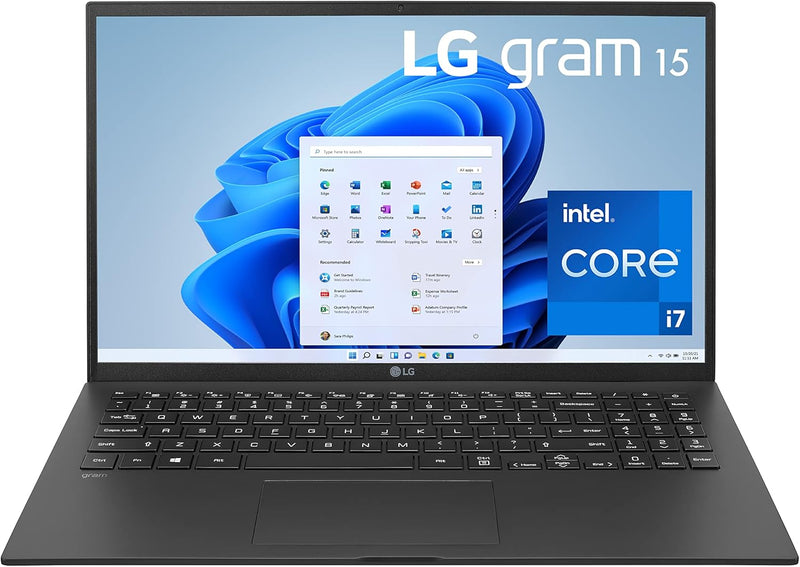
LG 15Z95P-P.AAB8U1 gram 15" i7 Laptop 512GB SSD
1920 x 1080512GB SSDUSB-CThunderbolt 4
An 11th-gen Core i7 ultrabook that weighs under 2.2 lbs yet delivers Thunderbolt 4 connectivity and NVMe storage speed where most thin-and-lights compromise.
View price on Amazon
Affiliate Disclosure: As an Amazon Associate, Studio Supplies earns from qualifying purchases made through links on this page, at no additional cost to you. This helps support our editorial team.
Notice a mistake? Let Us Know
Overview
Key Features
15.6" Full HD (1920 x 1080) with sRGB 99% color expression
Intel 11th Gen i7 -1195G7 Processor with Intel Iris Xe Graphic provides up responsive CPU performance for high-resolution content creation and editing
16GB LPDDR4X 4266mhz RAM delivers a high level of performance for memory-intensive content creation, designing, editing, and multitasking
Improve productivity with 512GB PCIe M.2 NVMe SSD for dependable storage accessible in a flash
Connect with Confidence: Two USB-C ports with Thunderbolt 4 support, two USB-A 3.2 ports, a full-size HDMI port, a microSD card reader, and a 3.5mm audio jack
Specifications
Display
15.6" IPS, 1920×1080, 99% sRGB
Processor
Intel Core i7-1195G7 (Tiger Lake, up to 5.0 GHz)
RAM
16 GB LPDDR4X 4266 MHz (soldered)
Storage
512 GB PCIe M.2 NVMe SSD
Graphics
Intel Iris Xe (integrated)
USB-C / Thunderbolt
2× USB-C with Thunderbolt 4
USB-A
2× USB-A 3.2
Video Output
Full-size HDMI
Card Reader
microSD
Audio
3.5mm combo jack
Operating System
Windows 11 Home
Color
Black
Frequently Asked Questions
What does the Intel Core i7-1195G7 actually deliver in day-to-day workloads compared to older i7 generations?
The 1195G7 is a Tiger Lake quad-core part with a boost clock up to 5.0 GHz — a meaningful step over Ice Lake predecessors. For content creators, that translates to faster Lightroom exports, snappier timeline scrubbing in Premiere, and responsive multitasking under sustained loads. It's not a discrete-GPU replacement, but for CPU-bound editing tasks it punches well above its thermal envelope.
Does the LPDDR4X at 4266 MHz matter compared to standard LPDDR4?
Yes, especially here. Because the Iris Xe GPU shares system memory bandwidth with the CPU, the higher-frequency LPDDR4X (versus 3200 MHz alternatives) gives Iris Xe a measurable boost in GPU-bound tasks — video playback, light photo editing, and even casual gaming see noticeably smoother performance. The 16 GB capacity also ensures you won't be swapping to disk during browser-heavy multitasking.
Is the 512 GB NVMe SSD fast enough for video work?
The PCIe M.2 NVMe drive achieves sequential read speeds typically in the 3,000–3,500 MB/s range on Tiger Lake platforms — fast enough that it won't bottleneck 4K footage ingest or large file transfers. For 1080p and proxy-based 4K workflows it's genuinely capable, though heavy RAW video editors may want external storage over Thunderbolt 4.
What does Thunderbolt 4 on both USB-C ports actually enable?
Thunderbolt 4 guarantees 40 Gbps bidirectional bandwidth on both ports, PCIe tunneling, and DisplayPort 1.4 alt-mode. In practice: you can drive two 4K external monitors simultaneously, connect eGPUs for heavier rendering, or daisy-chain high-speed NVMe enclosures — all from either port, not just one.
How does the 15.6" IPS panel compare to typical office-class displays?
The sRGB 99% coverage is the meaningful spec here. Most budget 15" panels top out around 60–72% sRGB, which means washed-out colors for any color-critical work. At 99% sRGB, color grading, photo editing, and design work rendered on this display will be representationally accurate — not a substitute for a calibrated wide-gamut panel, but substantially better than average.
Related Products


