



Logitech
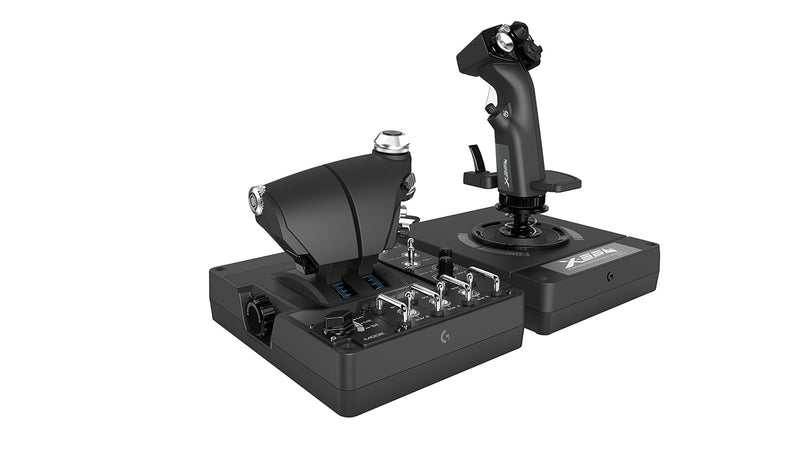
Logitech 945-000058 G X56 HOTAS Flight Simulator Controller
USB 2.0
189+ programmable controls and 16-bit hall-effect sensors give flight sim pilots the input precision and customization depth that combat and space simulation demands.
$229.99*$249.99Save 8%
View on Amazon
✓ In Stock on Amazon.com
*Price sourced from Amazon.com. Last updated:Aug 29, 2026.Price and availability are subject to change — details.
Affiliate Disclosure: As an Amazon Associate, Studio Supplies earns from qualifying purchases made through links on this page, at no additional cost to you. This helps support our editorial team.
Notice a mistake? Let Us Know
Overview
Key Features
Military-grade Space and Flight Sim Precision. Customizable options including all the control surface options required to achieve the exact level of performance that aspiring combat pilots demand.System Requirements : Windows 11,10,8.1,7, 2x USB 2.0 Port
New Mini Analog Stick Control Surfaces: Control pitch, roll, yaw, backwards, forwards, up, down, left and right as well as gimballed weapons that are controlled separately from the space craft
RGB Backlighting: Many PC peripherals now feature RGB backlighting and the X-56 is no exception. Use the software to set the color of the lighting to match the rest of your gaming rig
Ideal for VR: The X-56 places controls perfectly under your fingers where subtle distinctions in button feel and shape help you navigate the control set with ease
Fully Featured HOTAS: Accurate 16-bit aileron and elevator axis with hall-effect sensors. Adjustable Stick Force via Advanced 4-Spring System. Twin Throttles with Friction Adjuster and Throttle Lock
Cable Length: 2 m
System Requirements : Windows 11,10,8.1,7, 2x USB 2.0 Port
Specifications
Brand
Logitech G
Model
945-000058 (X56)
Type
HOTAS (Hands On Throttle-And-Stick)
Programmable Controls
189+
Primary Axis Resolution
16-bit (hall-effect sensors)
Stick Force Adjustment
Adjustable via 4-Spring System
Throttle Configuration
Twin Throttles with Friction Adjuster and Throttle Lock
Additional Axes
Mini analog stick (pitch, roll, yaw, translation, gimballed weapons)
Lighting
RGB Backlighting
Connectivity
2x USB 2.0
Cable Length
2 m
System Requirements
Windows 11, 10, 8.1, 7
Frequently Asked Questions
What does "16-bit" axis resolution mean in practice for flight simulation?
16-bit resolution on the aileron and elevator axes produces 65,536 discrete positions across the full range of stick deflection. In practice, this means extremely fine analog graduations — small control inputs register as proportionally small in-sim movements rather than jumping between coarse increments. For precise flight control tasks like instrument approaches, close-formation flying, or dogfight maneuvering, this granularity eliminates the stepped, imprecise feel common in lower-resolution controllers.
How does the adjustable 4-spring stick force system affect the X56's feel?
The 4-spring system lets you configure the physical resistance of the joystick across multiple tension levels by swapping or adding spring elements. Higher tension creates a center-seeking stick that resists deflection — better for aircraft that require deliberate, weighty inputs. Lower tension gives a lighter, more responsive feel suited to space sims or modern fly-by-wire aircraft profiles. This is a physical adjustment, not a software setting.
Does the X56 require a USB hub, or does it connect directly to the PC?
The throttle and joystick are independent USB devices, each requiring its own USB 2.0 port — that is two USB ports minimum. The 2-meter cable length on each unit should reach most desktop configurations without extension, but confirm your system has two free USB-A ports before purchase.
How many programmable inputs does the X56 actually provide, and how are they distributed?
The X56 offers over 189 total programmable controls distributed across both the joystick and throttle units. These include physical buttons, multi-position switches, rotary knobs, mini analog sticks, and hat switches. The throttle unit carries the majority of secondary controls, with the mini analog stick on the throttle providing additional axis inputs for gimballed weapons or independent spacecraft control.
Is the X56 compatible with all major flight sim and space sim titles?
The X56 works with titles that support generic HID joystick input, which includes most major simulation titles. For games that do not auto-detect the controller, the Logitech G software is required for profile mapping and RGB configuration. Windows 7 through 11 are supported; no Linux or macOS driver support is specified.
Related Products


