

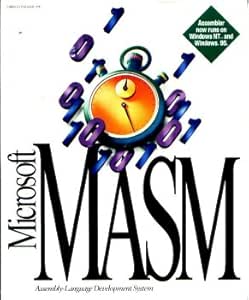
Microsoft
Microsoft MASM 6.11 Assembly Language Development System
Unleash the Power of Assembly Language The Microsoft MASM 6.11 assembly-language development system is the ideal tool for creating applications that require maximum speed and performance. Compatible with various Windows and MS-DOS operating systems, it provides comprehensive documentation and su...
Check availability
Affiliate Disclosure: As an Amazon Associate, Studio Supplies earns from qualifying purchases made through links on this page, at no additional cost to you. This helps support our editorial team.
Notice a mistake? Let Us Know
Overview
Unleash the Power of Assembly Language
The Microsoft MASM 6.11 assembly-language development system is the ideal tool for creating applications that require maximum speed and performance. Compatible with various Windows and MS-DOS operating systems, it provides comprehensive documentation and support for the Pentium processor.
- Operating Systems: Windows 95, Windows NT, Windows 3.1, MS-DOS
- Includes: Five 3.5" Floppy Disks
- Processor Requirement: 386 processor or higher (DX for Win 95/NT)
- Memory Requirement: 4MB memory (8MB for Win95/NT)
- Hard Disk Space: 10MB
- Floppy Drive: 3.5" floppy drive
Key Features
-The software contains five 3.5" Floppy disks
-Runs in Win 95, Win NT, and Win 3.1 & MS-Dos
-Requires 386 processor or higher (DX for Win 95/NT), 4mb memory (8 for Win95/NT), 10mb of hard disk space, and a 3.5" floppy drive.
-To target Windows 3.1, Windows 95, or Windows NT, you need one of the following (purchased separately):-Microsoft Visual C++ Developement System 2.0 or later-Microsoft Developer Network Level II
Specifications
Media Type
3.5" Floppy disks
Number of Disks
5
Operating System Compatibility
Win 95, Win NT, Win 3.1, MS-Dos
Minimum Processor
386 or higher (DX for Win 95/NT)
Minimum Memory
4mb (8mb for Win 95/NT)
Minimum Hard Disk Space
10mb
Required Drive
3.5" floppy drive
Frequently Asked Questions
What operating systems is Microsoft MASM 6.11 compatible with?
Microsoft MASM 6.11 is compatible with older operating systems including Windows 95, Windows NT, Windows 3.1, and MS-Dos, making it suitable for legacy development environments.
How is the software distributed and installed?
The software is distributed on five 3.5" floppy disks, and requires a functional 3.5" floppy drive for installation.
What are the minimum system requirements for running MASM 6.11?
To run MASM 6.11, you need a 386 processor or higher (DX for Win 95/NT), 4MB of memory (8MB for Win95/NT), and 10MB of hard disk space.
Do I need any other software to develop for Windows with MASM 6.11?
Yes, to target Windows 3.1, Windows 95, or Windows NT, you will need to purchase separately either Microsoft Visual C++ Development System 2.0 or later, or Microsoft Developer Network Level II.
Is this software suitable for modern assembly language programming?
Microsoft MASM 6.11 is designed for much older computing environments and may not be suitable for modern assembly language programming targeting contemporary operating systems and hardware architectures.
Related Products


