



Monoprice
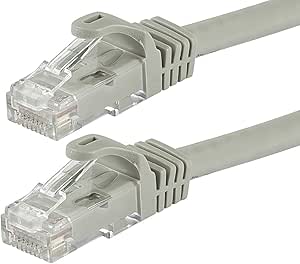
Monoprice 111208 0.5ft Cat5e Gray Ethernet Cable
★★★★★
A half-foot of snagless Cat5e that solves the short-run patch problem cleanly — no excess cable to coil, no signal compromise.
$6.86*
Check availability
*Price sourced from Amazon.com. Last updated:Jul 15, 2026.Price and availability are subject to change.
Affiliate Disclosure: Studio Supplies may earn a commission from qualifying purchases made through links on this page, at no additional cost to you. This helps support our editorial team.
Notice a mistake? Let Us Know
Overview
Specifications
Cable Type
Cat5e Ethernet
Length
0.5ft
Color
Gray
Pros & Cons
👍 Pros
- The 0.5-foot length eliminates cable slack precisely where longer standard patch cables create unnecessary bundle clutter in tight rack or patch panel environments.
- Pure bare copper conductors ensure consistent electrical performance without the resistance or corrosion risk of copper-clad aluminum alternatives.
- Snagless RJ45 boots protect the locking tab through repeated insertions and extractions — a measurable durability advantage over unprotected connectors.
- 350MHz bandwidth rating means this cable won't become the performance ceiling in any current gigabit deployment.
- Stranded construction handles repeated flex and repositioning without internal conductor fatigue, making it reliable in active patch environments.
👎 Cons
- At 0.5 feet, there is essentially no flexibility in routing — if port positions shift or you need to re-patch to a non-adjacent port, this cable won't reach.
- UTP construction offers no electromagnetic shielding, which is a limitation specifically in high-interference environments (though irrelevant for standard deployments).
- Cat5e tops out at Gigabit speeds — if your infrastructure is moving toward 2.5GbE or 10GbE, this cable is not rated for those standards and would need to be replaced with Cat6 or Cat6A.
- Gray color coding is neutral but may complicate color-coded patching schemes if your rack uses color to denote VLANs, purposes, or zones.
Frequently Asked Questions
Will this cable support Gigabit Ethernet speeds?
Yes. Cat5e is rated to handle Gigabit Ethernet (1000BASE-T) at the 0.5-foot length. The 350MHz bandwidth rating comfortably exceeds what Gigabit requires — the bottleneck in your network won't be this cable.
Why use stranded wire instead of solid conductor for a patch cable?
Stranded wire is the correct choice for short-run patch and equipment connections. It flexes repeatedly without the internal conductor fatigue that eventually cracks solid wire — important when this cable will be moved, re-routed, or plugged and unplugged regularly.
What does the snagless boot on the RJ45 connector actually prevent?
The protective molded boot shields the RJ45 locking tab from catching on other cables or surfaces during routing and removal. Without it, the tab breaks off, leaving a connector that won't lock into place — a small failure that requires replacing the cable entirely.
Is 0.5 feet long enough for most patch panel or rack connections?
For same-unit or adjacent-port connections — switch-to-patch-panel, device-to-adjacent-port — yes. It's specifically designed for the scenario where a standard 1-foot cable creates unnecessary slack. If there's any routing around corners or port spacing uncertainty, measure first.
Is this cable UTP or shielded?
UTP (Unshielded Twisted Pair). For standard office, home network, and rack patching environments, UTP at this length performs without issue. Shielded (STP/FTP) is only necessary in high-interference industrial or RF-dense environments.
Related Products


