



Monoprice
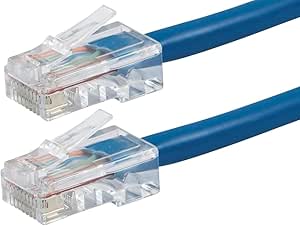
Monoprice 114263 Zeroboot Cat5e Ethernet Cable 1ft
★★★★★
Pure copper conductors and a ZEROboot clip-free design make this 1ft Cat5e patch cable the clean, low-profile link dense patch bays and rack enclosures demand.
$5.49*
View on Amazon
✓ In Stock on Amazon.com
*Price sourced from Amazon.com. Last updated:Jul 15, 2026.Price and availability are subject to change.
Affiliate Disclosure: Studio Supplies may earn a commission from qualifying purchases made through links on this page, at no additional cost to you. This helps support our editorial team.
Notice a mistake? Let Us Know
Overview
Key Features
Unshielded Twisted Pair (UTP) Category 5e Ethernet cable
24AWG stranded, pure bare copper conductors
350MHz bandwidth
No protective plug retaining clip covers
50m gold plated contacts
Made of 100% pure bare copper wire
Fully compliant with UL Code 444
Compliant with National Electrical Code TIA-568-C.2 fire and safety standards
Specifications
Cable Type
Cat5e Ethernet Patch Cable
Connector Type
RJ45
Design
ZEROboot (no plug retaining clip)
Wire Type
Stranded, Pure Bare Copper
AWG
24AWG
Bandwidth
350MHz
Shielding
UTP (Unshielded Twisted Pair)
Length
1 ft
Color
Blue
Contact Plating
50μ gold-plated
Compliance
UL Code 444, NEC TIA-568-C.2
Model
114263
Pros & Cons
👍 Pros
- 350MHz bandwidth provides headroom above the Cat5e baseline, maintaining signal integrity under Gigabit Ethernet loads
- 100% pure bare copper conductors meet TIA-568 compliance and deliver lower resistance than CCA alternatives
- ZEROboot design removes connector bulk that impedes cable density in patch panels and 1U rack environments
- 24AWG stranded construction withstands repeated flexing without conductor fatigue, extending usable life in active cable plants
- 50-micron gold-plated contacts resist oxidation at the connection point, maintaining low contact resistance over time
- UL Code 444 and TIA-568-C.2 compliance satisfies commercial installation and data center certification requirements
👎 Cons
- At 1ft, this cable has a single intended use case — patch panel to switch or back-of-rack connections — and offers no versatility for longer runs
- UTP (unshielded) construction makes this cable susceptible to electromagnetic interference in high-EMI environments such as industrial floors or dense power cable runs; shielded Cat5e or Cat6 would be required in those scenarios
- Cat5e is limited to 1Gbps — any infrastructure planning for 10GbE or higher throughput will require Cat6A or Cat8
- The absence of a boot clip means the latch is exposed; in environments where cables are pulled frequently without care, latch breakage risk is slightly higher than with booted connectors
Frequently Asked Questions
What does "ZEROboot" mean on this cable, and why does it matter?
ZEROboot means the RJ45 connector has no protective plastic boot covering the latch clip. In high-density patch panels and 1U rack switches where cables are routed tightly together, standard boots add bulk and make adjacent cables harder to seat or remove. The bootless design is a deliberate choice for cable management efficiency in structured cabling environments.
Does 350MHz bandwidth mean this cable supports Gigabit Ethernet?
Yes — Cat5e at 350MHz exceeds the 100MHz minimum required for 1000BASE-T (Gigabit Ethernet). The 350MHz rating indicates this cable has margin beyond the Cat5e spec floor, reducing crosstalk and improving signal integrity at Gigabit speeds over its 1ft length.
Why does conductor material matter, and what is "pure bare copper" vs. CCA?
Pure bare copper (PBC) has lower resistance and better signal conductivity than copper-clad aluminum (CCA), which is used in cheaper cables to cut material costs. CCA cables can run hotter, have higher resistance, and are not compliant with TIA-568 standards. This cable's 100% pure bare copper construction ensures full spec compliance and reliable signal at rated bandwidth.
Is 24AWG stranded wire the right choice for a 1ft patch cable versus solid core?
Stranded wire is the correct choice for patch cables regardless of length. Stranded conductors are more flexible and resist metal fatigue from repeated bending and repositioning — a meaningful advantage in any environment where cables are occasionally reseated. Solid-core cable is designed for permanent in-wall or structured cabling runs, not patch applications.
Is this cable compliant with UL and NEC fire safety standards?
Yes — the cable carries UL Code 444 listing and is compliant with National Electrical Code TIA-568-C.2 fire and safety standards, making it suitable for commercial and data center installations where fire-rated cable specifications are required.
Related Products


