



Monoprice
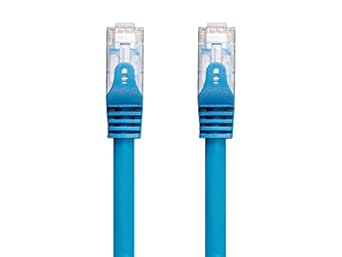
Monoprice 116055 Cat6 Plenum Ethernet Cable 50ft - Blue
★★★★★
CMP-rated Cat6 UTP with 550MHz bandwidth and pure bare copper conductors built to meet plenum fire codes without compromising on signal integrity.
$35.23*$41.76Save 15%
Check availability
*Price sourced from Amazon.com. Last updated:Jul 15, 2026.Price and availability are subject to change.
Affiliate Disclosure: Studio Supplies may earn a commission from qualifying purchases made through links on this page, at no additional cost to you. This helps support our editorial team.
Notice a mistake? Let Us Know
Overview
Key Features
Unshielded Twisted Pair (UTP) Category 6 Ethernet cable
23AWG stranded, pure bare copper conductors | 550MHz bandwidth
Snagless cable boot protects the plug retaining clip
Wired to the TIA/EIA-568-B standard | 50µm gold plated contacts
CMP (Plenum) fire safety rating
Specifications
Cable Type
Cat6 Plenum Ethernet
Length
50 feet
Color
Blue
Conductor Gauge
23AWG
Conductor Material
Pure bare copper stranded
Bandwidth
550MHz
Plug Contacts
50µm gold plated
Wiring Standard
TIA/EIA-568-B
Fire Safety Rating
CMP (Plenum)
Pros & Cons
👍 Pros
- CMP plenum jacket rating meets NEC fire code requirements for air-handling space installations where standard PVC-jacketed cables are prohibited.
- 550MHz bandwidth provides substantial headroom above Gigabit Ethernet's 100MHz requirement, ensuring signal integrity over the full 50-foot run.
- Pure bare copper conductors (not copper-clad aluminum) deliver lower resistance and better high-frequency performance than CCA alternatives.
- 23AWG stranded construction gives the cable flexibility for patch and equipment bay use without conductor fatigue from repeated bending.
- 50µm gold-plated RJ45 contacts resist oxidation and maintain reliable electrical contact over thousands of connect/disconnect cycles.
👎 Cons
- At 50 feet, this is a fixed-length cable — installations requiring shorter or longer runs need a different SKU, as there's no field-termination flexibility.
- CMP plenum jacket material is stiffer and less pliable than standard PVC-jacketed Cat6, making tight bends and cable management in confined spaces more challenging.
- Stranded conductor construction, while ideal for patch use, has marginally higher attenuation per meter than solid-core Cat6 — not operationally relevant at 50 feet, but worth noting for back-to-back patch applications approaching the 100-meter channel limit.
- No shielding (UTP) means this cable is unsuitable for high-EMI environments like those near high-voltage equipment or industrial machinery.
Frequently Asked Questions
What does the CMP (Plenum) fire rating mean and when is it required?
CMP stands for Communications Multipurpose Plenum — it's a UL fire-safety jacket rating for cables routed through air-handling spaces (plenum spaces) in buildings, such as above drop ceilings or below raised floors where air circulates for HVAC. Building codes in the US (NEC Article 800) typically mandate CMP-rated cable in these spaces because standard PVC jackets release toxic smoke when burning. If your run stays within a single room or inside walls, CMR (riser) or CM rating may suffice — but for any plenum deployment, CMP is non-negotiable.
Does the 550MHz bandwidth rating matter for a standard Gigabit Ethernet installation?
Gigabit Ethernet (1000BASE-T) requires only 100MHz of bandwidth per the IEEE 802.3ab specification. The 550MHz rating on this cable represents Category 6's headroom above that baseline, providing margin against crosstalk and attenuation over the full 50-foot run. At 50 feet you're well within the 100-meter Cat6 limit, so the 550MHz spec is more relevant as a signal quality indicator than a strict operational requirement at this length.
Is 23AWG stranded or solid core conductor construction used here?
This cable uses 23AWG stranded conductors. Stranded construction is more flexible and better suited for patch cable use — repeated bending and routing won't fatigue the conductors the way solid-core cable would. Solid-core Cat6 is typically used for permanent in-wall runs; stranded is the correct choice for patch and equipment cables.
What wiring standard is this cable terminated to?
The cable is wired to TIA/EIA-568-B, which is the dominant commercial and residential standard in North America. If your patch panels and wall plates are also 568-B (the standard default), the cable will be pin-compatible out of the box. Mixing 568-A and 568-B on opposite ends creates a crossover cable — not an issue if both ends of your run use 568-B.
Will the snagless boot prevent RJ45 connector damage in tight cable management situations?
Yes — the snagless boot is specifically designed to protect the plastic locking tab on the RJ45 plug from breaking when the cable is pulled at an angle or routed through tight runs. Broken locking tabs are the most common cause of intermittent connections in patched environments; the boot eliminates that failure mode for the lifetime of the cable.
Related Products


