



Monoprice
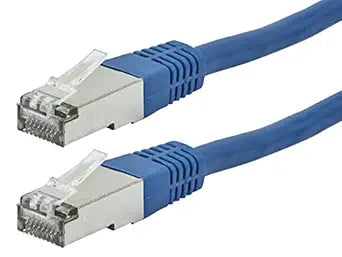
Monoprice Cat6A S/FTP Ethernet Cable 50ft 10G Zeroboot
★★★★★
S/FTP shielding and 10G-rated bandwidth eliminate crosstalk as the bottleneck in your network runs up to 50 feet.
$28.22*$38.24Save 26%
View on Amazon
✓ In Stock on Amazon.com
*Price sourced from Amazon.com. Last updated:Jul 15, 2026.Price and availability are subject to change.
Affiliate Disclosure: Studio Supplies may earn a commission from qualifying purchases made through links on this page, at no additional cost to you. This helps support our editorial team.
Notice a mistake? Let Us Know
Overview
Key Features
Shielded Twisted Pair (STP) Category 6A Ethernet cable
26AWG stranded, pure bare copper conductors
500MHz bandwidth | No protective plug retaining clip covers
50µm gold plated contacts
Specifications
Brand
Monoprice
Cable Category
Cat6A
Shielding
S/FTP (Shielded Foiled Twisted Pair)
Conductor
26AWG Stranded Pure Bare Copper
Bandwidth
500MHz
Data Rate
10 Gbps
Length
50 Feet
Contacts
50µm Gold Plated
Connector Type
Zeroboot (no retaining clip cover)
Color
Blue
Pros & Cons
👍 Pros
- S/FTP double shielding provides measurably superior EMI rejection compared to UTP alternatives, critical for runs near power cables or in data center environments.
- 10G-rated with 500MHz bandwidth headroom ensures this cable will not become a bottleneck as you upgrade switches and NICs to faster standards.
- 26AWG stranded pure bare copper conductors deliver reliable signal quality and flexibility for routing through tight spaces and cable management systems.
- 50µm gold-plated contacts resist corrosion and maintain consistent contact resistance over thousands of insertion cycles.
- Zeroboot connector profile fits dense patch panels where booted connectors would be too bulky to insert or remove cleanly.
👎 Cons
- S/FTP construction requires properly grounded endpoints — connecting to ungrounded UTP patch panels or switches negates the shielding benefit and can worsen interference.
- The zeroboot design lacks a snag-protecting boot, making the RJ45 clip more vulnerable to breaking if the cable is pulled or snagged during handling.
- 26AWG stranded conductors have higher resistance per foot than 23AWG solid conductors, which can matter at maximum Cat6A run lengths approaching 100 meters, though at 50 feet this is negligible.
- Shielded cables are stiffer and heavier than equivalent UTP cables, making routing and cable management in tight spaces more labor-intensive.
Frequently Asked Questions
What is the difference between S/FTP and standard UTP Cat6A cables?
S/FTP (Shielded Foiled Twisted Pair) wraps each twisted pair in foil and adds an overall braided shield around all pairs. Standard UTP has no shielding. The practical result is significantly better rejection of electromagnetic interference (EMI) and alien crosstalk, which matters in environments with dense cable bundles, nearby power lines, or electrical equipment.
Will this cable support 10 Gigabit Ethernet at its full 50-foot length?
Yes. Cat6A is rated for 10GBASE-T up to 100 meters (328 feet). At 50 feet, you are well within spec, and the S/FTP shielding ensures signal integrity is maintained even in electrically noisy environments.
Does this cable require grounded equipment to benefit from the shielding?
For the shielding to function as designed, both endpoints should have grounded metal RJ45 jacks or shielded patch panels. Without proper grounding, the shield can act as an antenna and potentially increase interference rather than reduce it.
What does "Zeroboot" mean on this cable?
Zeroboot refers to the connector design — there is no protective plastic boot or retaining clip cover over the RJ45 plug. This results in a slimmer connector profile that fits into tight patch panel spaces more easily, but provides less snag protection than booted connectors.
Are the conductors solid or stranded, and why does it matter?
This cable uses 26AWG stranded copper conductors. Stranded wire is more flexible and resistant to repeated bending, making it ideal for patch cable use between devices and patch panels. Solid conductors would be more appropriate for permanent in-wall installations.
Related Products


