



MSI
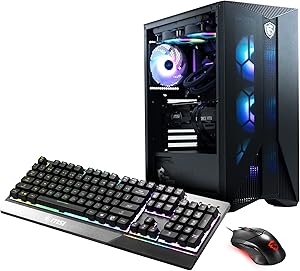
MSI AeRS13NUG427 Aegis RS i7-13700KF RTX 4080 2TB SSD Liquid Cooling
★★★★★
i7-13700KF2TB SSD
The MSI Aegis RS pairs an i7-13700KF with an RTX 4080 and 240mm liquid cooling to deliver a pre-built gaming desktop that sustains peak clock speeds under extended load without thermal throttling.
View price on Amazon
Affiliate Disclosure: Studio Supplies may earn a commission from qualifying purchases made through links on this page, at no additional cost to you. This helps support our editorial team.
Notice a mistake? Let Us Know
Overview
Key Features
Supercharged Processor: The 13th Gen. Intel Core i7 processor delivers the ultimate immersive experience in gameplay, multi-task work and productivity.
Power Your Passion: Get faster performance with the Aegis RS 13NUG-427US, equipped with 16GB (2x8GB) DDR5 RAM and a 2TB M.2 NVMe.
Beyond Fast: The NVIDIA GeForce RTX 4080 GPU powered by the Ada architecture unleashes the full glory of ray tracing, which simulates how light behaves in the real world.
Liquid Cooled: The desktop features a 240mm liquid cooling system that keeps the temperature of the CPU and GPU in check even during intense gaming sessions.
Keyboard and Mouse Included: The included MSI gaming mouse and keyboard bundle lets you get into the action from the start. The keyboard is built with mechanical-like switches for a crisp typing experience.
Specifications
Brand
MSI
Model
AeRS13NUG427 (Aegis RS 13NUG-427US)
Processor
Intel Core i7-13700KF (13th Gen)
GPU
NVIDIA GeForce RTX 4080 (Ada Lovelace)
RAM
16GB DDR5 (2×8GB dual-channel)
Storage
2TB M.2 NVMe SSD
Cooling
240mm Liquid Cooling (CPU + GPU)
Included Peripherals
MSI Gaming Mouse and Keyboard
Keyboard Switch Type
Mechanical-like switches
Pros & Cons
👍 Pros
- RTX 4080 Ada Lovelace GPU delivers hardware ray tracing and DLSS 3 Frame Generation support at 1440p and 4K with headroom to spare
- 240mm liquid cooling system manages the combined thermal load of an unlocked i7-13700KF and RTX 4080 under sustained gaming sessions
- 2TB M.2 NVMe SSD provides fast sequential read/write speeds and sufficient capacity for a substantial game library without immediate expansion
- DDR5 dual-channel memory delivers higher memory bandwidth than DDR4 platforms, benefiting CPU-intensive simulation and open-world titles
- Pre-built configuration eliminates component compatibility risk — all thermals, power delivery, and driver stacks are factory validated
👎 Cons
- 16GB DDR5 (2×8GB) is below the 32GB threshold that power users and content creators consider the modern baseline for longevity
- Included keyboard and mouse use mechanical-like switches, not full mechanical — competitive players will replace both before serious use
- Pre-built chassis limits GPU upgrade path; a future GPU tier-up may require verifying PCIe slot, PSU wattage, and physical clearance
- i7-13700KF is a 13th-gen Intel part — buyers planning to hold this system five or more years should note it sits one generation behind current-gen platforms
- Liquid cooling loop introduces a failure mode (pump, tubing) not present in all-air configurations, though MSI validates thermals before shipping
Frequently Asked Questions
What does the 240mm liquid cooling system actually cool — just the CPU, or the GPU as well?
The listing specifies that the 240mm liquid cooling system manages both CPU and GPU thermals. This is a meaningful distinction from entry-level desktops that air-cool both: keeping the i7-13700KF's power-hungry cores and the RTX 4080's 320W TDP under control simultaneously requires dedicated liquid loop capacity.
How much headroom does the 16GB DDR5 RAM leave for future upgrades?
16GB DDR5 in a dual-channel 2×8GB configuration is functional for current gaming but represents the minimum for future-proofing. The platform supports higher capacity DDR5 modules — upgrading to 32GB is the most impactful near-term expansion, particularly for titles that pagefile under 16GB at high resolutions.
What is the storage configuration, and can a second drive be added?
The Aegis RS ships with a 2TB M.2 NVMe SSD as the primary drive. MSI desktop chassis typically include additional M.2 slots and SATA bays — verify with MSI's spec sheet for this SKU to confirm available expansion slots before purchasing additional storage.
Does the RTX 4080 in this system support DLSS 3 and Frame Generation?
Yes. The RTX 4080 is an Ada Lovelace architecture GPU and fully supports DLSS 3, Frame Generation, and hardware ray tracing. These features are enabled per-game via supported titles and the NVIDIA driver — no additional configuration is required at the system level.
Is the included keyboard and mouse suitable for serious gaming, or should they be replaced?
The included MSI gaming mouse and keyboard use mechanical-like (not full mechanical) switches and represent entry-level peripherals. They are functional for initial use, but competitive players will likely upgrade both — treat them as temporary inclusions rather than primary peripherals.
Related Products


