



MSI
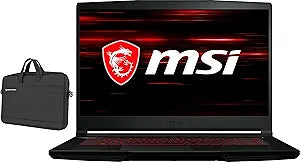
MSI GF63818-4542-230488 Thin Gaming Laptop i5 GTX 1650 16GB
1920x108015.6 inchi5-10500H16GB DDR4120W
A hexa-core i5-10500H and GTX 1650 Max-Q in a 0.85-inch chassis deliver 60fps 1080p gaming at a power envelope that fits a slim backpack.
Check availability
Affiliate Disclosure: As an Amazon Associate, Studio Supplies earns from qualifying purchases made through links on this page, at no additional cost to you. This helps support our editorial team.
Notice a mistake? Let Us Know
Overview
Key Features
【Upgraded】 Seal is opened for Hardware/Software upgrade only to enhance performance. 15.6" Full HD (1920x1080) 60Hz IPS Display; Wi-Fi 6 AX201 Wifi, Bluetooth 5.2, Ethernet LAN (RJ-45), 720p HD Webcam, Red Backlit Keyboard, .
【Powerful Performance with Intel Core i5-10500H Hexa Core】 10th Gen Intel Core i5-10500H 2.50GHz Processor (upto 4.5 GHz, 12MB Cache, 6-Cores, 12-Threads, ) ; NVIDIA GTX 1650 [Max-Q] 4GB GDDR6 Dedicated Graphics, .
【High Speed and Multitasking】 16GB DDR4 SODIMM; 120W Power Supply, 3-Cell 52.5 Whr Battery; Black Color, .
256GB SATA SSD; 3 USB 3.2 Gen1, 1 HDMI, USB 3.2 Type-C Gen1, No Optical Drive, 1 x Microphone Jack, 1 x Headphone Jack., Windows 11 Pro-64., 1 Year Manufacturer warranty from GreatPriceTech (Professionally upgraded by GreatPriceTech)
Includes Workstation Topload Bag(upto 15.6 inch Laptop;Briefcases type bag;Polyester Material;Black Color)
Specifications
Processor
Intel Core i5-10500H, 6-Core/12-Thread, 2.50GHz base / 4.5GHz boost, 12MB cache
Memory
16GB DDR4 SO-DIMM
Storage
256GB SATA SSD (M.2)
Graphics
NVIDIA GTX 1650 Max-Q, 4GB GDDR6
Display
15.6-inch, 1920×1080 (Full HD), 60Hz, IPS
Operating System
Windows 11 Pro 64-bit
Wireless
Wi-Fi 6 (Intel AX201), Bluetooth 5.2, Ethernet LAN (RJ-45)
Webcam
720p HD
Keyboard
Red Backlit
Ports
3x USB 3.2 Gen1, 1x HDMI, 1x USB 3.2 Type-C Gen1, 1x Microphone Jack, 1x Headphone Jack
Battery
3-Cell, 52.5Whr
Power Supply
120W
Dimensions
14 x 10 x 0.85 inches
Weight
4.1 lbs
Color
Black
Included Accessory
Workstation Topload Bag (fits up to 15.6-inch laptops)
Warranty
1 Year (GreatPriceTech)
Frequently Asked Questions
What is the performance difference between the GTX 1650 Max-Q in this laptop and a standard GTX 1650?
The GTX 1650 Max-Q in this GF63 is power-limited to approximately 35–50W versus the standard GTX 1650's 80W TDP. That translates to roughly 10–15% lower frame rates compared to a desktop GTX 1650 at the same settings. For 1080p medium-to-high settings in esports titles (Valorant, CS2, Apex Legends), the card sustains 60+ fps consistently; AAA titles at high settings may require tuning down to medium.
The SSD is listed as 256GB SATA — is this an M.2 SATA or a 2.5-inch drive, and can it be upgraded?
MSI GF63 models use an M.2 2280 slot for the SSD. The SATA interface (rather than NVMe) is the key limitation here — sequential reads top out around 550 MB/s compared to 3,000+ MB/s on an NVMe drive. The slot accepts standard M.2 SATA or NVMe drives, so upgrading to a larger NVMe unit is a cost-effective performance improvement.
Does the 16GB DDR4 RAM in this laptop run in dual-channel, and does that affect GTX 1650 Max-Q performance?
Dual-channel memory configuration provides the integrated memory controller with double the bandwidth, and while the GTX 1650 Max-Q has its own dedicated 4GB GDDR6, the CPU's memory bus still affects overall system responsiveness. Verify the two SO-DIMM slots are each populated with 8GB for dual-channel — if 16GB is on one stick, a second matching module provides measurable throughput gains.
What is the rated battery life on the 52.5Whr cell, and does the GTX 1650 Max-Q drain it quickly under gaming load?
The 52.5Whr battery is modest for a gaming laptop. Under gaming load with the GTX 1650 Max-Q active, expect 1.5–2.5 hours. For light workloads (browsing, documents) with the GPU in low-power state, 4–6 hours is achievable. The Max-Q power ceiling helps battery longevity compared to full-TDP gaming GPUs.
Does the 60Hz IPS display create a bottleneck for esports titles that the GTX 1650 can push above 60fps?
Yes. The panel is capped at 60Hz, so frame rates above 60fps provide no visual benefit and can introduce screen tearing without V-Sync enabled. For esports titles where the GTX 1650 Max-Q can sustain 80–120fps, enabling V-Sync or an FPS cap at 60 is the recommended configuration until a higher-refresh panel is accessible.
Related Products


