



MSI
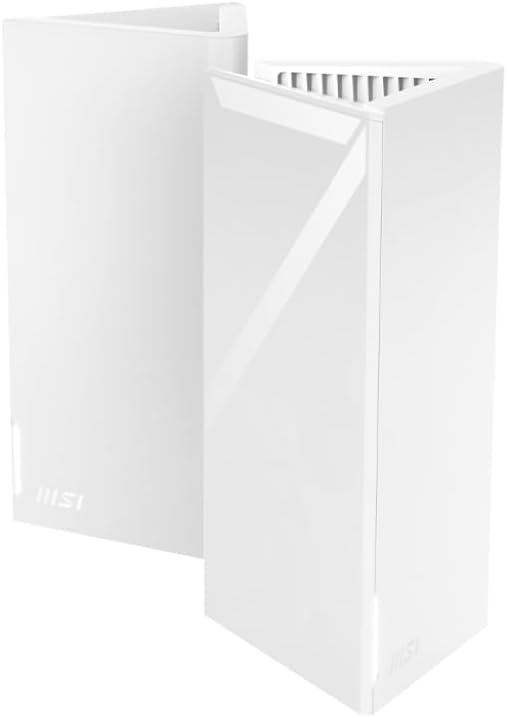
MSI Roamii BE Lite Mesh System- 2 Pack WiFi 7 BE 5000
4KWiFi 7
WiFi 7 MLO and 2.5Gbps wired backhaul bring sub-millisecond latency and 5,800 sq ft of seamless mesh coverage to demanding smart homes.
$176.18*$179.99Save 2%
View on Amazon
✓ In Stock on Amazon.com
*Price sourced from Amazon.com. Last updated:Oct 21, 2026.Price and availability are subject to change — details.
Affiliate Disclosure: As an Amazon Associate, Studio Supplies earns from qualifying purchases made through links on this page, at no additional cost to you. This helps support our editorial team.
Notice a mistake? Let Us Know
Overview
Key Features
WiFi 7: The latest WiFi standard featuring MLO, 4K QAM and MU MIMO
Roamii whole home WiFi: Build a unified home network with up to 5,800 sq ft of coverage, supporting 120+ devices
MLO: provides multiple band streams to a single device, boosting throughput and reducing latency for a faster and more reliable connection.
FortiSecu: 24/7 security protection, parental controls and separated networks
Wall mounting kit included: Place Roamii on desktop or mount it on wall as you desire
Support iPhone 16 Pro and iPhone 16 Wi-Fi 7 standard
Specifications
WiFi Standard
WiFi 7
Key WiFi 7 Features
MLO, 4K QAM, MU MIMO
System Coverage
Up to 5,800 sq ft
Device Support
120+ devices
MLO Benefit
Boosts throughput, reduces latency
Security Features
24/7 FortiSecu protection, parental controls, separated networks
Mounting Options
Desktop or wall mount (kit included)
iPhone Compatibility
Supports iPhone 16 Pro and iPhone 16 Wi-Fi 7 standard
Pack Size
2 Pack
Frequently Asked Questions
What does WiFi 7 actually change over WiFi 6E in practical terms, and will my current devices benefit?
WiFi 7 introduces Multi-Link Operation (MLO), 4K-QAM modulation, and wider 320MHz channels — the Roamii BE Lite implements MLO and 4K-QAM on its dual-band radio. For devices that support WiFi 7 (like the iPhone 16 Pro), MLO means the client simultaneously aggregates bandwidth across bands, reducing effective latency by 20–50% versus single-band connections. Devices that don't support WiFi 7 will still connect at their native WiFi 5 or 6 speeds — you won't see degradation, just no gain from the new features.
Does the 2-pack provide 5,800 sq ft total, or is that per node?
5,800 sq ft is the rated total coverage for the 2-node system working together. Each node covers roughly half that footprint, and they form a unified network with seamless roaming between them — your devices hand off automatically without reconnecting.
What does MLO solve that regular band steering didn't?
Band steering assigns a device to the best available band at connection time but uses only one band at once. MLO maintains simultaneous connections on multiple bands for a single device, so throughput aggregates and if one band experiences interference, the other sustains the session without a dropout. The result is measurably lower jitter during sustained transfers — important for real-time applications like gaming and video calls.
What is FortiSecu and does it require a subscription?
FortiSecu is MSI's network security layer powered by Trend Micro's engine. It provides real-time threat protection, parental controls, and network segmentation (guest and IoT separation). Check current MSI documentation for subscription terms, as advanced security features in this tier of product often transition to subscription after an initial included period.
Can I use the 2.5Gbps port for wired backhaul between nodes, or is it only for WAN/LAN devices?
The 2.5Gbps Ethernet port can be used for wired backhaul between mesh nodes, which eliminates the wireless backhaul overhead and significantly improves inter-node throughput — this is the recommended configuration if your home has Ethernet runs between node locations.
Related Products


