



MSI
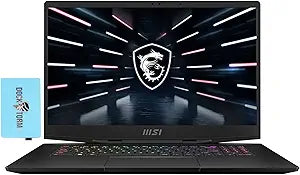
MSI Stealth7712084-3557-264769 GS77 Gaming Laptop i9 RTX 3070 Ti 4TB SSD
★★★★★
QHD1080p2560x1440i9-12900H64GB DDR5
A 14-core i9 and RTX 3070 Ti in a 17.3" chassis with 4TB of RAID 0 NVMe storage and a 240Hz QHD display — built to remove every bottleneck simultaneously.
View price on Amazon
Affiliate Disclosure: Studio Supplies may earn a commission from qualifying purchases made through links on this page, at no additional cost to you. This helps support our editorial team.
Notice a mistake? Let Us Know
Overview
Key Features
【Upgraded】 Seal is opened for Hardware/Software upgrade only to enhance performance. 17.3" 2K Quad HD (2560x1440) 240Hz Refresh Rate QHD Display; Wi-Fi 6E AX1675, Bluetooth 5.2, Ethernet LAN (RJ-45), 1080p Full HD Webcam, Fingerprint Security System, RGB Backlit, .
【Powerful Performance with Intel Core i9-12900H 】 12th Gen Intel Core i9-12900H 2.90GHz Processor (upto 5 GHz, 24MB Cache, 14-Cores, 20-Threads, 6 Performance-cores) ; GeForce RTX 3070 Ti 8GB GDDR6 Dedicated Graphics, VR Ready .
【High Speed and Multitasking】 64GB DDR5 SODIMM; 240W Power Supply, 4-Cell 99 WHr Battery; Core Black Color, .
【Enormous Storage】 2x2TB PCIe NVMe SSD RAID 0 (4TB available storage); 1 HDMI, Thunderbolt 4 (Type-C), USB 3.2 Type-C Gen2, SD Reader, No Optical Drive, Headphone/Microphone Combo Jack., Windows 11 Pro-64., 1 Year Manufacturer warranty from GreatPriceTech (Professionally upgraded by GreatPriceTech)
Includes Dockztorm USB Hub(Special Edition Portable Docztorm Data Hub;Super Speedy Data Syn Rate upto 5Gbps)
Specifications
Processor
Intel Core i9-12900H, 2.9GHz base / 5.0GHz boost, 24MB cache, 14 cores / 20 threads
Display
17.3" QHD 2560x1440, 240Hz refresh rate
Memory
64GB DDR5 SO-DIMM
Storage
2x 2TB PCIe NVMe SSD RAID 0 (4TB total)
Graphics
NVIDIA GeForce RTX 3070 Ti 8GB GDDR6
Operating System
Windows 11 Pro 64-bit
Wireless
Wi-Fi 6E AX1675
Bluetooth
5.2
Wired Networking
Ethernet LAN (RJ-45)
Webcam
1080p Full HD
Ports
1x HDMI, 1x Thunderbolt 4 (Type-C), 1x USB 3.2 Type-C Gen2, SD Card Reader
Audio
Headphone/Microphone Combo Jack
Security
Fingerprint Reader
Keyboard
RGB Backlit
Battery
4-cell, 99 WHr
Power Supply
240W
Color
Core Black
Optical Drive
None
Pros & Cons
👍 Pros
- The i9-12900H's 14-core / 20-thread architecture (6 P-cores + 8 E-cores) sustains 5 GHz single-core boost while distributing background tasks to efficiency cores, reducing thermal contention.
- RTX 3070 Ti 8GB GDDR6 is VR-ready and handles ray tracing at 1440p without requiring resolution compromises.
- Dual 2TB PCIe NVMe drives in RAID 0 deliver sequential read speeds exceeding 5,000 MB/s — enough to eliminate storage as a bottleneck in any content creation or game loading workflow.
- The 17.3" QHD panel at 240Hz with 2560×1440 resolution hits both resolution and refresh rate targets simultaneously, unlike 1080p 240Hz or 4K 60Hz panels that force a compromise.
- 64GB DDR5 SO-DIMM provides headroom for memory-bandwidth-intensive tasks — video editing timelines, 3D scene caching, and multitasking alongside a running game.
👎 Cons
- RAID 0 across two NVMe drives eliminates redundancy — a single drive failure destroys the entire 4TB volume, requiring disciplined off-device backup.
- The 99 WHr battery is large for a laptop, but a 14-core i9 with an RTX 3070 Ti under load can drain it in under 90 minutes — this is a plugged-in machine with portability as a secondary consideration.
- At 240W, the power brick is large and heavy; carrying it significantly increases the practical travel weight of this system.
- The RTX 3070 Ti operates in a thermally constrained laptop TGP envelope — its peak performance is below the desktop RTX 3070 Ti, and sustained workloads may be managed by the chassis thermal policy.
- The upgraded warranty is provided by GreatPriceTech (1 year), not MSI directly, which affects RMA procedures and support escalation paths.
Frequently Asked Questions
What does the RAID 0 configuration with two 2TB NVMe drives actually deliver, and what's the risk?
Two PCIe NVMe drives in RAID 0 stripe data across both disks, roughly doubling sequential read/write throughput — expect 5,000–7,000+ MB/s reads versus ~3,500 MB/s on a single drive. The trade-off is data redundancy: if either drive fails, all data on both drives is lost. A backup strategy is not optional with this configuration — it's essential.
Can the RTX 3070 Ti drive the 240Hz QHD panel in modern games, or does the display outpace the GPU?
At 2560×1440, the RTX 3070 Ti comfortably hits 144–240fps in esports titles and 60–100fps in AAA games at high settings. The 240Hz panel is well-matched — you'll reach the refresh rate ceiling in less demanding titles and stay above 144fps in most others. At maximum graphical settings in current AAA releases, expect 80–120fps.
What does DDR5 SO-DIMM deliver in this laptop versus DDR4?
DDR5 runs at higher clock speeds with greater bandwidth than DDR4 — typically 4800–6400 MT/s versus DDR4's 3200 MT/s. For gaming, the real-world delta is modest. The meaningful benefit appears in CPU-bound workloads, memory-bandwidth-sensitive applications like video encoding, and the RTX 3070 Ti's VRAM-adjacent operations where system memory bandwidth matters.
Is Thunderbolt 4 on this laptop useful beyond external storage?
Yes — Thunderbolt 4 at 40 Gbps supports external GPU enclosures, daisy-chained displays, and 10GbE networking adapters. For a machine already carrying an RTX 3070 Ti the eGPU use case is marginal, but connecting a 40 Gbps NVMe enclosure or a TB4 dock with 4K display output adds meaningful flexibility at a desk setup.
What does Wi-Fi 6E add compared to standard Wi-Fi 6?
Wi-Fi 6E (AX1675) extends Wi-Fi 6's capabilities into the 6GHz band, adding 1,200 MHz of new spectrum. In practice this means less channel congestion in dense environments and the ability to run on 160MHz channels without interference from legacy 2.4/5GHz devices. If your router supports 6GHz, this enables the cleanest possible wireless connection for low-latency online play.
Related Products


