

Nikon
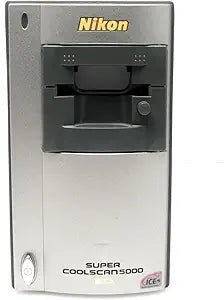
Nikon 9238 Super CoolScan 5000 ED Film Scanner
★★★★★
Digitize Your Memories with Precision Rediscover your film archives with the Nikon Super CoolScan 5000 ED. This high-performance film scanner is engineered for imaging professionals, delivering unparalleled quality when scanning 35mm slides, film strips, and more. Specifications Optical Resolut...
$1,299.99*
Check availability
*Price sourced from Amazon.com. Last updated:Jun 27, 2026.Price and availability are subject to change.
Affiliate Disclosure: Studio Supplies may earn a commission from qualifying purchases made through links on this page, at no additional cost to you. This helps support our editorial team.
Notice a mistake? Let Us Know
Overview
Digitize Your Memories with Precision
Rediscover your film archives with the Nikon Super CoolScan 5000 ED. This high-performance film scanner is engineered for imaging professionals, delivering unparalleled quality when scanning 35mm slides, film strips, and more.Specifications
- Optical Resolution: 4,000 dpi
- Image Sensor: 3,964-pixel, two-line linear CCD
- A/D Conversion: 16-bit per color (8-/16-bit output)
- Illumination: Nikon LED Technology
- Scan Time: Preview scans in 11 seconds, full scans as fast as 20 seconds
- Image Correction: Digital ICE4 Advanced suite
- Interface: USB
- Compatibility: PC and Mac
- Lens: Scanner Nikkor ED glass lens
Key Features
It has 4,000 dpi optical resolution, 4.8 density
It has 16-bit A/D conversion, 8 or 16-bit output
Preview scans in 11 seconds, full scans as fast as 20 seconds
Digital ICE4 Advanced suite of image correction technologies
Its USB interface, PC and Mac compatible
Specifications
Model Number
9238
Type
Film Scanner
Optical Resolution
4,000 dpi
Density
4.8
A/D Conversion
16-bit
Output Bit Depth
8 or 16-bit
Preview Scan Speed
11 seconds
Full Scan Speed
As fast as 20 seconds
Image Correction
Digital ICE4 Advanced
Interface
USB
Compatibility
PC and Mac
Pros & Cons
👍 Pros
- Features an impressive 4,000 dpi optical resolution, allowing for highly detailed and sharp scans of film.
- Offers a wide 4.8 density range, which is crucial for capturing detail in both the shadows and highlights of film negatives and transparencies.
- Utilizes 16-bit A/D conversion with 8 or 16-bit output, ensuring accurate color reproduction and smooth tonal gradations.
- Provides fast preview scans in 11 seconds and full scans as quickly as 20 seconds, improving workflow efficiency.
- Equipped with the Digital ICE4 Advanced suite of image correction technologies, which automatically removes dust, scratches, and other imperfections from scans.
- Includes a USB interface, making it compatible with both PC and Mac operating systems for broad accessibility.
👎 Cons
- The scanner is specifically designed for film, meaning it cannot be used for scanning paper documents or other non-film media.
- While 4,000 dpi is high resolution, some users may desire even higher optical resolutions available in professional film scanners.
- The need for 8 or 16-bit output options means users might need to manage larger file sizes, which could require more storage space and processing power.
- The USB interface, while widely compatible, may offer slower data transfer speeds compared to newer interfaces like USB 3.0 or Thunderbolt.
- The mention of "Japan import" in the title might imply potential regional compatibility issues with power adapters, software localization, or warranty services in other countries.
Frequently Asked Questions
What is the maximum optical resolution of the Nikon Super CoolScan 5000 ED?
The Nikon Super CoolScan 5000 ED offers an optical resolution of 4,000 dpi, providing high-detail film scans.
How quickly can this scanner perform a full scan?
This scanner is capable of performing full scans as fast as 20 seconds, and preview scans in just 11 seconds.
What image correction features are included?
It features the Digital ICE4 Advanced suite of image correction technologies, designed to automatically improve scan quality.
Is this scanner compatible with both Windows and Mac computers?
Yes, the Nikon Super CoolScan 5000 ED is compatible with both PC and Mac operating systems via its USB interface.
What is the density range of this film scanner?
The scanner boasts a 4.8 density, allowing it to capture a broad range of tonal values from film.
Does the scanner offer different output options for color depth?
Yes, it supports 16-bit A/D conversion with output options for either 8 or 16-bit, providing flexibility for image processing.
Related Products


