

Nikon
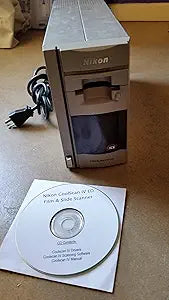
Nikon Coolscan IV ED USB Film Slide Scanner
★★★★★
Digitize Your Memories with Precision and ClarityIntroducing the Nikon Coolscan IV ED, a USB film scanner designed to bridge the gap between film and digital. Scan slides and 35mm film rolls with impressive speed and quality, preserving your precious memories for years to come. Specifications B...
$1,549.99*
View on Amazon
✓ In Stock on Amazon.com
*Price sourced from Amazon.com. Last updated:Jun 27, 2026.Price and availability are subject to change.
Affiliate Disclosure: Studio Supplies may earn a commission from qualifying purchases made through links on this page, at no additional cost to you. This helps support our editorial team.
Notice a mistake? Let Us Know
Overview
Digitize Your Memories with Precision and Clarity
Introducing the Nikon Coolscan IV ED, a USB film scanner designed to bridge the gap between film and digital. Scan slides and 35mm film rolls with impressive speed and quality, preserving your precious memories for years to come.
Specifications
- Brand: Nikon
- Model: Coolscan IV ED
- Scanner Type: Film Scanner
- Optical Resolution: 2,900 dpi
- Interface: USB
- Scan Time: 42 seconds per image
- Dynamic Range: 3.6
- Image Depth: 42-bit
- Light Source: LED
Key Features
2,900 dpi optical resolution with fast 42 second scan times
USB interface for plug-and-play connectivity
Color Management System ensures vivid, accurate color matching
Dynamic range of 3.6 for great detail throughout a wide range of tones
LED light source for accurate color consistency
Specifications
Product Type
Film Slide Scanner
Model
Coolscan IV ED
Optical Resolution
2,900 dpi
Scan Speed
42 seconds
Interface
USB
Color Management System
Included
Dynamic Range
3.6
Light Source
LED
Pros & Cons
👍 Pros
- Achieves a high 2,900 dpi optical resolution for capturing fine details from film and slides
- Provides fast scan times of just 42 seconds, enhancing workflow efficiency for digitizing collections
- Features a USB interface for straightforward plug-and-play connectivity with compatible devices
- Incorporates a Color Management System to ensure vivid and accurate color matching in scanned images
- Utilizes an LED light source, contributing to consistent and precise color representation during scanning
- Offers a dynamic range of 3.6, allowing for excellent detail reproduction across various tonal values
👎 Cons
- The 42-second scan time, while fast for its class, might still be considered slow for large batches of slides or film
- A dynamic range of 3.6, though good, might not meet the most demanding professional needs for extreme detail in highlights and shadows
- The USB interface, while convenient, may indicate an older generation of connectivity compared to newer high-speed options
- Limited information is provided on supported film formats, which could be a consideration for users with diverse media
- Being a dedicated film and slide scanner, it does not offer flatbed scanning capabilities for prints or documents
Frequently Asked Questions
What is the optical resolution of the Nikon Coolscan IV ED scanner?
The Nikon Coolscan IV ED offers an optical resolution of 2,900 dpi, allowing for detailed scans of film and slides.
How quickly can this scanner complete a scan?
This scanner is capable of fast 42-second scan times, which helps in efficient digitization of your media.
What type of connection does the scanner use?
The Nikon Coolscan IV ED uses a USB interface, providing plug-and-play connectivity for ease of use.
Does this scanner help with color accuracy?
Yes, it includes a Color Management System to ensure vivid and accurate color matching in your scanned images.
What is the dynamic range offered by this scanner?
The scanner features a dynamic range of 3.6, which helps in capturing great detail across a wide range of tones in your film and slides.
Related Products


