



NVIDIA
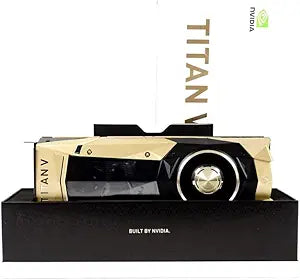
NVIDIA TITAN V VOLTA 12GB HBM2 Graphics Card
Volta architecture and 12GB HBM2 deliver server-class compute throughput in a PCIe form factor for AI research and scientific workloads.
$499.07*$575.00Save 13%
View on Amazon
✓ In Stock on Amazon.com
*Price sourced from Amazon.com. Last updated:Sep 12, 2026.Price and availability are subject to change — details.
Affiliate Disclosure: As an Amazon Associate, Studio Supplies earns from qualifying purchases made through links on this page, at no additional cost to you. This helps support our editorial team.
Notice a mistake? Let Us Know
Overview
Key Features
Original box, manual, adapter, and static shield bag included
Specifications
Model
TITAN V VOLTA
Memory
12GB HBM2
Brand
NVIDIA
Similar Products
Other products from the same family that visitors often consider:
 ✓ Available
NVIDIA TITAN V VOLTA 12GB HBM2 High Performance GPU
$447.62
View on Amazon → ✓ Available
NVIDIA GTX TITAN X - 12GB GDDR5 Graphics Card
$398.00
View on Amazon → ✓ Available
NVIDIA 900-52081-0050-000 Quadro K6000 12GB Graphics Card
$212.00
View on Amazon → ✓ Available
NVIDIA Quadro-K6000 12GB GDDR5 Graphics Card (Renewed)
$299.00
View on Amazon → ✓ Available
NVIDIA Titan RTX Graphics Card (Renewed)
$1,149.99
View on Amazon →Frequently Asked Questions
What is the NVIDIA TITAN V designed for — is it a gaming card?
The TITAN V is a compute-first card built on Volta architecture — the same generation as the Tesla V100 used in data centers. It targets deep learning research, scientific simulation, and computational workflows. It can run games, but its price-to-gaming-performance ratio makes it a poor gaming investment.
What makes HBM2 memory different from GDDR6 used on consumer cards?
HBM2 uses a 3D-stacked die design with an extremely wide memory bus, delivering high memory bandwidth at lower power draw than GDDR alternatives. The 12GB HBM2 on the TITAN V provides the bandwidth and capacity needed for large neural network models and scientific datasets that exceed typical 8GB consumer VRAM budgets.
Does the TITAN V support CUDA acceleration for deep learning frameworks?
Yes. Volta's Tensor Cores are designed for mixed-precision (FP16/FP32) matrix operations used in deep learning training. TensorFlow, PyTorch, and other major frameworks support CUDA acceleration on Volta-class hardware.
What power and slot requirements does the TITAN V have?
The TITAN V uses a PCIe x16 slot and requires two 8-pin power connectors. NVIDIA recommends a minimum 650W power supply — under full compute load the card approaches its rated TDP, so PSU headroom matters.
Is the TITAN V still a relevant compute platform for current AI workloads?
Volta's Tensor Cores remain functional for mixed-precision training and inference. However, Ampere and Ada Lovelace architectures deliver significantly higher Tensor Core throughput per watt. The TITAN V is a capable legacy-tier platform — still functional, but no longer the competitive edge it represented at launch.
Related Products


