NVIDIA

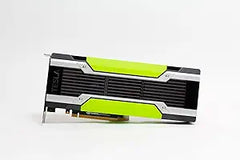
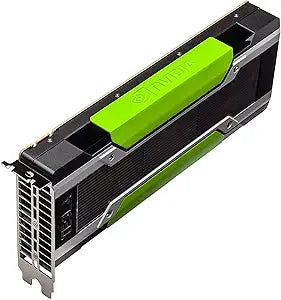
NVIDIA Tesla K80 - 24GB GDDR5 - PCI-E - Passive Cooling

3.6 (9 reviews)

Accelerate scientific computing and deep learning workloads with the Tesla K80's dual GPUs and 24GB of onboard memory.

$159.96*
In Stock on Amazon.com
View on Amazon

*Price sourced from Amazon.com. Last updated:Jun 04, 2026.Price and availability are subject to change.

Affiliate Disclosure: Studio Supplies may earn a commission from qualifying purchases made through links on this page, at no additional cost to you. This helps support our editorial team.

Notice a mistake? Let Us Know

Overview

The NVIDIA Tesla K80 is a dual-GPU compute accelerator built on the Kepler architecture, packing two GK210 processors with a combined 4992 CUDA cores and 24GB of GDDR5 memory onto a single full-length PCIe card. Originally designed for data center deployment, the K80 delivered substantial performance gains across scientific computing disciplines — NVIDIA documented 5-10x speedups in applications spanning seismic analysis (RTM), molecular dynamics (NAMD, AMBER, LAMMPS), lattice quantum chromodynamics (CHROMA), and deep learning frameworks like CAFFE. The 24GB memory pool, split as 12GB per GPU, remains generous enough to accommodate moderately sized neural network models and scientific datasets.

As a passive-cooled card, the K80 is built for rack-mounted servers with high-volume airflow and is not suitable for consumer desktop cases. Each GPU appears as a separate CUDA device to the host system, so applications must be written or configured to leverage both GPUs for maximum throughput. While newer architectures like Volta, Ampere, and Hopper have dramatically surpassed the K80 in raw performance, memory bandwidth, and power efficiency, the K80 has found a second life as an affordable compute card for students, researchers, and hobbyists who need hands-on GPU computing experience without the cost of current-generation hardware. Its broad CUDA compatibility means it still runs the vast majority of GPU-accelerated software, albeit more slowly than modern alternatives.

Key Features

Colour: brown

Brand: Nvidia

Packed with features

Best product in its class

Specifications

GPU Architecture
NVIDIA Kepler (Dual GK210 GPUs)
CUDA Cores
4992 (total across both GPUs)
Memory
24GB GDDR5 (12GB per GPU)
Number of GPUs
2
Cooling
Passive
Interface
PCI Express

Similar Products

Other products from the same family that visitors often consider:

Pros & Cons

👍 Pros

  • Dual GK210 GPUs with 4992 total CUDA cores provide substantial parallel computing power
  • 24GB combined GDDR5 memory accommodates large datasets and model parameters
  • Proven 5-10x application speedups in scientific workloads like molecular dynamics, seismic processing, and deep learning
  • Extremely affordable on the used market compared to current-generation compute accelerators
  • Wide software ecosystem support across CUDA, cuDNN, and major ML frameworks

👎 Cons

  • Passive cooling design requires a server chassis with strong directed airflow and will not work in standard desktop cases
  • Older Kepler architecture lacks tensor cores and mixed-precision support found in newer GPUs
  • GDDR5 memory bandwidth is significantly slower than the HBM2 used in modern compute accelerators
  • High power consumption relative to the compute performance compared to current-generation alternatives
  • No video display outputs, so it cannot be used as a primary or secondary graphics card

Frequently Asked Questions

No, the Tesla K80 is a compute-focused accelerator without display outputs. It is designed for data center workloads like scientific simulation, deep learning training, and high-performance computing, not for gaming or graphics rendering to a monitor.
The K80 uses passive cooling because it is designed for rack-mounted servers with high-airflow chassis. It relies on the server's built-in fans for cooling and will overheat in a standard desktop case without directed airflow.
Yes, the K80 contains two GK210 GPUs on a single PCIe card, each with its own 12GB of GDDR5 memory, for a combined 24GB. Software sees them as two distinct devices.
It requires a PCIe x16 slot and draws significant power, so it needs a server or workstation with adequate PCIe power delivery and airflow.
While it has been superseded by newer architectures with faster memory and better tensor performance, the K80 can still handle smaller-scale training jobs and inference tasks at a fraction of the cost of current-generation accelerators.