



QNAP
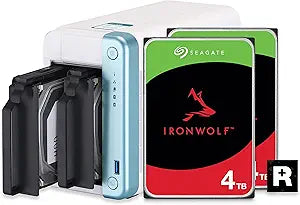
QNAP TS-251D-4G-24R-US 2 Bay NAS 4TB RAID 1 IronWolf Drives
USB 2.0USB 3.2
A preconfigured RAID 1 NAS with IronWolf drives installed means your home data redundancy is running within minutes of unboxing.
Check availability
Affiliate Disclosure: As an Amazon Associate, Studio Supplies earns from qualifying purchases made through links on this page, at no additional cost to you. This helps support our editorial team.
Notice a mistake? Let Us Know
Overview
Key Features
Two 4TB Seagate Iron Wolf Drives Pre-Installed and Pre-Configured with RAID 1. Hassle-free!
Seagate IronWolf drives include a robust 3-year Rescue Data Recovery Services plan
Intel Celeron J4005 dual-core 2.0 GHz processor
Intel HD Graphics 600
2 X 3.5-inch SATA 6Gb/s, 3Gb/s
1 X Gigabit Ethernet Port (RJ45)
3 X USB 2.0 port; 2 X USB 3.2 Gen 1 port; PCI-E Expandability
Specifications
Processor
Intel Celeron J4005 dual-core 2.0 GHz
Graphics
Intel HD Graphics 600
Drive Bays
2 x 3.5-inch SATA 6Gb/s, 3Gb/s
Pre-installed Drives
Two 4TB Seagate IronWolf Drives
RAID Configuration
RAID 1 (pre-configured)
Data Recovery Service
3-year Seagate Rescue Data Recovery Services
Ethernet Ports
1 x Gigabit Ethernet (RJ45)
USB 2.0 Ports
3
USB 3.2 Gen 1 Ports
2
Expansion Slot
PCI-E
Frequently Asked Questions
The listing shows 4TB total but two 4TB drives — why is usable capacity only 4TB?
RAID 1 mirrors all data across both drives simultaneously. You get 4TB of usable storage backed by a complete second copy for redundancy — lose one drive and your data is fully intact on the other. The trade-off is that the second drive's capacity is consumed entirely by the mirror, not by additional storage.
What does the PCIe expansion slot allow you to add to this NAS?
The PCIe slot supports add-in cards for expanded connectivity — most commonly a 10GbE network card to break through the stock 1GbE bottleneck, or an M.2 NVMe SSD adapter for SSD caching to accelerate frequently accessed files. The specific cards supported are listed in QNAP's compatibility list for the TS-251D.
Can the TS-251D stream 4K video to multiple devices at the same time?
The Intel Celeron J4005 processor with Intel HD Graphics 600 supports hardware transcoding, which reduces CPU load during media playback. Whether simultaneous 4K streams are achievable depends on the codec, bitrate, and number of concurrent users — real-time 4K transcoding to multiple clients will approach the limits of a dual-core 2.0GHz processor.
What is the Seagate Rescue Data Recovery Services plan included with the IronWolf drives?
Each IronWolf drive includes a 3-year Seagate Rescue plan, which provides professional data recovery services if a drive fails in a way that makes its data unreadable — including physical failure. This is separate from RAID redundancy and covers scenarios where both drives are not simultaneously lost.
Can the drive bays be upgraded to larger-capacity drives in the future?
Yes. The two 3.5-inch SATA 6Gb/s bays support standard SATA drives up to the capacities QNAP certifies for the TS-251D chassis. Upgrading requires purchasing new drives and reconfiguring the RAID array through the QTS operating system.
Related Products
