

QNAP
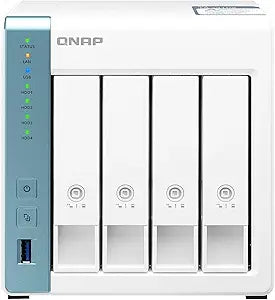
QNAP TS-431P3-2G 4-Bay 2.5GbE Home Office NAS
USB 3.2
Centralize Your Data with QNAP TS-431P3The QNAP TS-431P3 is a 4-bay NAS designed for home and office use. With a 2.5GbE port, it provides faster data transfer speeds for smoother multimedia playback and everyday tasks. Protect your data with AES 256-bit encryption and various backup options, incl...
View price on Amazon
Affiliate Disclosure: As an Amazon Associate, Studio Supplies earns from qualifying purchases made through links on this page, at no additional cost to you. This helps support our editorial team.
Notice a mistake? Let Us Know
Overview
Centralize Your Data with QNAP TS-431P3
The QNAP TS-431P3 is a 4-bay NAS designed for home and office use. With a 2.5GbE port, it provides faster data transfer speeds for smoother multimedia playback and everyday tasks. Protect your data with AES 256-bit encryption and various backup options, including snapshot protection.
- Processor: Annapurna Labs Alpine AL-314, quad-core 1.7 GHz
- RAM: 2GB DDR3L RAM
- LAN Ports: One 1GbE LAN port and one 2.5GbE LAN port
- Encryption: AES 256-bit encryption
- Backup Options: Local/remote/cloud backup
- Snapshot Protection: Yes
Key Features
Annapurna Labs AL-314 Quad-core 1.7GHz processor
SIngle-port 2.5GbE
SIngle-port 1GbE
3 X USB 3.2 Gen1 ports
4GB SODIMM DDR3L Memory (Max 8GB)
4 x 3.5-inch SATA 6Gb/s, 3Gb/s (Diskless)
Specifications
Processor
Annapurna Labs AL-314 Quad-core
Processor Speed
1.7GHz
2.5GbE Ports
1
1GbE Ports
1
USB Ports
3 X USB 3.2 Gen1
Memory
4GB SODIMM DDR3L
Maximum Memory
8GB
Drive Bays
4 x 3.5-inch SATA 6Gb/s, 3Gb/s
Condition
Diskless
Frequently Asked Questions
What processor does the QNAP TS-431P3-2G NAS utilize?
This QNAP NAS is powered by an Annapurna Labs AL-314 Quad-core 1.7GHz processor, designed for efficient network attached storage operations.
What are the network connectivity options available on this NAS?
It features a single-port 2.5GbE connection for faster speeds and a single-port 1GbE connection for versatile network integration.
How much RAM is included, and can it be upgraded?
The NAS comes with 4GB SODIMM DDR3L Memory, which can be upgraded to a maximum of 8GB for enhanced performance.
How many drive bays does the QNAP TS-431P3-2G have, and are hard drives included?
It has 4 x 3.5-inch SATA 6Gb/s, 3Gb/s drive bays, but it is diskless, meaning hard drives are not included and must be purchased separately.
What type of USB ports are available for peripheral connectivity?
The NAS is equipped with three USB 3.2 Gen1 ports, providing fast connectivity for external storage or other compatible devices.
What is the primary benefit of the 2.5GbE port?
The 2.5GbE port offers significantly faster data transfer speeds than traditional Gigabit Ethernet, improving efficiency for tasks like large file backups and multimedia streaming within the home office.
Related Products
