

QNAP
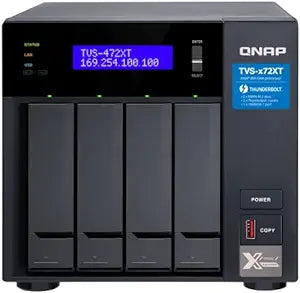
QNAP TVS-472XT-i3-4G-US 4 Bay Thunderbolt 3 NAS
★★★★★
Unleash Ultra-High Speed Storage and Connectivity The QNAP TVS-472XT is an ultra-high-speed 4-bay Thunderbolt™ 3 NAS designed for demanding workloads and creative professionals. Featuring an Intel® Core™ i3 processor, high-bandwidth connectivity, and expandable storage capacity, this NAS delivers...
$149.00*
Check availability
*Price sourced from Amazon.com. Last updated:Jul 14, 2026.Price and availability are subject to change.
Affiliate Disclosure: Studio Supplies may earn a commission from qualifying purchases made through links on this page, at no additional cost to you. This helps support our editorial team.
Notice a mistake? Let Us Know
Overview
Unleash Ultra-High Speed Storage and Connectivity
The QNAP TVS-472XT is an ultra-high-speed 4-bay Thunderbolt™ 3 NAS designed for demanding workloads and creative professionals. Featuring an Intel® Core™ i3 processor, high-bandwidth connectivity, and expandable storage capacity, this NAS delivers exceptional performance and versatility.
Specifications:
- Processor: Intel® Core™ i3 4-core
- Memory: 4GB DDR4 RAM
- Drive Bays: 4 x 3.5"/2.5" HDD/SSD Slots
- Connectivity: Thunderbolt™ 3, 10GBASE-T
Specifications
Brand
QNAP
Model
TVS-472XT-i3-4G-US
Drive Bays
4
Connectivity
Thunderbolt 3
Pros & Cons
👍 Pros
- Features Thunderbolt 3 connectivity, enabling extremely fast data transfer speeds ideal for video editing and large file transfers
- Equipped with a 4-bay design, offering flexible storage configurations and ample capacity for growing data needs
- Designed by QNAP, a reputable brand in network attached storage, known for robust software features
- Provides a centralized storage solution, enhancing collaboration and data accessibility for multiple users
- Optimized for demanding applications, making it suitable for creative workflows and professional environments
👎 Cons
- Requires hard drives to be purchased separately, adding to the total cost and setup complexity
- The "i3-4G" in the model name suggests a potential limitation with only 4GB of RAM, which might be low for advanced NAS functions
- Thunderbolt 3 connectivity requires compatible devices to fully utilize its high-speed benefits
- Initial setup and configuration of a NAS can be complex for users unfamiliar with network storage
- Specific details on processor generation and core count are not provided in the title, which could be a factor for performance-intensive tasks
Frequently Asked Questions
What is the primary benefit of Thunderbolt 3 connectivity on this NAS?
Thunderbolt 3 offers extremely fast data transfer speeds, which is highly beneficial for tasks like 4K video editing, large file transfers, and direct connectivity to workstations.
How many hard drives can be installed in the QNAP TVS-472XT-i3-4G-US?
This QNAP NAS features a 4-bay design, allowing for the installation of up to four hard drives for storage.
Are hard drives included with the purchase of this NAS?
No, hard drives are not included with the QNAP TVS-472XT-i3-4G-US and must be purchased separately.
Is this NAS suitable for multimedia professionals?
Given its Thunderbolt 3 connectivity and QNAP's reputation, it is well-suited for creative professionals who handle large media files and require fast access to storage.
What operating system does this QNAP NAS use?
QNAP NAS devices typically run on QTS, QNAP's proprietary operating system, which provides a comprehensive suite of applications and management tools.
Related Products


