



Razer
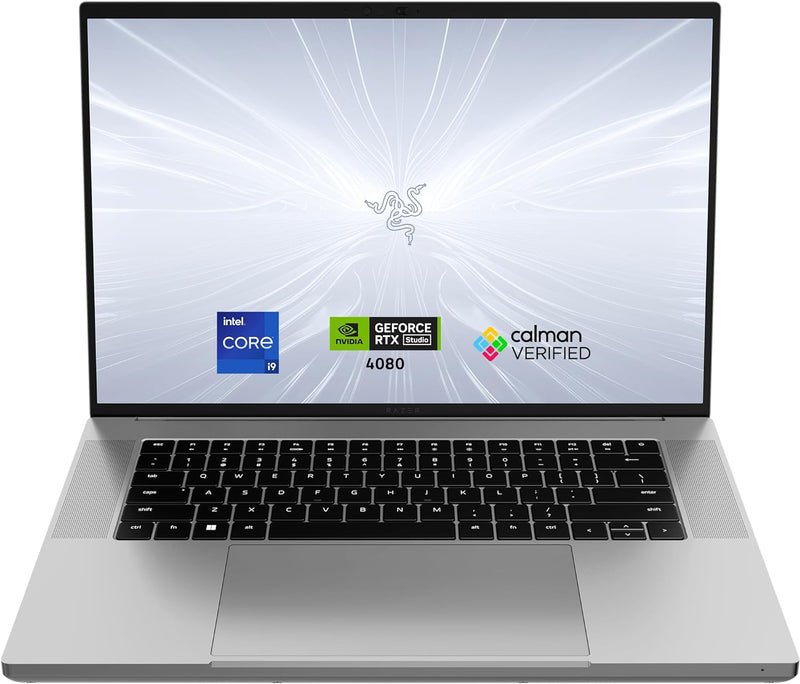
Razer RZ09-0510TEM4-R3U1 Blade 16 RTX 4080 Gaming Laptop
★★★★★
Experience Unrivaled Gaming Power with the Razer Blade 16 (2024) Dominate the competition with the Razer Blade 16 (2024), a gaming laptop engineered for peak performance. Featuring a cutting-edge Intel Core i9 processor, NVIDIA GeForce RTX 40 Series graphics, and a stunning Dual-Mode Mini-LED dis...
View price on Amazon
Affiliate Disclosure: Studio Supplies may earn a commission from qualifying purchases made through links on this page, at no additional cost to you. This helps support our editorial team.
Notice a mistake? Let Us Know
Overview
Experience Unrivaled Gaming Power with the Razer Blade 16 (2024)
Dominate the competition with the Razer Blade 16 (2024), a gaming laptop engineered for peak performance. Featuring a cutting-edge Intel Core i9 processor, NVIDIA GeForce RTX 40 Series graphics, and a stunning Dual-Mode Mini-LED display, this machine delivers breathtaking visuals and unparalleled speed. Experience truly responsive in-game movement via Razer Synapse 4 by prioritizing the latest input between a pair of assigned keys with Razer Snap Tap.
Specifications:
- Brand: Razer
- Model: RZ09-0510TEM4-R3U1
- Processor: Intel Core i9-14900HX (2.4 GHz)
- Memory: 32 GB DDR5 RAM
- Storage: 2 TB SSD
- Display: 16" Dual Mode Mini-LED (UHD+ 120 Hz / FHD+ 240 Hz)
- Graphics: NVIDIA GeForce RTX 4080 (16 GB)
- Operating System: Windows 11
- Wireless: 802.11a/b/g/n/ac, Bluetooth
- Ports: 1x Thunderbolt 4 (Up to 100W charging), 1x USB-C, 3x USB-A, 1x HDMI 2.1, 1x UHS-II SD Card Reader, 3.5mm Combo Audio Jack
- Color: Mercury
- Dimensions: 9.61 x 13.98 x 0.87 inches
- Weight: 8.36 pounds
- Battery: 1 Lithium Ion batteries required. (included)
- Special Features: Vapor Chamber Cooling System, Razer Snap Tap, Light & Durable Anodized Aluminum Unibody
Key Features
DUAL-MODE MINI-LED DISPLAY — Enjoy ultra-sharp 4K quality for creative work (UHD+ 120 Hz) and ultra-fast refresh rates for silky-smooth gameplay (FHD+ 240 Hz), backed by 100% DCI-P3 color accuracy that’s Calman Verified for the most lifelike visuals
NVIDIA GEFORCE RTX 40 SERIES GRAPHICS — Packed for pure performance with 1.50 gPD (Graphics Power Density) and delivers up to 30% more graphic power per cubic inch than any other 16” gaming laptop
INTEL CORE I9-14900HX PROCESSOR — Featuring 24 cores and 5.8 GHz max clock speed, game and create flawlessly with the most powerful mobile processor leveraging desktop-grade silicon — push performance even further with Overclock Mode in Razer Synapse
VAPOR CHAMBER COOLING SYSTEM — Enjoy optimal thermal performance with a unique single-piece vapor chamber design, featuring 0.5 mm exhaust fins and special NASBIS insulating sheets that cool keyboard temperatures by up to 12%
RAZER SNAP TAP — Enjoy truly responsive in-game movement via Razer Synapse 4 by prioritizing the latest input between a pair of assigned keys; Snap Tap is OFF by default and can be toggled ON/OFF in Razer Synapse
Specifications
Model
Blade 16 RTX 4080 Gaming Laptop
Processor
Intel Core i9-14900HX
Processor Cores
24 cores
Max Processor Clock Speed
5.8 GHz
Graphics Card
NVIDIA GEFORCE RTX 40 SERIES (RTX 4080)
Display Type
DUAL-MODE MINI-LED
Display Resolution/Refresh Rate 1
UHD+ 120 Hz (4K)
Display Resolution/Refresh Rate 2
FHD+ 240 Hz
Color Accuracy
100% DCI-P3, Calman Verified
Cooling System
Vapor Chamber Cooling System
Keyboard Cooling
Up to 12% cooler keyboard temperatures
Special Features
Razer Snap Tap (via Razer Synapse 4), Overclock Mode in Razer Synapse
Pros & Cons
👍 Pros
- Features a unique dual-mode Mini-LED display offering both ultra-sharp 4K (UHD+ 120Hz) for creative work and ultra-fast (FHD+ 240Hz) for gaming.
- Equipped with NVIDIA GeForce RTX 40 Series Graphics, delivering up to 30% more graphic power density than other 16-inch gaming laptops.
- Powered by the Intel Core i9-14900HX Processor with 24 cores and 5.8 GHz max clock speed, ensuring flawless gaming and creation.
- Incorporates a Vapor Chamber Cooling System with 0.5 mm exhaust fins and NASBIS insulating sheets to cool keyboard temperatures by up to 12%.
- Includes Razer Snap Tap via Razer Synapse 4, enhancing responsive in-game movement by prioritizing input from assigned keys.
👎 Cons
- The dual-mode display, while innovative, may require manual switching between resolutions/refresh rates, which could be inconvenient for some users.
- High-end specifications like RTX 4080 graphics and Intel Core i9 processor typically mean a premium price point for this gaming laptop.
- The 16-inch form factor, while offering a large display, might be less portable for users prioritizing extreme mobility.
- Specific battery life figures are not provided, which is a key consideration for a powerful gaming laptop.
- While the cooling system is advanced, the overall thermal management for sustained heavy loads over long periods is not detailed.
Frequently Asked Questions
What are the display options on the Razer Blade 16 laptop?
The laptop features a dual-mode Mini-LED display, offering ultra-sharp 4K (UHD+ 120 Hz) for creative work and ultra-fast FHD+ 240 Hz for gaming.
What graphics card powers this gaming laptop?
It is equipped with NVIDIA GeForce RTX 40 Series Graphics (specifically RTX 4080), providing high graphic power density for demanding games and applications.
Which processor is found in the Razer Blade 16?
This gaming laptop is powered by the Intel Core i9-14900HX Processor, which boasts 24 cores and a 5.8 GHz maximum clock speed.
How does the cooling system perform on this laptop?
It utilizes a Vapor Chamber Cooling System with 0.5 mm exhaust fins and NASBIS insulating sheets, designed to cool keyboard temperatures by up to 12%.
What is Razer Snap Tap and how does it work?
Razer Snap Tap, toggled via Razer Synapse 4, improves responsive in-game movement by prioritizing the latest input between a pair of assigned keys.
Is the display color accurate for professional work?
Yes, the display is Calman Verified with 100% DCI-P3 color accuracy, ensuring lifelike visuals for creative tasks.
Related Products


