



Roland
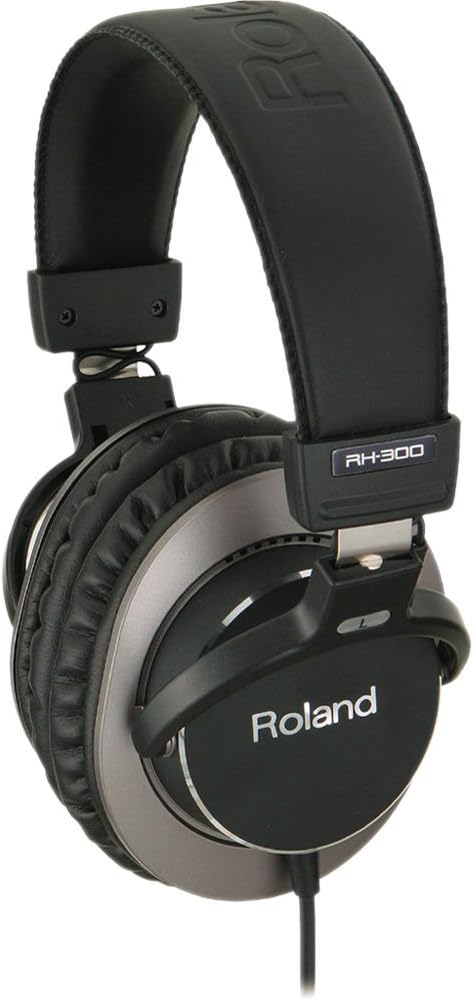
Roland RH-300 Stereo Monitoring Headphones
Roland's 45mm neodymium drivers and 10–25,000Hz response deliver studio-accurate monitoring in a closed-back form factor built for critical listening.
$179.99*
Check availability
*Price sourced from Amazon.com. Last updated:Aug 29, 2026.Price and availability are subject to change — details.
Affiliate Disclosure: As an Amazon Associate, Studio Supplies earns from qualifying purchases made through links on this page, at no additional cost to you. This helps support our editorial team.
Notice a mistake? Let Us Know
Overview
Key Features
45mm drivers with neodymium magnets
Frequency response - 10 - 25,000Hz
11' oxygen-free litz-wire cord
Gold-plated stereo mini plug + 1/4 adapter
Includes carrying pouch
Specifications
Driver Size
45mm
Magnet Type
Neodymium
Frequency Response
10Hz – 25,000Hz
Cord Length
11 feet
Cord Type
Oxygen-Free Litz-Wire
Connector
3.5mm Gold-Plated Stereo Mini Plug
Included Adapter
6.35mm (1/4-inch) Screw-On Adapter
Form Factor
Closed-Back Over-Ear
Weight
1.01 lbs
Included Accessories
Carrying Pouch
Model
RH-300
Frequently Asked Questions
Are the RH-300 headphones open-back or closed-back, and what does that mean for monitoring?
The RH-300 is a closed-back, over-ear design. Closed-back headphones provide passive sound isolation — they block ambient noise from entering and prevent sound from leaking out. For studio monitoring, this is advantageous during tracking sessions where microphone bleed from open-back cans would be a problem, though closed-back designs can introduce some low-frequency emphasis that open-back designs avoid.
What does the 10–25,000Hz frequency response mean for monitoring accuracy?
The rated 10–25,000Hz range extends well below the 20Hz threshold of human hearing and above 20,000Hz, meaning the drivers are not rolling off within the audible spectrum. In practice, this matters most at the frequency extremes — sub-bass content and high-frequency air in recordings — where headphones with a narrower response start to compress dynamics.
Does the 11-foot oxygen-free litz-wire cord create any signal degradation concerns?
No — at headphone signal levels, an 11-foot oxygen-free litz-wire cable introduces no measurable signal degradation. The litz construction (individually insulated wire strands) reduces skin effect losses at high frequencies, which is a legitimate engineering benefit, though audibility at listening-level currents is minimal.
What connection options does the RH-300 include, and will it work with a studio interface's headphone output?
The cable terminates in a 3.5mm gold-plated stereo mini plug with a 6.35mm (1/4-inch) screw-on adapter included. This covers both consumer devices (phones, laptops, portable players) and standard studio interface headphone outputs, which typically use 1/4-inch jacks.
How does the neodymium magnet driver compare to ferrite magnet drivers in monitoring headphones?
Neodymium magnets provide a stronger magnetic field per unit of mass than ferrite alternatives, which allows manufacturers to use a lighter driver assembly for equivalent sensitivity. The practical result is faster transient response and higher efficiency — the RH-300 can reach adequate monitoring levels from lower-output headphone amplifiers.
Related Products

