

SanDisk
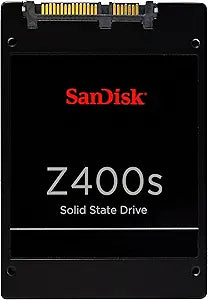
SanDisk SD8SBAT-128G-1122 Z400s 128GB SATA SSD
★★★★★
Reliable and Efficient Storage Solution for Embedded ApplicationsThe SanDisk Z400s Solid State Drive provides a dependable storage solution for a variety of embedded applications. Available in multiple form factors and capacities, this SSD offers high endurance, exceptional stability, and low pow...
$109.00*
Check availability
*Price sourced from Amazon.com. Last updated:Jul 13, 2026.Price and availability are subject to change.
Affiliate Disclosure: Studio Supplies may earn a commission from qualifying purchases made through links on this page, at no additional cost to you. This helps support our editorial team.
Notice a mistake? Let Us Know
Overview
Reliable and Efficient Storage Solution for Embedded Applications
The SanDisk Z400s Solid State Drive provides a dependable storage solution for a variety of embedded applications. Available in multiple form factors and capacities, this SSD offers high endurance, exceptional stability, and low power consumption. Built to meet the demands of continuous operation, the Z400s ensures long-lasting performance and data reliability.
- Capacity: 128GB
- Form Factor: 2.5”
- Interface: SATA 3.2 6GB/s
Key Features
2.5-inch Form Factor SATA 3.2 6GB/s, 128GB Capacity
Sequential Read/Write: Up to 546/342MB/s
Random Read/Write: Up to 33/62K IOPS
Up to 1.7 Million Hours of continual use
Exceptional reliability and Faster Speeds Over Standard Hard Drives
Specifications
Capacity
128GB
Form Factor
2.5-inch
Interface
SATA 3.2 6GB/s
Sequential Read Speed
Up to 546MB/s
Sequential Write Speed
Up to 342MB/s
Random Read IOPS
Up to 33K
Random Write IOPS
Up to 62K
Endurance
Up to 1.7 Million Hours (continual use)
Pros & Cons
👍 Pros
- Achieve significantly faster data access compared to traditional hard drives, enhancing system performance.
- Benefit from exceptional reliability, rated for up to 1.7 million hours of continual use.
- The 2.5-inch form factor allows for broad compatibility with various desktop and laptop systems.
- Experience rapid sequential read speeds of up to 546MB/s for quicker application loading.
- Utilize sequential write speeds up to 342MB/s, improving efficiency for data transfers and saves.
👎 Cons
- The 128GB capacity may be limiting for users requiring extensive storage for large files or numerous applications.
- Random write speeds of up to 62K IOPS are respectable but might not satisfy users with extremely demanding, write-intensive workloads.
- This model uses the SATA 3.2 interface, which has a lower theoretical bandwidth limit compared to newer NVMe SSDs.
- Sequential write performance is noticeably lower than its sequential read performance, which could impact certain tasks.
- The focus on reliability may mean that peak performance metrics are not as high as some competing performance-oriented SSDs.
Frequently Asked Questions
What is the capacity of the SanDisk SD8SBAT-128G-1122 Z400s SSD?
This SanDisk Z400s SSD offers a storage capacity of 128GB, suitable for operating systems and essential applications.
What form factor does this SSD use, and what is its interface?
The SSD features a 2.5-inch form factor and utilizes a SATA 3.2 6GB/s interface, ensuring compatibility with many standard systems.
How fast are the sequential read and write speeds of this drive?
The sequential read speed is up to 546MB/s, and the sequential write speed is up to 342MB/s, offering quick data transfer rates.
What is the expected lifespan or reliability of this SanDisk SSD?
This SanDisk SSD is built for exceptional reliability, rated for up to 1.7 million hours of continual use.
Does this SSD offer a significant performance upgrade over traditional hard drives?
Yes, it provides faster speeds compared to standard hard drives, contributing to a more responsive computing experience.
Related Products


