

SanDisk
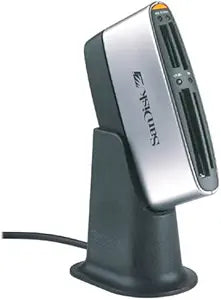
SanDisk SDDR-86-07 ImageMate 6-in-1 USB 2.0 Reader
Quickly Transfer Files with this Versatile USB 2.0 ReaderThe SanDisk ImageMate 6-in-1 USB 2.0 Reader/Writer provides a fast and convenient solution for transferring files between your computer and various memory cards. With support for multiple card formats, this reader eliminates the need to con...
$23.94*
Check availability
*Price sourced from Amazon.com. Last updated:Sep 08, 2026.Price and availability are subject to change — details.
Affiliate Disclosure: As an Amazon Associate, Studio Supplies earns from qualifying purchases made through links on this page, at no additional cost to you. This helps support our editorial team.
Notice a mistake? Let Us Know
Overview
Quickly Transfer Files with this Versatile USB 2.0 Reader
The SanDisk ImageMate 6-in-1 USB 2.0 Reader/Writer provides a fast and convenient solution for transferring files between your computer and various memory cards. With support for multiple card formats, this reader eliminates the need to connect your digital devices directly, streamlining your workflow.
- Interface: USB 2.0 (backward compatible with USB 1.1)
- Supported Memory Cards: CompactFlash Type I and II, SmartMedia, Memory Stick, MultiMediaCard, SD Card
Key Features
Hi-Speed USB 2.0 certified for fastest data transfer, with backwards compatiblity with all USB 1.1 ports
All four memory slots are active, which allows you to copy data between the different memory cards at the same time
Separate reader and docking station for quick desktop/laptop connectivity
Easy to use; just drag and drop your files
Compatible with Windows 98 SE, ME, 2000, XP and Macintosh OS 9.1x+ and OS X v10.1.2+
Specifications
Connectivity
Hi-Speed USB 2.0
Card Slots
4 (active simultaneously)
Design
Separate reader and docking station
Compatibility (Windows)
Windows 98 SE, ME, 2000, XP
Compatibility (Macintosh)
OS 9.1x+, OS X v10.1.2+
Ease of Use
Drag and Drop functionality
Frequently Asked Questions
What USB standard does the SanDisk ImageMate reader support?
The SanDisk ImageMate reader is Hi-Speed USB 2.0 certified for fast data transfer, and it is also backwards compatible with all USB 1.1 ports.
Can I transfer data between different memory cards simultaneously with this reader?
Yes, all four memory slots on this reader are active, allowing you to copy data between different memory cards at the same time.
What operating systems are compatible with this memory card reader?
It is compatible with Windows 98 SE, ME, 2000, XP, and Macintosh OS 9.1x+ as well as OS X v10.1.2+.
Is this card reader easy to use for transferring files?
Yes, it is designed for ease of use, allowing you to simply drag and drop your files.
Does this reader support the latest memory card formats?
As a product released earlier, its features specify compatibility with formats common for its time; compatibility with newer formats like SDXC is not explicitly mentioned.
Related Products


