



Seagate
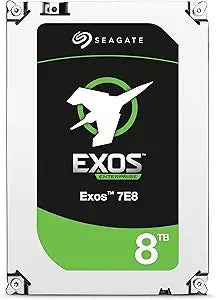
Seagate ST8000NM0055 8TB Enterprise SATA Hard Drive
Enterprise-grade 8TB SATA drive built for 24/7 heavy workloads with 256MB cache and a 5-year warranty
Check availability
Affiliate Disclosure: As an Amazon Associate, Studio Supplies earns from qualifying purchases made through links on this page, at no additional cost to you. This helps support our editorial team.
Notice a mistake? Let Us Know
Overview
Key Features
Support 8TB of data with an easy-to-integrate SATA HDD
Tackle heavy applications 24x7 with high performance
Reduce TCO with customizable power options
Advanced Write Caching coupled with TurboBoost provides better performance and minimizes the risk of losing data due to unexpected power loss
Enjoy long-term peace of mind with the included five-year limited warranty protection plan
The available storage capacity may vary.
Specifications
Capacity
8TB
Spindle Speed
7200 RPM
Interface
SATA 6Gb/s
Cache
256MB
Sector Format
512e
Form Factor
3.5" Internal
Application
Enterprise
Warranty
5-Year Limited
Frequently Asked Questions
Is the ST8000NM0055 compatible with standard desktop SATA ports?
Yes, the drive uses a standard SATA 6Gb/s interface and fits any 3.5" bay with a SATA connector. However, it is firmware-optimized for enterprise RAID controllers and NAS enclosures — desktop motherboards will recognize it, but you won't benefit from features like advanced error recovery tuning without a hardware RAID controller.
What is the 512e format, and does it affect compatibility?
512e (512-byte emulation) means the drive uses 4K physical sectors internally but presents them as 512-byte logical sectors to the host. This ensures backward compatibility with older operating systems and RAID controllers that don't support 4Kn (4K native). Windows 7 and later, Linux 2.6+, and all modern RAID controllers handle 512e without issue.
How does TurboBoost and Advanced Write Caching protect against data loss?
Advanced Write Caching uses the 256MB onboard cache to buffer write operations for throughput, while TurboBoost optimizes the caching algorithm for sequential workloads. In the event of unexpected power loss, the drive firmware prioritizes flushing critical metadata to platters, reducing the risk of file system corruption — though a UPS or battery-backed RAID controller is still recommended for full protection.
What is the rated workload limit per year?
Seagate rates the Exos 7E8 series for up to 550TB per year of data transferred, which is roughly 100x the workload rating of a typical desktop drive. This makes it suitable for write-heavy enterprise applications like surveillance, backup servers, and database logging.
Can I use this drive in a ZFS pool or software RAID?
The ST8000NM0055 works well in ZFS, mdadm, and other software RAID configurations. Its enterprise firmware includes longer error recovery timeouts that align with RAID controller expectations, reducing the chance of a drive being prematurely dropped from an array during sector recovery.
Related Products
