



Seagate
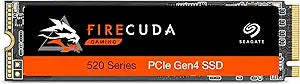
Seagate ZP1000GM3A002 Firecuda 520 1TB NVMe Gen4 SSD
1TB NVMe
PCIe Gen4 sequential reads hit 5000 MB/s on the FireCuda 520 — nearly double what a Gen3 drive can deliver.
$159.97*
View on Amazon
✓ In Stock on Amazon.com
*Price sourced from Amazon.com. Last updated:Oct 23, 2026.Price and availability are subject to change — details.
Affiliate Disclosure: As an Amazon Associate, Studio Supplies earns from qualifying purchases made through links on this page, at no additional cost to you. This helps support our editorial team.
Notice a mistake? Let Us Know
Overview
Key Features
Performance internal Solid State Drive: 2TB, 1TB, 500GB
Maximum sequential read and write speeds up to 5000MB/s and 4400MB/s
Mtbf of 1.8M hours and TBW of up to 2800TB, plus 3-year Rescue Service
Ideal for high-performance gaming PCs and creative Pro workstations
Migrate and clone data from old drives with ease using our free Seagate DiscWizard software tool
The available storage capacity may vary.
Specifications
Model
ZP1000GM3A002
Capacity
1TB
Interface
PCIe Gen4 x4, NVMe 1.3
Form Factor
M.2 2280
NAND Type
3D TLC NAND
Sequential Read
Up to 5000 MB/s
Sequential Write
Up to 4400 MB/s
TBW (Endurance)
700 TBW (1TB model)
MTBF
1.8 million hours
Warranty
3 years + Rescue Data Recovery Service
Backward Compatibility
PCIe Gen3 (speed-limited)
Similar Products
Other products from the same family that visitors often consider:
 Currently Unavailable
Seagate ZP1000GM3A033 FireCuda 1TB Gen4 NVMe SSD
Check on Amazon → Currently Unavailable
Seagate ZP1000GM3A013 FireCuda 530 1TB NVMe Gen4 SSD
Check on Amazon → ✓ Available
Seagate Firecuda 520 2TB NVMe PCIe Gen4 SSD
$499.99
View on Amazon → Currently Unavailable
Seagate ZP1000GM3A011 FireCuda 510 1TB NVMe SSD
Check on Amazon → Currently Unavailable
Seagate ZP4000GM3A013 FireCuda 530 4TB NVMe Gen4 SSD
Check on Amazon →Frequently Asked Questions
Does the FireCuda 520 require a PCIe Gen4 motherboard to function?
No. The FireCuda 520 is backward compatible with PCIe Gen3 slots, but speeds will be capped at Gen3 bandwidth (~3500 MB/s read). To realize the full 5000/4400 MB/s sequential read/write figures, you need a Gen4-capable platform — AMD Ryzen 5000/7000 or Intel 12th gen and newer with a compatible motherboard.
What does 5000 MB/s sequential read actually mean for load times?
At 5000 MB/s, the FireCuda 520 transfers roughly 5 GB of data per second — a 50 GB game loads its assets in about 10 seconds versus 20+ on a SATA SSD. The more meaningful number for gaming is random 4K read IOPS, where Gen4 drives like this one maintain significantly lower queue depths under sustained workloads compared to Gen3 competition.
What is TBW and how does 700 TBW hold up for a 1TB drive?
TBW (Terabytes Written) is the manufacturer's endurance rating — how much data you can write before the NAND cells statistically begin to degrade. At 700 TBW for the 1TB model, a user writing 50 GB per day would reach that threshold in roughly 38 years. For a gaming or creative workstation, endurance is not a practical concern on this drive.
Does the FireCuda 520 need active cooling?
Under sustained sequential writes — think large video exports or game installations — the controller can throttle if heat isn't managed. Seagate does not include a heatsink in the box. Most mid/high-end motherboards provide M.2 heatsinks; use them. Without thermal management, sustained write speeds will step down after the SLC cache fills.
What form factor does the FireCuda 520 use?
M.2 2280 (80mm). It uses the standard M-key connector and fits virtually every desktop and laptop M.2 slot that supports NVMe. Confirm your motherboard's M.2 slot supports PCIe x4 NVMe — not just SATA — before installing.
Related Products
