



Seagate
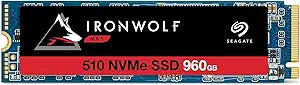
Seagate ZP960NM30011: 960GB IronWolf 510 M.2 NAS SSD
★★★★★
The Seagate IronWolf 510 delivers NAS-optimized M.2 SSD caching with 960GB of high-endurance storage.
Check availability
Affiliate Disclosure: Studio Supplies may earn a commission from qualifying purchases made through links on this page, at no additional cost to you. This helps support our editorial team.
Notice a mistake? Let Us Know
Overview
Key Features
ULTIMATE ENDURANCE: The ideal solution for multi-user NAS environments craving powerhouse SSD endurance and performance
TOUGH: Enjoy long-term reliability with 1. 8M hours MTBF in a M. 2 form factor
EFFICIENT: Increased file-sharing performance and lower power consumption for NAS
SPACIOUS: Capacity of 960GB offers next-level NAS server storage for small and medium-sized businesses and creative professionals
Warranty: Enjoy long-term peace of mind with the included five-year limited product warranty protection plan and three year Rescue Data Recovery Services
The available storage capacity may vary.
Specifications
Capacity
960GB
Form Factor
M.2
Interface
PCIe NVMe
Endurance
Optimized for multi-user NAS environments
Warranty
5-Year Limited
Data Recovery
3-Year Rescue Data Recovery Services
Brand
Seagate
Model
ZP960NM30011
Pros & Cons
👍 Pros
- 960GB capacity provides ample space for NAS caching or tiered storage duties.
- High-endurance rating designed to handle the constant read/write demands of multi-user NAS environments.
- PCIe NVMe interface delivers substantially faster throughput than SATA SSDs.
- Includes 3-year Rescue Data Recovery Services for added peace of mind.
- 5-year limited warranty reflects Seagate's confidence in the drive's longevity.
👎 Cons
- Premium price point compared to SATA NAS SSDs of similar capacity.
- Requires a NAS with an available M.2 PCIe slot, which not all consumer NAS models offer.
- Performance benefits depend heavily on the NAS operating system's caching implementation.
- No DRAM cache information specified, which may affect sustained write performance under heavy loads.
- Overkill for single-user or low-traffic NAS setups where caching provides minimal benefit.
Frequently Asked Questions
What is the Seagate IronWolf 510 SSD designed for?
It is specifically engineered for use in multi-bay NAS (Network Attached Storage) systems, where it serves as a high-speed cache or storage tier to accelerate file access across the network.
What interface does the IronWolf 510 use?
It uses a PCIe NVMe M.2 interface, which provides significantly faster read and write speeds compared to traditional SATA-based NAS drives.
Does the IronWolf 510 come with any data recovery services?
Yes, Seagate includes 3 years of Rescue Data Recovery Services, which provides professional data recovery assistance in case of drive failure or data loss.
How long is the warranty on this SSD?
The IronWolf 510 comes with a 5-year limited warranty from Seagate.
Can this drive be used as the sole storage in a NAS, or is it meant for caching only?
While it can be used as primary storage in compatible NAS bays with M.2 slots, it is most commonly deployed as a caching drive to speed up read and write operations for larger spinning-disk arrays.
Related Products


