



Sony
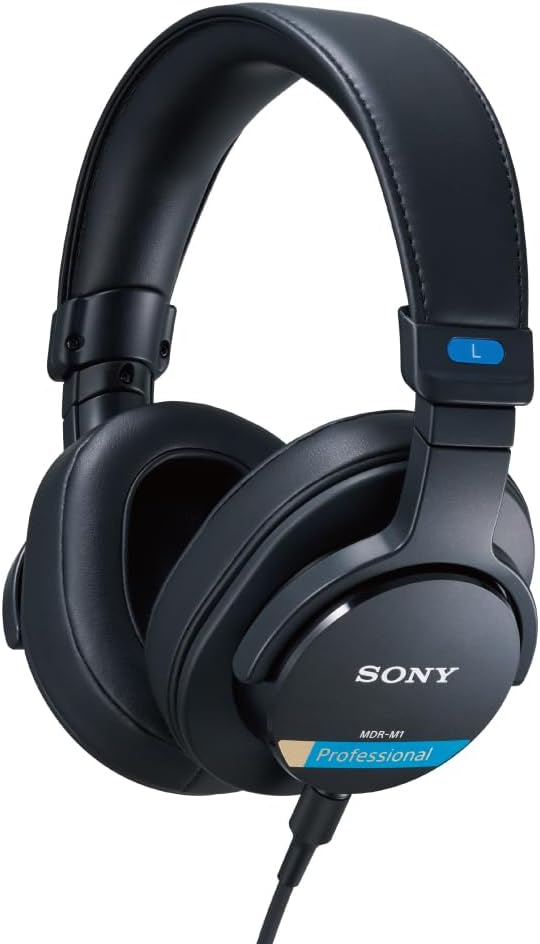
Sony MDR-M1 Professional Closed Monitor Headphones
5 Hz–80 kHz
A 5Hz–80kHz frequency range and closed acoustic isolation make the MDR-M1 the reference monitoring tool Sony built for engineers who need to hear exactly what's on the track.
$228.00*$269.99Save 15%
View on Amazon
✓ In Stock on Amazon.com
*Price sourced from Amazon.com. Last updated:Aug 28, 2026.Price and availability are subject to change — details.
Affiliate Disclosure: As an Amazon Associate, Studio Supplies earns from qualifying purchases made through links on this page, at no additional cost to you. This helps support our editorial team.
Notice a mistake? Let Us Know
Overview
Key Features
STUDIO SOUND, UNLEASHED: Ultra-wideband playback and a closed acoustic structure with high sound isolation allows for detailed and precise monitoring, for a wide range of audio production workflows.
ULTRA-WIDE PLAYBACK: The uniquely designed driver unit balances low distortion with reproduction of low frequencies to high frequencies for ultra-wideband playback and accurate reproduction from 5 Hz–80 kHz.
HIGH-FIDELITY, FAITHFUL SOUND REPRODUCTION: A closed acoustic structure with effective sound isolation facilitates precise audio production in a variety of applications.
IN COLLABRATION WITH CREATORS: We collaborated with renowned industry engineers to achieve a sound that accurately reproduces the creative intent.
COMFORTABLE & LIGHT: The soft, thick earpads are designed to provide a reassuring, comfortable fit throughout even the longest sessions. Extreme light-weight design (Approx. 216g)
EASY TO MAINTAIN: Designed for years of dependable use, supplied with two detachable cable lengths and easy to replace earpads.
PROFESSIONAL CONNECTIVITY: The versatile screw-in plug adapter makes it easy to connect to devices with either a 6.3 mm or 3.5 mm stereo jack. The cable connection to the headphone uses a screw system, allowing for secure attachment and cable replacement.
Specifications
Headphone Type
Professional Closed Monitor
Frequency Response
5 Hz–80 kHz
Weight
Approx. 216g
Connectivity
6.3 mm or 3.5 mm stereo jack (screw-in plug adapter)
Cable Connection
Screw system
Included Accessories
Two detachable cable lengths, easy to replace earpads
Frequently Asked Questions
What does the 5Hz–80kHz frequency range actually mean for monitoring work?
Human hearing tops out around 20kHz, so the MDR-M1's 80kHz ceiling isn't about what you can consciously hear — it's about the driver's ability to reproduce ultra-high frequencies without the distortion that bleeds back into the audible range. A driver strained to its limits at 18kHz introduces artifacts. A driver that extends to 80kHz handles 20kHz reproduction with linear ease, which translates to cleaner, more accurate treble response in the range you can actually hear.
How does the closed acoustic structure affect mixing decisions compared to open-back headphones?
Closed-back designs like the MDR-M1 isolate you from room noise and prevent sound from bleeding into microphones during live tracking — essential for recording sessions. The trade-off is that closed-back headphones typically produce a slightly more intimate stereo image compared to the airy soundstage of open-back monitors. For critical mix referencing where you need to hear the track without room influence, the MDR-M1's isolation is an asset, not a compromise.
Are the cables and earpads replaceable in the field?
Yes — both are designed for serviceability. The MDR-M1 ships with two detachable cable lengths (a shorter cable for desktop work and a longer cable for studio distance), and both connect via a screw-lock system that prevents accidental disconnection during sessions. Earpads are also replaceable, which matters for a professional headphone expected to see years of daily studio use.
Does the MDR-M1 work with both 3.5mm and 6.3mm connections?
Yes. Sony includes a versatile screw-in plug adapter that converts between 3.5mm and 6.3mm stereo jacks, so you can connect directly to an audio interface, a headphone amplifier, a laptop, or a portable recorder without carrying a separate adapter. The screw-in design keeps the adapter secure rather than dangling or pulling loose.
At 216g, how does the weight compare to competitive studio monitors and does it cause fatigue?
216g is genuinely light for a closed-back professional headphone — the Sony MDR-7506, a long-time studio standard, weighs around 230g, and many premium closed monitors push 300g or more. Combined with the thick soft earpads designed for extended wear, the MDR-M1 is engineered to remain comfortable during the marathon mixing and tracking sessions where fatigue headphones cause problems.
Related Products

