



Thermaltake
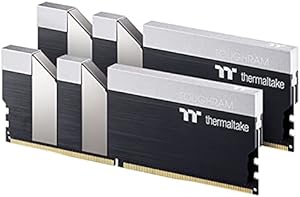
Thermaltake R017D408GX2-3200C16A 16GB ToughRam DDR4 3200MHz Memory
Thermaltake ToughRam DDR4-3200 at CL16 delivers the bandwidth and latency balance that modern gaming and productivity builds need to stop leaving CPU performance on the table.
View price on Amazon
Affiliate Disclosure: As an Amazon Associate, Studio Supplies earns from qualifying purchases made through links on this page, at no additional cost to you. This helps support our editorial team.
Notice a mistake? Let Us Know
Overview
Key Features
R017D408GX2-3200C16A
Specifications
Capacity
16GB (2x8GB)
Memory Type
DDR4
Speed
3200 MHz (PC4-25600)
Latency
CL16
Configuration
Dual Channel Kit
Color
Black/Gray
Model
R017D408GX2-3200C16A
Frequently Asked Questions
What does DDR4-3200 CL16 mean in terms of actual memory latency?
DDR4-3200 at CL16 means the memory takes 16 clock cycles to respond to a read command. True latency in nanoseconds is calculated as (CL / frequency) × 2 × 1000 — at 3200 MHz, CL16 works out to approximately 10ns. This is a competitive latency figure for DDR4-3200 class memory and represents a solid balance between speed and timing tightness.
Will this 16GB kit run in dual-channel mode, and does that matter?
Yes — the kit is a 2x8GB configuration, meaning two sticks populate two memory channels for dual-channel operation when installed in the correct slots (typically A2/B2 on most motherboards). Dual-channel doubles the memory bus width from 64-bit to 128-bit, providing up to a 30–40% bandwidth increase in bandwidth-sensitive workloads like integrated GPU tasks and certain productivity applications.
Is DDR4-3200 compatible with my existing platform?
DDR4 operates in DDR4-compatible motherboards only — it is not compatible with DDR5 platforms (Intel 12th gen and above on Z690/Z790, or AMD AM5). For Intel 10th/11th gen and AMD Ryzen 3000/5000 series (AM4) systems, DDR4-3200 is within or near the native memory controller speed range, often running at rated speed without manual XMP profile activation on some boards.
Does this kit support XMP profiles for automatic overclocking to 3200 MHz?
DDR4 JEDEC baseline speed is 2133 or 2400 MHz — rated speeds above that require XMP (Intel) or EXPO/A-XMP (AMD) profile activation in the BIOS. The ToughRam kit at 3200 MHz requires XMP enablement to run at its rated speed; without it, the system defaults to a lower JEDEC speed. XMP activation is a single BIOS toggle on supported motherboards.
What is the PC4 designation for this memory, and what does it indicate about bandwidth?
PC4-25600 is the JEDEC bandwidth designation for DDR4-3200. The number indicates peak theoretical bandwidth in MB/s — 25,600 MB/s per channel, or approximately 51.2 GB/s in dual-channel configuration. This bandwidth rating is what enables the memory subsystem to keep pace with modern CPUs at sustained compute loads.
Related Products


