

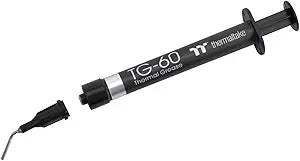


Thermaltake
Thermaltake TG-60 Liquid Metal Thermal Compound - 1g
52W
Thermaltake's TG-60 liquid metal compound delivers 52 W/m-K thermal conductivity for extreme CPU and GPU cooling.
$12.99*
Check availability
*Price sourced from Amazon.com. Last updated:Aug 29, 2026.Price and availability are subject to change — details.
Affiliate Disclosure: As an Amazon Associate, Studio Supplies earns from qualifying purchases made through links on this page, at no additional cost to you. This helps support our editorial team.
Notice a mistake? Let Us Know
Overview
Key Features
Designed for high performance CPU and GPU
High Thermal Conductivity of 52W/m-k
Excellent Stability
Enhanced Cooling Efficiency
Anti-Oxidation
Specifications
Brand
Thermaltake
Model
TG-60
Part Number
CL-O034-GROSGM-B
Type
Liquid Metal Thermal Compound
Thermal Conductivity
52 W/m-K
Electrical Conductivity
7.28 × 10⁶ μS/cm
Density
6.2 g/cm³
Viscosity
0.0018 Pa-s
Thermal Impedance
0.12°C-in²/W
Melting Temperature
3°C
Operating Temperature
3°C – 200°C
Weight
1 g
Compatible Surfaces
Copper, Nickel-plated
Included Accessories
Cotton Swabs × 2, Alcohol Pads × 2, Pinhead × 1
Frequently Asked Questions
Is the TG-60 safe to use on all CPU and GPU heatsink surfaces?
The TG-60 is suitable for copper and nickel-plated surfaces only. It should not be applied to bare aluminum heatsinks, as liquid metal can cause a corrosive reaction with aluminum.
How does the TG-60's thermal conductivity compare to standard thermal paste?
At 52 W/m-K, the TG-60 delivers roughly 5 to 10 times the thermal conductivity of conventional silicone-based thermal pastes, which typically range from 5 to 12 W/m-K.
Is liquid metal electrically conductive?
Yes, the TG-60 has an electrical conductivity of 7.28 × 10⁶ μS/cm, so it must be applied carefully to avoid contact with any electrical components, PCB traces, or capacitors surrounding the CPU or GPU die.
What is included in the TG-60 package besides the compound?
The package includes 1 gram of liquid metal compound, two cotton swabs, two alcohol pads, and one application pinhead for precise application and cleanup.
What is the operating temperature range of the TG-60?
The TG-60 operates between 3°C and 200°C, with a melting temperature of 3°C, meaning it remains in liquid form under virtually all normal computing conditions.
Related Products


