



Toshiba
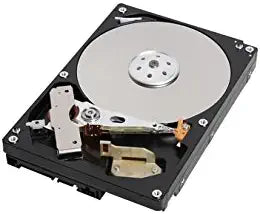
Toshiba PH3400U-1I72 4TB SATA 7200rpm Hard Drive
4TB of 7200 RPM desktop storage with 128MB cache and SATA 6Gb/s throughput — capacity and spin speed that keeps pace with demanding read/write workloads.
$179.90*
View on Amazon
✓ In Stock on Amazon.com
*Price sourced from Amazon.com. Last updated:Aug 28, 2026.Price and availability are subject to change — details.
Affiliate Disclosure: As an Amazon Associate, Studio Supplies earns from qualifying purchases made through links on this page, at no additional cost to you. This helps support our editorial team.
Notice a mistake? Let Us Know
Overview
Key Features
Perpendicular Magnetic Recording (PMR) Technology
Tunnel Magneto-Resistive (TMR) Recording Head Technology
Native Command Queuing (NCQ) Support
Read/Write cache for increased performance128MB Cache
Low power consumption with adaptive power modes and Serial ATA DIPM
Specifications
Capacity
4 TB
Rotational Speed
7200 rpm
Interface
SATA
Cache
128 MB
Technology
Perpendicular Magnetic Recording (PMR), Tunnel Magneto-Resistive (TMR)
Features
Native Command Queuing (NCQ) Support, Adaptive Power Modes, Serial ATA DIPM
Similar Products
Other products from the same family that visitors often consider:
 ✓ Available
Toshiba MG04ACA400E 4TB Internal 7200RPM Hard Drive
View on Amazon → ✓ Available
Toshiba MG03SCA400 Harrier 4TB SAS 7200RPM Hard Drive
View on Amazon → Currently Unavailable
Toshiba HDWR440XZSTA 4TB X300 7200RPM Internal Hard Drive
Check on Amazon →Currently Unavailable
Toshiba 7200rpm SATA 6Gbps Internal Hard Drive
Check on Amazon → ✓ Available
Toshiba DT01ACA300 3TB 7200RPM SATA Hard Drive
$139.99
View on Amazon →Frequently Asked Questions
What interface does this drive use, and what transfer speeds can I expect?
SATA 6Gb/s (SATA III), with a theoretical ceiling of 600 MB/s. Real-world sustained sequential reads on a 7200 RPM mechanical drive at this capacity typically land in the 150–190 MB/s range — fast for an HDD, though still well below any SATA SSD. The 128MB cache helps buffer burst transfers.
Is the PH3400U-1I72 suitable for use in a NAS enclosure?
This is a desktop-class drive (the "DT" designation in Toshiba's lineup), not a NAS-optimized model like the Toshiba N300. It lacks the vibration compensation and rotational vibration (RV) sensor technology found in NAS-specific drives. It will function in a single-drive enclosure, but for multi-bay NAS arrays, a NAS-rated drive is a more reliable long-term choice.
What recording technology does this drive use, and why does it matter?
It uses Perpendicular Magnetic Recording (PMR) combined with Tunnel Magneto-Resistive (TMR) read heads. PMR is the established, well-understood recording method — unlike SMR (Shingled Magnetic Recording), PMR handles random write workloads without the write-penalty overhead that SMR introduces. This matters for workloads mixing sustained and random I/O.
Does NCQ support make a measurable difference in desktop use?
Native Command Queuing reorders pending read/write operations to minimize head movement — it measurably reduces latency during multi-threaded I/O, such as running applications while copying large files. The improvement is more pronounced under mixed workloads than during pure sequential transfers.
What power modes does this drive support?
The drive includes Serial ATA Device-Initiated Power Management (DIPM) and adaptive power modes, allowing the controller to step down power consumption during idle periods. This translates to lower idle wattage in always-on desktop systems without manual spin-down configuration.
Related Products
