



TP-Link
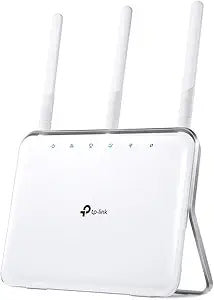
TP-Link Archer C8 AC1750 Gigabit WiFi Router
USB 3.0
A dual-band AC1750 gigabit router with beamforming and a dual-core processor for smooth whole-home Wi-Fi.
$50.00*
View on Amazon
✓ In Stock on Amazon.com
*Price sourced from Amazon.com. Last updated:Oct 25, 2026.Price and availability are subject to change — details.
Affiliate Disclosure: As an Amazon Associate, Studio Supplies earns from qualifying purchases made through links on this page, at no additional cost to you. This helps support our editorial team.
Notice a mistake? Let Us Know
Overview
Key Features
Supports 802.11ac, the next generation of Wi-Fi
1.75Gbps of total available bandwidth
Simultaneous dual band networks, 2.4GHz (450Mbps) and 5GHz (1300Mbps)
3 detachable dual band antennas for maximum wireless coverage and reliability
Beamforming technology locates wireless devices to create a stronger connection
800MHz dual-core processor handles simultaneous wired and wireless connections without interruption
TP-LINK technical support for assistance with setup and configuration
USB 3.0 and 2.0 ports to easily share printers, files, and media across your network
Industry-leading 2-year warranty and unlimited technical support. Technical Support: +1 866 225 8139; Hotline en Français: +1 855 987 5465.
Specifications
Wireless Standard
802.11ac (Wi-Fi 5)
Total Bandwidth
1.75Gbps (1300Mbps on 5GHz + 450Mbps on 2.4GHz)
Frequency Bands
2.4GHz and 5GHz (simultaneous dual-band)
Processor
800MHz Dual-Core
Antennas
3 detachable dual-band antennas
Beamforming
Yes
LAN Ports
4x Gigabit (10/100/1000Mbps)
WAN Port
1x Gigabit (10/100/1000Mbps)
USB Ports
1x USB 3.0, 1x USB 2.0
Protocol Support
IPv4 and IPv6
Warranty
2 years
Frequently Asked Questions
What are the combined wireless speeds of the Archer C8?
The Archer C8 delivers up to 1.75Gbps of total bandwidth — 1300Mbps on the 5GHz band and 450Mbps on the 2.4GHz band — operating both bands simultaneously.
Does the Archer C8 support beamforming, and what does that do?
Yes, it features beamforming technology that detects the location of your connected devices and focuses the wireless signal toward them, resulting in stronger and more reliable connections compared to omnidirectional broadcasting.
Can I connect a USB hard drive or printer to this router?
Yes, the Archer C8 has both a USB 3.0 and a USB 2.0 port, allowing you to share printers, external hard drives, or media storage across your entire network.
Are the antennas removable or replaceable on the Archer C8?
Yes, the three dual-band antennas are detachable, which makes them replaceable if damaged and allows for easier storage or transport of the router.
Does this router support the latest Wi-Fi standard?
The Archer C8 supports 802.11ac (Wi-Fi 5), which was the current standard at its release. It does not support Wi-Fi 6 (802.11ax) or newer standards.
Related Products


