TP-Link

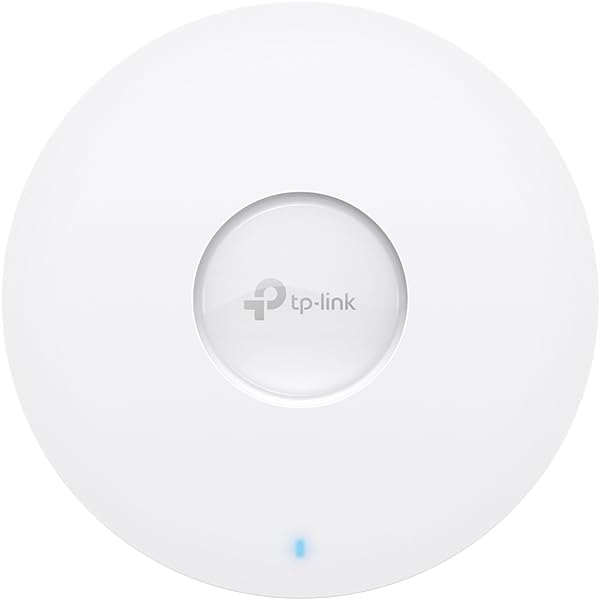
TP-Link EAP683 LR AX6000 WiFi 6 Long Range Access Point

4.5 (372 reviews)
WiFi 6

The EAP683 LR pushes AX6000 WiFi 6 throughput across large floor plans where standard access points give up signal before they give up bandwidth.

$159.99*$181.49Save 11%
In Stock on Amazon.com
View on Amazon

*Price sourced from Amazon.com. Last updated:Jun 04, 2026.Price and availability are subject to change.

Affiliate Disclosure: Studio Supplies may earn a commission from qualifying purchases made through links on this page, at no additional cost to you. This helps support our editorial team.

Notice a mistake? Let Us Know

Overview

The TP-Link EAP683 LR is a ceiling-mount WiFi 6 access point rated at AX6000 — a combined 1148 Mbps on 2.4GHz and 4804 Mbps on 5GHz. Those numbers matter less in isolation than in context: the 5GHz radio uses HE160 channel bonding (160MHz channel width) and 1024-QAM modulation, which together push per-client throughput to levels that expose 1GbE uplinks as a bottleneck — which is precisely why TP-Link paired this AP with a 2.5GbE port. The "LR" designation signals a specific engineering priority: antenna gain and OFDM symbol length are tuned for range over density, making this the right AP for large open spaces rather than a crowded convention floor.

The EAP683 LR integrates natively into TP-Link's Omada SDN ecosystem, supporting hardware controllers, software controllers, or cloud-based management — with standalone mode available for simpler installations. In SDN mode, Mesh WiFi and 802.11r Seamless Roaming become available, enabling enterprise-grade mobility across multi-AP deployments managed from a single dashboard. The 802.3at PoE+ power input means deployment requires only Cat6 to the ceiling — no separate power run needed. This AP targets IT administrators deploying coverage in warehouses, conference centers, schools, and large retail environments where long-range signal stability and centralized management outweigh ultra-dense client capacity as design criteria.

Key Features

Blazing-Fast True Wi-Fi 6 SpeedsDesigned with the latest wireless Wi-Fi 6 technology featuring 1024-QAM, HE160 and Long OFDM Symbol, the EAP683 LR boosts dual-band Wi-Fi speeds up to 6000 Mbps.

2.5GE Port with PoE+ for Easy InstallationArmed with a 2.5 Gigabit Ethernet port, the EAP683 LR delivers exceptional multi-gigabit performance and boosts total internet throughput for faster, better Wi-Fi. Supports standard 802.3at PoE+ and 12V/2A DC power supply, can be powered by a TP-Link PoE+ switch, or the provided 12V/2A DC adapter, making deployment effortless and flexible.

Support Omada SDNOmada Software Defined Networking (SDN) platform integrates network devices including access points, switches & gateways with multiple control options offered - Omada Hardware controller, Software Controller or Cloud-based controller*(Contact TP-Link for Cloud-Based Controller Details). Standalone mode also supported.

Cloud Access & Omada CompatibilityRemote Cloud access and Omada app enables centralized cloud management of the whole network from different sitesall controlled from a single interface anywhere, anytime. For devices that are compatible with SDN firmware, please visit From the manufacturer Q&A section or TP-Link website.

Advanced Wireless TechSupports Mesh WiFi, Seamless Roaming*(Omada Mesh & Seamless Roaming require the use of Omada SDN controllers), Band Steering, Load Balancing, Airtime Fairness and Beamforming technologies.

Specifications

Wireless Standard
Wi-Fi 6 (802.11ax)
Combined Speed
AX6000 (up to 6000 Mbps)
2.4GHz Speed
1148 Mbps
5GHz Speed
4804 Mbps
Uplink Port
1× 2.5 Gigabit Ethernet
Power Input
802.3at PoE+ or 12V/2A DC
Management
Omada SDN (Hardware / Software / Cloud Controller) + Standalone
Wireless Features
Mesh WiFi, Seamless Roaming, Band Steering, Load Balancing, Airtime Fairness, Beamforming
Antenna Type
Internal
Dimensions
8.7 × 8.7 × 1.3 inches
Color
White
Modulation
1024-QAM
Channel Width
HE160

Pros & Cons

👍 Pros

  • The 4804 Mbps 5GHz radio with HE160 channel width delivers nearly 5x the per-client throughput of WiFi 5 Wave 2 APs in the same form factor — measurable in file transfer benchmarks and 4K stream stability.
  • PoE+ compatibility means the AP can be deployed to any ceiling location covered by existing Cat6 infrastructure without pulling new power runs — a meaningful installation cost reduction in retrofit scenarios.
  • Omada SDN integration enables zero-touch provisioning and centralized policy enforcement across multi-site deployments from a single management pane, eliminating per-device configuration overhead.
  • The 2.5GbE uplink prevents the backhaul from becoming the bottleneck in multi-gigabit LAN environments — unlike competing APs that ship with 1GbE ports despite faster wireless radios.
  • Long OFDM Symbol support improves signal robustness at range by extending the guard interval, which reduces inter-symbol interference in acoustically complex or obstructed environments.

👎 Cons

  • The EAP683 LR's internal antenna design, optimized for long-range horizontal coverage, produces a flatter radiation pattern — it performs significantly worse for multi-floor vertical coverage than an AP with external directional antennas.
  • Seamless Roaming and Omada Mesh require an SDN controller — the full feature set is unavailable in standalone mode, which limits deployment flexibility in sites not committed to the Omada ecosystem.
  • At 8.7 inches in diameter, the EAP683 LR is physically larger than competing APs in the AX3000–AX4800 tier, which can create aesthetic or mounting constraint issues in finished ceiling environments.
  • The 1148 Mbps 2.4GHz radio, while standard for the category, will be a ceiling for legacy devices that can't connect to 5GHz — in mixed-device environments, 2.4GHz congestion remains a deployment planning consideration.

Frequently Asked Questions

The LR designation refers to specific antenna design and power tuning optimized for extended range rather than maximum density. In practice, the EAP683 LR targets large open spaces — warehouses, auditoriums, long office wings — where a standard ceiling AP would require a second unit. Coverage area and signal-to-noise ratio at distance are prioritized over the aggressive MIMO spatial multiplexing optimized for packed device environments.
In real-world use, no. The AX6000 rating combines 1148 Mbps (2.4GHz) + 4804 Mbps (5GHz) across all spatial streams simultaneously — a scenario that requires many concurrent high-throughput clients. A single 2.5GbE uplink (2500 Mbps theoretical) can realistically carry the aggregate traffic generated by typical enterprise deployments. Only extremely dense, simultaneous 5GHz client loads would expose the uplink as a ceiling.
Three options: Omada Hardware Controller (dedicated physical appliance), Omada Software Controller (Windows/Linux server or VM), or Omada Cloud-based Controller. Standalone mode is also supported for single-AP deployments without a controller. SDN mode unlocks Mesh WiFi, Seamless Roaming, and centralized policy management; standalone mode provides basic AP functionality only.
The EAP683 LR supports 802.3at PoE+ (up to 30W) — standard on most enterprise PoE switches — which is sufficient to power the unit. A 12V/2A DC adapter is included for non-PoE installations. You do not need a specialized injector or higher-wattage PoE++ switch.
Band steering nudges dual-band clients toward 5GHz from 2.4GHz on the same AP. Seamless Roaming (802.11r/k/v) enables clients to hand off between multiple EAP683 LR units in the same Omada SDN without dropping the session — critical for VoIP calls or real-time video that can't tolerate a full reassociation pause during roaming.