

TP-Link
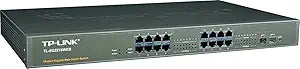
TP-Link TL-SG2216WEB 16-Port Gigabit Web Smart Switch
Optimize Your Network with the TP-Link 16-Port Gigabit Web Smart Switch The TP-Link TL-SG2216WEB is a 16-Port Gigabit Web Smart Switch designed to enhance network performance and management. Ideal for small to medium-sized businesses, it offers advanced features for optimizing network traffic and...
Check availability
Affiliate Disclosure: As an Amazon Associate, Studio Supplies earns from qualifying purchases made through links on this page, at no additional cost to you. This helps support our editorial team.
Notice a mistake? Let Us Know
Overview
Optimize Your Network with the TP-Link 16-Port Gigabit Web Smart Switch
The TP-Link TL-SG2216WEB is a 16-Port Gigabit Web Smart Switch designed to enhance network performance and management. Ideal for small to medium-sized businesses, it offers advanced features for optimizing network traffic and ensuring reliable connectivity.
Key Features
16-port Pure-Gigabit Web Smart Switch
Quick and easy setup with Web-based management
Supports Port-Based VLAN and IEEE 802.1Q Tag VLAN
Supports Static MAC address and filtering MAC address management
Supports Static Port Priority and IEEE 802.1p Class of Service (CoS) with 4-level priority queuing
Specifications
Type
Web Smart Switch
Ports
16-Port Gigabit
Management
Web-based
VLAN Support
Port-Based VLAN, IEEE 802.1Q Tag VLAN
MAC Address Management
Static MAC address, Filtering MAC address
Quality of Service (QoS)
Static Port Priority, IEEE 802.1p Class of Service (CoS) with 4-level priority queuing
Frequently Asked Questions
Does this switch require any software installation on a computer for management?
No, the TP-Link TL-SG2216WEB is a Web Smart Switch, meaning its management interface is accessed directly through a web browser without the need for additional software installation.
Can this switch segment my network for different departments or purposes?
Yes, it supports both Port-Based VLAN and IEEE 802.1Q Tag VLAN, allowing you to logically segment your network traffic for different groups or applications.
How many devices can I connect to this switch at Gigabit speeds?
The TL-SG2216WEB features 16 pure-Gigabit ports, enabling you to connect up to 16 devices at gigabit speeds simultaneously.
Is this switch suitable for prioritizing voice or video traffic?
Yes, with support for Static Port Priority and IEEE 802.1p Class of Service (CoS) with 4-level priority queuing, this switch can prioritize critical network traffic like voice and video.
What security features does this switch offer to control network access?
This switch supports Static MAC address and filtering MAC address management, which allows you to define which devices are permitted to access specific ports or the network.
Related Products


