



Zoom
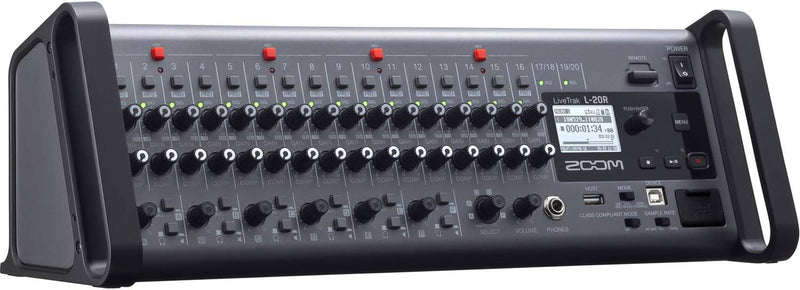
Zoom LiveTrak L-20R Digital Mixing Console
Comprehensive Digital Console for Live Performance and RecordingThe Zoom LiveTrak L-20R is a rack-mountable digital console designed for musicians and engineers. With wireless control, 20 discrete channels, and versatile recording capabilities, this console provides a complete solution for mixing...
$799.99*
View on Amazon
✓ In Stock on Amazon.com
*Price sourced from Amazon.com. Last updated:Aug 28, 2026.Price and availability are subject to change — details.
Affiliate Disclosure: As an Amazon Associate, Studio Supplies earns from qualifying purchases made through links on this page, at no additional cost to you. This helps support our editorial team.
Notice a mistake? Let Us Know
Overview
Comprehensive Digital Console for Live Performance and Recording
The Zoom LiveTrak L-20R is a rack-mountable digital console designed for musicians and engineers. With wireless control, 20 discrete channels, and versatile recording capabilities, this console provides a complete solution for mixing, monitoring, and recording live performances.
Specifications:- Brand: Zoom
- Model: LiveTrak L-20R
- Channels: 20 Discrete Channels (16 Mono + 2 Stereo)
- Recording: 22-Track Simultaneous Recording, 20-Track Playback
- Audio Interface: 22-in/4-out USB
- Recording Quality: Up to 24bit/96kHz Audio to SD Card
- Compression: Built-in Compression Control (Channels 1-16)
Specifications
Model
LiveTrak L-20R
Brand
Zoom
Type
Digital Mixing Console
Frequently Asked Questions
Is this mixing console suitable for studio recording or primarily live sound?
The name "LiveTrak" suggests it is designed for live applications, but digital mixing consoles often include features that make them versatile for studio recording as well.
What does "Digital Mixing Console" imply about its functionality compared to analog mixers?
A digital mixing console offers advanced features like onboard effects, scene recall, automation, and often remote control capabilities, which are typically absent in analog mixers.
Does the "R" in L-20R indicate it is rack-mountable?
Yes, the "R" typically signifies a rack-mountable design, allowing the unit to be installed into a standard audio equipment rack.
How many input channels does this mixer support?
The number of input channels for the Zoom LiveTrak L-20R is not specified in the provided information.
Can this mixer be controlled remotely?
While not explicitly stated, many digital mixing consoles, especially rack-mounted ones, offer remote control options via applications or external controllers, but this product's specifics are not detailed.
Related Products


