



AKG
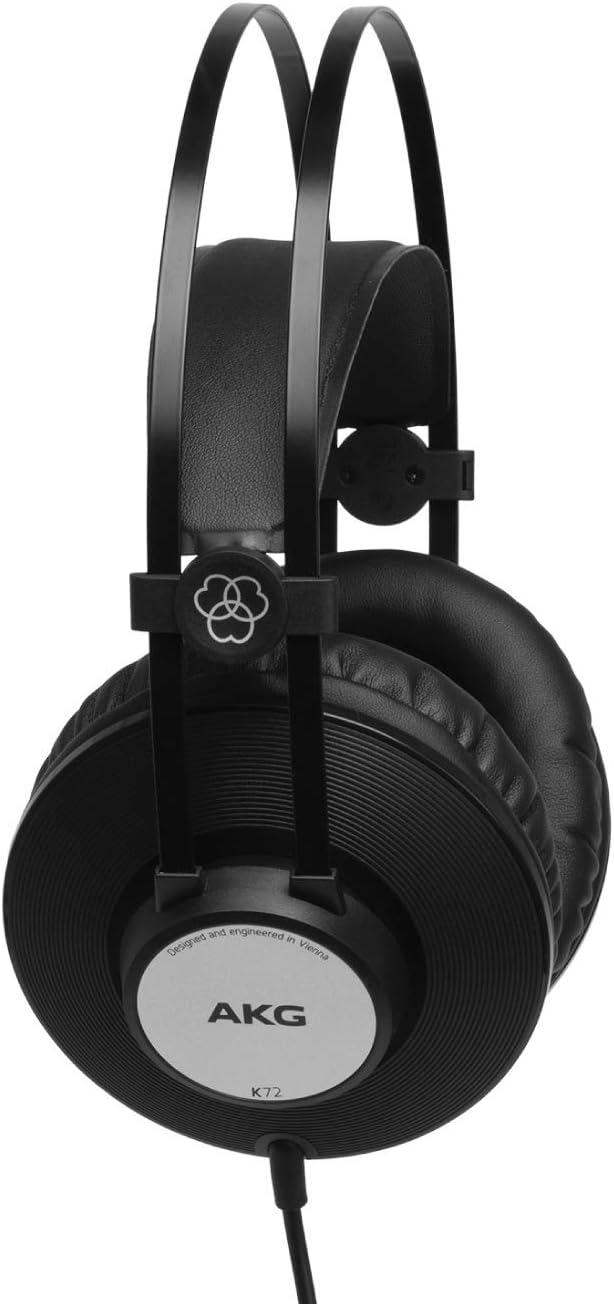
AKG K72-cr Pro Audio Studio Headphones - Black (Renewed)
16Hz - 20kHz
Reference-grade 40mm drivers and closed-back isolation in a sub-$50 form factor that punches well above its price point in the studio.
$54.50*$58.95Save 7%
View on Amazon
✓ In Stock on Amazon.com
*Price sourced from Amazon.com. Last updated:Oct 21, 2026.Price and availability are subject to change — details.
Affiliate Disclosure: As an Amazon Associate, Studio Supplies earns from qualifying purchases made through links on this page, at no additional cost to you. This helps support our editorial team.
Notice a mistake? Let Us Know
Overview
Key Features
Precisely balanced response provides reference-monitor accuracy
Professional drivers 40mm drivers for extended 16Hz - 20kHz frequency response
Over-ear design and lightweight construction for exceptional comfort
Closed-back design maximizes isolation
Self-adjusting headband ensures perfect fit
Specifications
Driver Size
40mm dynamic
Frequency Response
16 Hz – 20 kHz
Design
Over-ear, closed-back
Color
Matte Black
Headband
Self-adjusting
Condition
Renewed (refurbished)
Frequently Asked Questions
What does the 16Hz–20kHz frequency response mean for monitoring accuracy on the K72?
That range covers the full audible spectrum with extension into the sub-bass that many budget headphones roll off early. The 16 Hz low-end extension means you'll hear kick drum and bass fundamentals accurately rather than a thinned representation — critical for mix decisions on bass-heavy material.
How effective is the closed-back design on the K72 for isolation?
Closed-back construction provides passive isolation by sealing the driver cavity from the environment. On the K72, this reduces bleed-through meaningfully enough for recording reference monitoring in a live room, though it won't match the attenuation of dedicated noise-isolating or noise-canceling designs.
What does "Renewed" mean for the K72, and does it affect audio performance?
Renewed units are manufacturer- or seller-refurbished to working condition — typically inspected, cleaned, and repackaged. The 40mm drivers and passive circuitry in the K72 have no firmware or battery components to degrade, so renewed units generally perform identically to new if the drivers and ear cup seals are intact.
Does the self-adjusting headband affect long-session comfort on the K72?
The self-adjusting mechanism eliminates the manual fit-and-clamp cycle. For extended mixing or listening sessions, it distributes clamping force more consistently than a fixed-position band, reducing hotspots at the crown. Over-ear pad depth is the more relevant long-session variable.
Is the K72 compatible with standard audio interfaces and consumer devices?
The K72 uses a standard 3.5mm termination (with a 6.3mm adapter typically included). It works with any device that has a headphone output — audio interfaces, mixers, smartphones, laptops, and desktop sound cards — without requiring amplification, though a dedicated headphone amp will improve control at low volumes.
Related Products


